
Events in recent days—above all, the law signed by Donald Trump on September 18 allowing tariffs of up to 100% on major buyers of Russian energy, a new wave of pressure on Pretoria, and continuing uncertainty surrounding US tariffs on semiconductors—have prompted a similar feeling in India, South Africa and South Korea: Washington is increasingly turning access to its market, investment and visas into a tool of coercion. Local reactions, however, differ markedly. In India, this is seen as an attempt to force the country to choose between energy security and its strategic partnership with the United States; in South Africa, as interference in painful domestic disputes over racial inequality and land reform; and in South Korea, as a demand to pay for security and trade access with ever-new investment commitments.
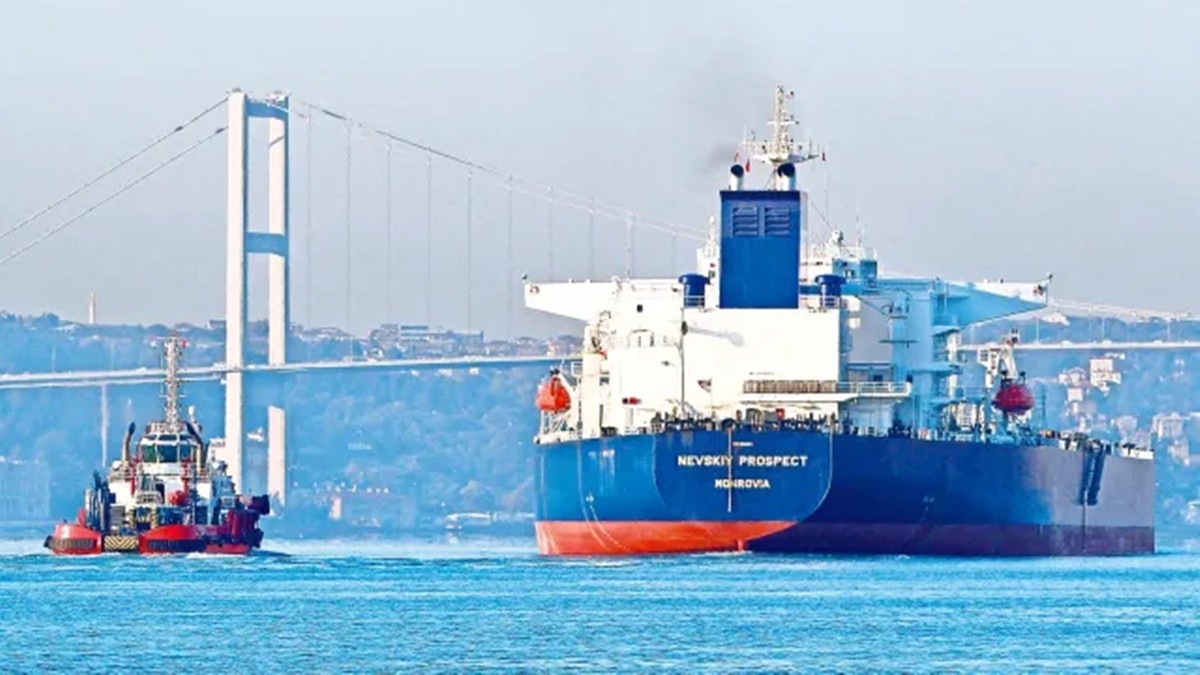
The Indian debate now revolves less around the immediate imposition of a 100% tariff than around the White House’s very right to apply it at its political discretion. The law is aimed at Russia’s revenues from oil and gas exports, but its potential victims are primarily India and China. In an editorial titled “American Arbitrariness” in Dainik Jagran, this approach is described as American arbitrariness: New Delhi, the publication stresses, cannot silently accept punishment for buying oil essential to its economy. The logic of local commentators is simple: for India, Russian oil is not an ideological gesture in Moscow’s favor, but insurance against price spikes for a country of 1.4 billion people.
It is particularly telling that India also views the American threat as potentially damaging to the United States itself. In an editorial comment by Jansatta, the paper warns that if India sharply reduces its purchases of cheap crude, the global oil market will become even tighter, driving prices higher far beyond South Asia. Ajay Srivastava, founder of the Global Trade Research Initiative, told Navbharat Times that India should not alter its long-term energy strategy in exchange for uncertain tariff concessions: in his assessment, Russian oil has already reduced India’s import bill. This does not mean Indian commentators underestimate the threat. On the contrary, many consider it serious precisely because it affects exports—from textiles and pharmaceuticals to engineering products. But the prevailing response is not fear, but a demand for reciprocity: friendship with the United States should not mean abandoning the independent definition of national interests. The law does give the president broad discretion to decide whom to punish and by how much, turning it into an instrument not only of sanctions policy but also of negotiations. (ogj.com)
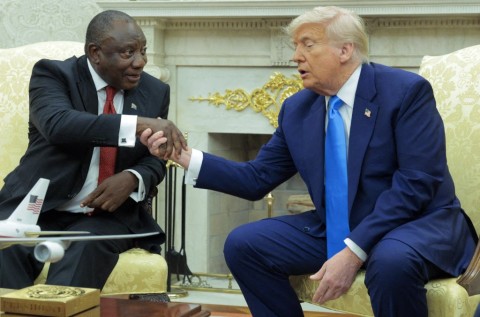
In South Africa, US pressure has taken on an even more politically charged character. Washington links new visa restrictions against South African officials to allegations of discrimination against white citizens and to the country’s land-expropriation law; Pretoria rejects these accusations. International analyst Kingsley Makhubela, speaking to eNCA, saw the campaign as preparation for a “broader attack on the legitimacy” of the South African government. This is an important local perspective: for many, the dispute is not limited to visas. It concerns whether a foreign power will be granted the right to assess and effectively reshape policies on affirmative action, land reform and economic transformation—measures inseparable in South Africa from the legacy of apartheid. (enca.com)
At the same time, South African commentators are not calling for a romantic break with America. Their concern is pragmatic: political grievances may be followed by trade consequences—new tariffs, investment restrictions or pressure through AGOA, the US program granting African goods preferential access to the American market. In a conversation with Moneyweb, there was concern that AGOA could become Washington’s “stick” in its dispute with Pretoria. The editorial board of Financial Mail welcomed the program’s extension through the end of 2028, but stressed its ambiguity: preferential treatment has been preserved, yet tariffs have already undermined its practical value, while South Africa’s membership remains politically conditional. Economists Jing Chien and Lawrence Edwards wrote in Business Day that the average tariff burden on South Africa’s non-commodity exports remains far higher than it was at the beginning of 2025. As a result, the most characteristic South African response is not a call for retaliatory sanctions, but an accelerated search for alternative markets through the African Continental Free Trade Area, BRICS and Asian destinations. (businessday.co.za)
South Korea views the same American policy through an entirely different lens—technological and alliance-based. Washington is not accusing Seoul of ideological disloyalty, but US tariff threats involving chips, drones and industrial products are perceived as a test of the military-political alliance’s real value. Industry Minister Kim Jung-kwan said negotiations over semiconductor tariffs should proceed according to the principle that Korea must not be placed in a worse position than its competitors. But the very need to seek such a commitment reveals Seoul’s anxiety: for a country where semiconductors are the foundation of exports and a source of strategic influence, “no worse than others” no longer looks like a guarantee, but merely the minimum result of bargaining. (yna.co.kr)
The Korean press describes this bargaining almost as an exchange of market access for capital investment. A Newsis analysis links a possible announcement of South Korea’s first major investment project in the United States to an attempt to untangle the issue of semiconductor tariffs and Washington’s other trade demands. For India, American pressure means “do not buy this oil”; for South Africa, “change your domestic political framework”; and for South Korea, “invest in American manufacturing to preserve predictable market access.” The mechanism differs, but the underlying principle is the same: the United States is offering its partners not so much stable rules as individual deals in which economic concessions become the price of political security.
This unpredictability is the main common theme in the local reactions. Indian commentators fear that sanctions against Russia will become a pretext for pressuring New Delhi’s autonomous foreign policy. South African commentators fear that trade and visas are turning into levers for influencing the internal structure of a post-apartheid state. South Korean commentators fear that even a longstanding alliance with the United States does not protect critical industries from having their terms revised. In all three countries, the desire to cooperate with America has not disappeared; what is disappearing is the confidence that cooperation is based on rules that will apply tomorrow as they do today.
-1789668585736.webp)




![South Korean Industry Minister Kim Jung-kwan answers questions from reporters in Washington, DC, on September 3 (local time). 2026.9.4. nari@yna.co.kr [Redistribution and database use prohibited]](https://img8.yna.co.kr/etc/inner/KR/2026/09/04/AKR20260904006600071_01_i_P4.jpg)
![Investment declaration ceremony for the United States hosted by the Ministry of Trade, Industry and Energy and KOTRA. Industry Minister Kim Jung-kwan poses for a photo at the ceremony in Washington, DC, on September 3 (local time). 2026.9.4. nari@yna.co.kr [Redistribution and database use prohibited]](https://img7.yna.co.kr/etc/inner/KR/2026/09/04/AKR20260904006600071_02_i_P4.jpg)
