As of November 26, 2026, the United States is simultaneously creating three different but strikingly similar reasons for concern abroad: once again threatening China with tariffs, leaving the Middle East in dangerous uncertainty over Iran, and stripping South Africa of AGOA trade preferences. In Beijing, Riyadh and Pretoria, these developments are not seen as isolated episodes. Local commentators see the same logic in all of them: US policy has become less institutional, more personalized and openly transactional. Partners are offered cooperation while being reminded that access to the US market, security guarantees or negotiations can be reconsidered at any moment.
The latest reaction from China centers on a new US tariff plan proposing duties of up to 20% on China and several other major economies, ostensibly to combat “overcapacity.” What particularly irritates Chinese officials and experts is not protectionism itself—Beijing has long been preparing for that—but the fact that it has emerged just after a diplomatic thaw. Just a week earlier, on November 19, Xi Jinping and Donald Trump met in Shenzhen, where they discussed stabilizing relations, mutual respect and continued dialogue. Chinese observers cautiously welcomed Washington’s signal that the United States does not support Taiwan’s independence, while stressing that words must be backed up with practical steps, above all on export controls and technology. (globaltimes.cn)
That caveat has now taken center stage. In a Global Times analysis, economists describe the new tariff initiative as an attempt by Washington not so much to address competition as to reshape global production chains to serve its own interests. Chinese Foreign Ministry spokesperson Guo Jiakun put the position plainly: “Tariff and trade wars serve the interests of neither side” [translated from Chinese]. For Beijing, this is also a matter of trust: if the White House is preparing new restrictions even as it negotiates cuts to certain tariffs, any compromise is rendered temporary and reversible. (globaltimes.cn)
Notably, China’s debate is not limited to the usual rhetoric about external pressure. A pragmatic conclusion is becoming more prominent: America cannot be “persuaded” to abandon its drive to protect its technological and industrial lead, so China must reduce its reliance on the US market, accelerate import substitution in chips, and strengthen trade ties with Asia, the Middle East and countries of the Global South. Even Trump’s warm words about Shenzhen’s infrastructure—he called the city an impressive example of modernization—are read in Beijing not as a sign of a change in course, but as recognition of China’s competitiveness, which does nothing to remove US restrictions on advanced semiconductors. (globaltimes.cn)
In Saudi Arabia, American unpredictability is measured not in tariffs but in the risk of a major war. Saudi newspapers and analytical outlets are discussing not so much whether the United States will strike Iran again as the danger of an American strategy of “neither war nor peace.” That is how the newspaper Okaz described the situation: after negotiations broke down and limited reciprocal strikes took place, Washington, in its assessment, is considering maintaining a state of managed but highly unstable conflict. (okaz.com.sa)
For Riyadh, this is the worst of the possible middle grounds. A full-scale war would threaten infrastructure, shipping and energy exports; a sudden US withdrawal would create a security vacuum; prolonged uncertainty combines both risks. According to Reuters, Saudi Arabia urged Trump not to resume major strikes on Iran, while Israel continued pressing Washington to launch a new military campaign. (arabnews.com) The local logic here is not abstract pacifism: Riyadh is not abandoning the policy of deterring Iran and its allies. But the Saudi response is based on the view that the costs of American escalation will fall primarily on the Gulf states—through threats to the Strait of Hormuz, oil infrastructure and attacks by proxy groups.
That is why the question raised by Arab News—could America withdraw its forces from the Gulf?—is particularly telling. The fact that it is being discussed so widely suggests that the traditional formula of “US presence equals security guarantee” is no longer accepted automatically. Saudi Arabia’s perspective is twofold: the United States remains an essential military and technological partner, but its military strategy is increasingly seen as a source of additional risk. Washington asks its regional allies for trust while demonstrating that it may build up its forces, consider scaling them back, or make the continuation of an operation contingent on its own budgetary and domestic political calculations. (aawsat.com)
South Africa is experiencing the same logic in the form of trade policy. The Trump administration’s decision to end Pretoria’s access to preferences under the African Growth and Opportunity Act—AGOA—on January 1, 2027, was seen by local officials as pressure that goes well beyond an ordinary tariff dispute. In a Mail & Guardian report, South Africa’s Department of Trade accuses Washington of introducing new demands during the negotiations that had not been raised before. Trade Minister Parks Tau responded diplomatically but firmly: the US decision “does not define the broader relationship,” but a way forward is possible only if both sides are willing to seek a solution [translated from English]. (mg.co.za)
South Africa’s response is considerably more nuanced than a simple anti-American campaign. Economists point out that AGOA covered only part of South Africa’s exports to the United States, and losing it will not bring down the entire economy. But for specific industries—auto parts, wine and citrus—the impact could be painful. Gerrit van der Merwe, chair of the Citrus Growers’ Association, warns that entire orchards in the Western Cape and Northern Cape were planted specifically for the US market, and that a new market cannot be found with a single administrative decision: phytosanitary standards and consumer preferences differ. (mg.co.za)
This is where the most substantive common theme among the three countries emerges. China is responding to US tariffs by diversifying its markets and pursuing technological autonomy. Saudi Arabia is seeking to diversify its security arrangements: maintaining ties with the United States without relying on a single external guarantor on matters of war and peace. South Africa is being forced to diversify its exports, primarily toward Asia and the Middle East, without giving up on US buyers. American influence remains enormous everywhere; nowhere is it considered easy to replace. But that very influence is increasingly seen as a resource Washington uses conditionally and selectively.
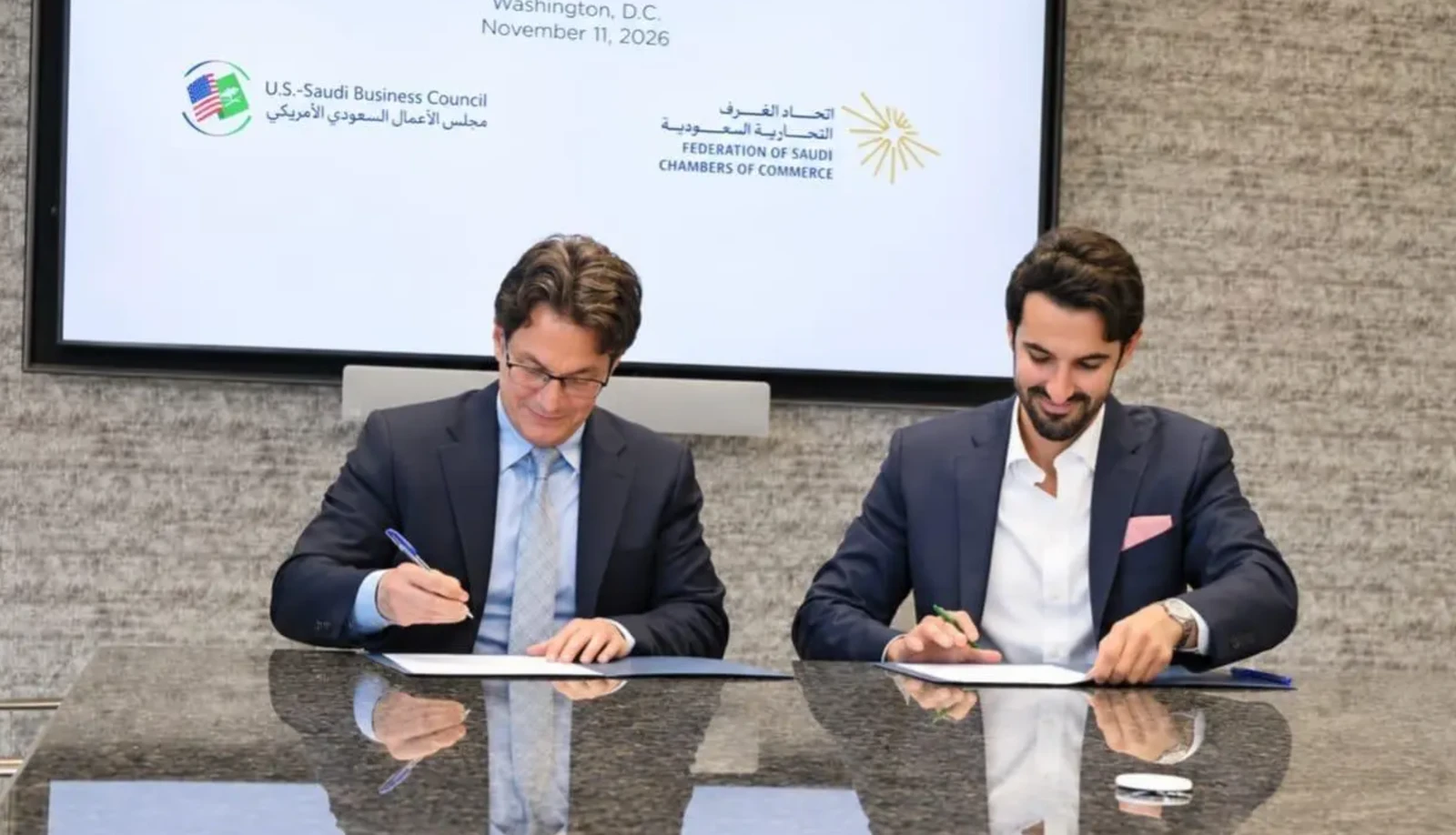
The most unexpected conclusion of these local debates is that this is neither the “end of America” nor the formation of a united anti-American front. Chinese experts continue to call for negotiations, Saudi business groups are expanding trade ties with the United States, and Pretoria is trying to challenge the AGOA decision rather than sever relations. Saudi-US businesses continue to institutionalize cooperation: in November, the two countries’ chambers of commerce signed a memorandum to promote investment and trade. (arabnews.com) However, the overall mood has changed: in Beijing, Riyadh and Pretoria, fewer people are counting on American promises to hold, and more are shaping policy around protection against Washington’s next change of course.