In Australia, Japan and Saudi Arabia, discussions about America today revolve around the same question: can the superpower on which these countries depend to varying degrees for security, trade and energy remain a predictable partner? The triggers include the protracted US-Iranian confrontation, a new wave of tariff pressure from Donald Trump’s administration, and Washington’s increasingly evident willingness to make decisions without prior consultation with its allies. Yet the local responses differ considerably. Australia is experiencing a crisis of confidence in its political ally; Japan measures American inconsistency in the cost of oil and the vulnerability of maritime routes; while Saudi Arabia seeks to turn its geographical position and diplomatic ties into tools for de-escalation.
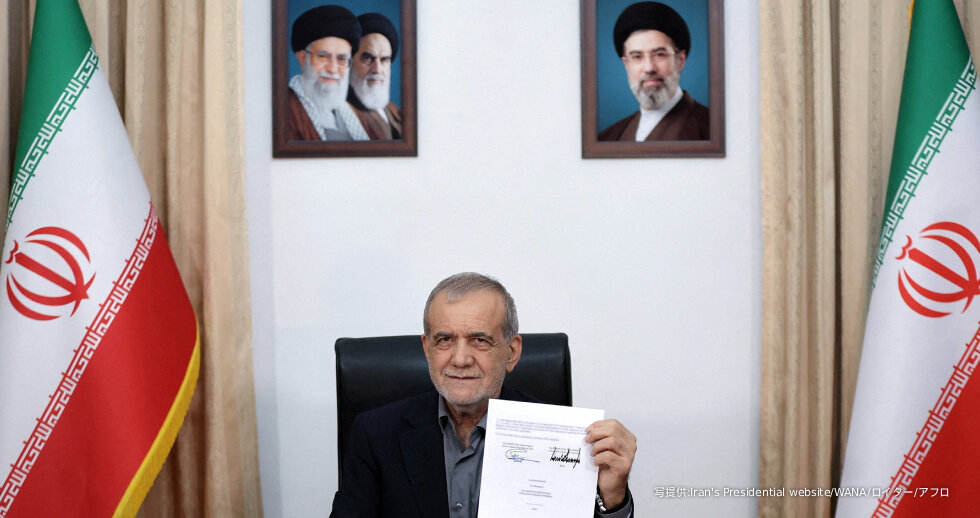
The most acute issue is the impact of US policy toward Iran and the security of the Strait of Hormuz. For Saudi Arabia, this is not an abstract debate about the international order, but a question of the region’s physical security, oil infrastructure and the possibility of preventing another major war on its doorstep. Riyadh publicly welcomed the US-Iranian agreement of June 15, 2026, on ending military operations and beginning negotiations, stressing the need to restore freedom and security of navigation in the Strait of Hormuz to the conditions that existed before February 28. In a statement by the Saudi Foreign Ministry the kingdom placed particular emphasis on the principle of noninterference in the internal affairs of states. This is an important formulation: it shows that the Saudi position is not limited to supporting one side, but calls on the United States to abandon attempts to reshape the regional order by force. (mofa.gov.sa)
Saudi analysis is even more cautious than the official diplomacy. In a column for Asharq Al-Awsat, the US-Iranian memorandum is described as a continuation of “political tug-of-war,” rather than a peaceful settlement: too much—Iran’s nuclear program, sanctions, missiles, regional proxy groups and the status of the strait—remains outside clearly enforceable commitments. (aawsat.com) This reflects a distinctly Middle Eastern view of the United States: American military power is acknowledged as a reality, but is not seen as an adequate substitute for a security architecture in which the interests of the Gulf states are not a secondary outcome, but a starting condition.
In Japan, the same war is viewed primarily through the country’s dependence on energy imports and maritime trade. Tokyo cannot afford to regard Hormuz merely as a geopolitical symbol: it is one of the vital routes for oil supplies. Japan’s Foreign Ministry reported that, following the agreement between the United States and Iran, it was seeking the earliest possible safe passage for the 37 Japan-linked vessels remaining in the Persian Gulf; one ship passed through the strait on June 19. (mofa.go.jp) Even after that, Japanese experts do not consider the risk resolved. A researcher at the Japan Institute of International Affairs notes in a strategic commentary that although Washington seeks to distance itself from the Middle East, it inevitably returns there as the main coordinator of military deterrence, sanctions, finance and maritime security. For precisely that reason, however, Tokyo should pursue more active multilateral diplomacy and not rely on a vague US-Iranian compromise. (jiia.or.jp)
It is telling that Japan’s response is almost entirely devoid of the moral fervor typical of Western discussions of war. Its language is that of insurance premiums, supply schedules, the price of a barrel and the risk of stagflation. Economist Nobuhiko Kiuchi of NRI warned in an analysis for the Nomura Research Institute that another escalation around the strait, retaliatory US strikes and talk of charging vessels for passage would once again expose Japan to a combination of expensive energy, falling markets and a weaker yen. (nri.com) From Japan’s perspective, the main criticism of the United States is not that America acts too decisively or not decisively enough, but that shifting signals from Washington have themselves become a source of economic destabilization.
Australians formulate the problem more directly and politically. Canberra remains one of Washington’s closest allies, but local media are showing a shift from the customary rhetoric of a “special relationship” toward an examination of the limits of loyalty. In an interview with ABC, Prime Minister Anthony Albanese said: “The United States now plays a different role in the world.” He linked this not only to protectionism, but also to the fact that the United States had begun its war with Iran without consulting its allies. (abc.net.au) For Australia, which has built its defense planning around the American umbrella for decades, this is almost a programmatic admission: the alliance remains, but automatic political trust is gone.
Australian commentators are particularly troubled by the gap between American expectations of military solidarity and America’s willingness to ignore its partners’ interests. In an ABC column, the question is posed in stark terms: Canberra’s refusal to immediately send naval forces to the Iranian conflict may have revealed Australia’s “red line” in its relations with Trump. (abc.net.au) This is an unusual formulation for the country. Australia is not abandoning its alliance with the United States or proposing neutrality; it is trying to separate the defense treaty from unconditional participation in every operation the White House deems necessary.
The second common thread is tariffs. Here Australia is feeling the impact directly. After the previous tariff arrangement was abolished, the US tariff on Australian exports was set at 12.5%. In an ABC analysis, Trade Minister Don Farrell called the decision “completely unjustified,” while winemaker Jeffrey Grosset described its consequences without diplomatic euphemisms: US isolationism will hurt American consumers, but it will hurt Australian producers even more, as they lose their presence and brand recognition in the largest market. (abc.net.au) Australia’s reaction is therefore less anti-American than anti-chaos: businesses find it difficult to withstand not merely a high tariff, but constantly changing rationales, rates and deadlines.
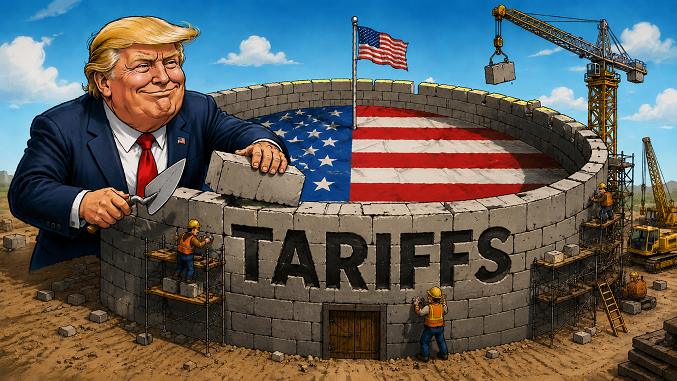
In Japan, US tariff policy is perceived as a less local but more systemic challenge. The Japanese government has already based its response on the principle of “not tariffs, but investment,” seeking a review of US measures. Yet official Japanese economic reviews acknowledge that US trade policy has become a shifting structure of exemptions, investigations and sectoral restrictions. (www5.cao.go.jp) For Japan’s export economy, this means that even a compromise with Washington offers no guarantee of stability: the rules can be rewritten by a new executive order or a new legal rationale. Saudi business media view the same process from the perspective of global markets: in an Argaam analysis, Trump’s new tariff strategy is described as an attempt to build a more durable legal “wall of tariffs” after the courts rejected the previous framework—at the cost of additional inflationary pressure and uncertainty for the global economy. (argaam.com)
This is where the three countries’ most unexpected similarity emerges. Australia, Japan and Saudi Arabia have not adopted a unified anti-American position. Each still needs the United States: Australia as a key military ally, Japan as a guarantor of deterrence in East Asia, and Saudi Arabia as a crucial outside player in Gulf security and global energy finance. But in all three countries, there is a growing demand not for “more America,” but for an America that explains its intentions in advance, respects its partners’ interests and can turn military pressure into lasting agreements. For Washington’s allies and partners, the problem with Trump today is not only his toughness. Much more important is that this toughness has become unpredictable—and the cost of that unpredictability is now measured not only in diplomatic inconvenience, but in oil, inflation, ships in the Strait of Hormuz, export contracts and confidence in the American alliance system itself.