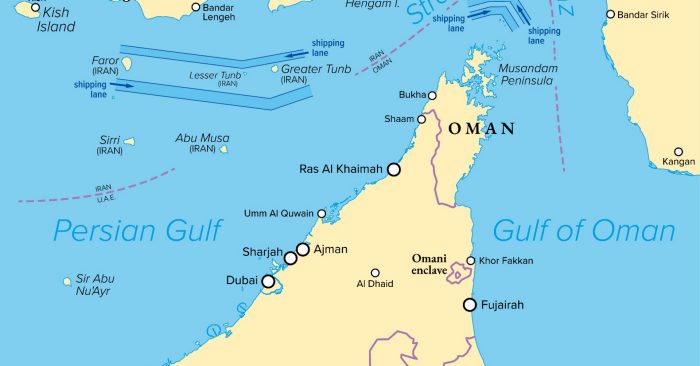
Events in recent days have once again placed the United States at the center of global debate: on August 30, U.S. forces struck Iranian missile installations near the Strait of Hormuz, ending a month-long pause in direct military action. For Australia, France and Japan, this is not an isolated Middle Eastern news story but a symptom of a broader problem: Washington is simultaneously pursuing coercive diplomacy, using tariffs as a means of pressure, and handling its commitments to allies in an increasingly unpredictable manner. (apnews.com)
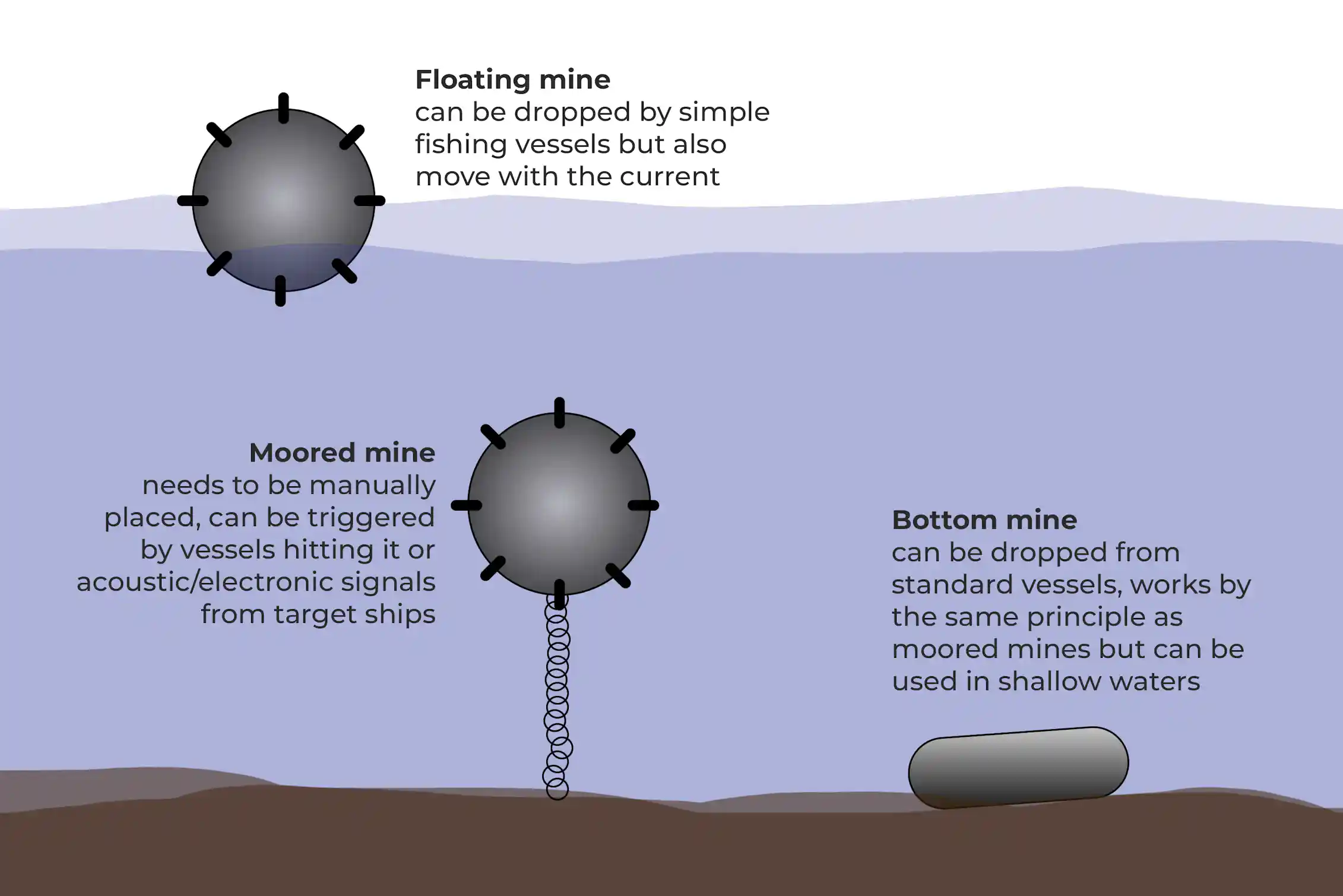
The main common theme is Hormuz and the transformation of the American campaign against Iran from a promise to quickly restore order into a prolonged source of economic and strategic risks. In Australia, the issue is discussed primarily in professional military terms: not “should America show resolve?” but whether it is capable of reliably ensuring freedom of navigation at all. In a University of New South Wales analysis, former Royal Australian Navy officer Jennifer Parker explains that a single strike against shore targets is not enough. For commercial vessels to actually return to the strait, the United States would need intelligence, maritime patrol aircraft, continuous air cover, escort ships and, if mines posed a threat, a lengthy mine-clearance operation. The Australian view is particularly clear-eyed here: American power is recognized as immense, but it is not considered capable of overriding geography, Iran’s inexpensive drones or the cost of a prolonged maritime campaign. (unsw.edu.au)
In Japan, the same crisis is perceived even more painfully—as a test of the vulnerability of a country dependent on seaborne energy supplies. In a strategic commentary, Koichi Nakagawa, a researcher at the Japan Institute of International Affairs, calls Hormuz the “lifeline” of Japan’s oil imports. His central point is not limited to condemning or supporting the American operation: in his assessment, the U.S.-Israeli attack changed the very nature of the conflict—from an attempt to constrain Iran’s nuclear program to an intervention affecting the structure of Iranian rule and the regional order. The Japanese therefore see the American action not as a brief episode, but as the risk of being drawn into a remaking of the Middle East without a clear political endgame. (jiia.or.jp)
Economists in Tokyo put it even more directly. In a Japan Research Institute analysis, the Hormuz crisis is described as having exposed two weaknesses in Japan’s energy security: the concentration of supplies and the lack of alternative routes. For Japanese audiences, it is crucial that America’s war be measured not only in allied declarations, but also in the cost of electricity, fuel, transportation and industrial raw materials. This differs noticeably from the French debate, which focuses more on Washington’s political objectives and the destruction of international rules, but it coincides with the Australian view: an alliance with the United States does not eliminate the need to calculate one’s own costs.
In France, distrust of Donald Trump’s strategy is expressed in more ideological terms. In a column for Le Monde, Sciences Po professor Jean-Pierre Filiu links the current destabilization to decisions made during Trump’s first term—U.S. withdrawal from the nuclear deal with Iran, the relocation of the embassy to Jerusalem and the desire to replace consistent diplomacy with displays of force. His diagnosis is that U.S. military infrastructure becomes an asset only when backed by a clear political strategy; when objectives keep changing, it becomes a vulnerable burden. The French response thus raises a question more often implied in Australia and Japan: if America’s ultimate goal is constantly shifting, how can its allies plan their own security? (lemonde.fr)
The second common theme is trade as an extension of U.S. foreign policy. Australia’s response here is not rhetorical anti-Americanism, but irritated pragmatism. During an August conversation with Trump, Prime Minister Anthony Albanese sought Australia’s full exemption from the new tariffs or at least a refusal to raise the existing 10% rate; according to him, the White House promised only to “consider” the request. As ABC News notes, the leaders were simultaneously discussing AUKUS, a defense project of key importance to Canberra. This juxtaposition is especially telling: Australia is discovering that strategic closeness with the United States does not guarantee trade immunity. (abc.net.au)
In Japan, the reaction is less emotional but no less critical. In his review, Kiyotaka Kiuchi, chief economist at Nomura Research Institute, writes that the new 12.5% U.S. tariff on Japan was introduced on the pretext of insufficient efforts to combat goods produced through forced labor. He assesses the direct effect as relatively limited—around 0.06% of annual GDP—but the main issue lies elsewhere: after the previous tariff framework encountered legal obstacles in the United States, the Trump administration found a new legal mechanism for applying pressure. For the Japanese expert, the problem is less the specific figure than the fact that the rules may once again be rewritten. (nri.com)
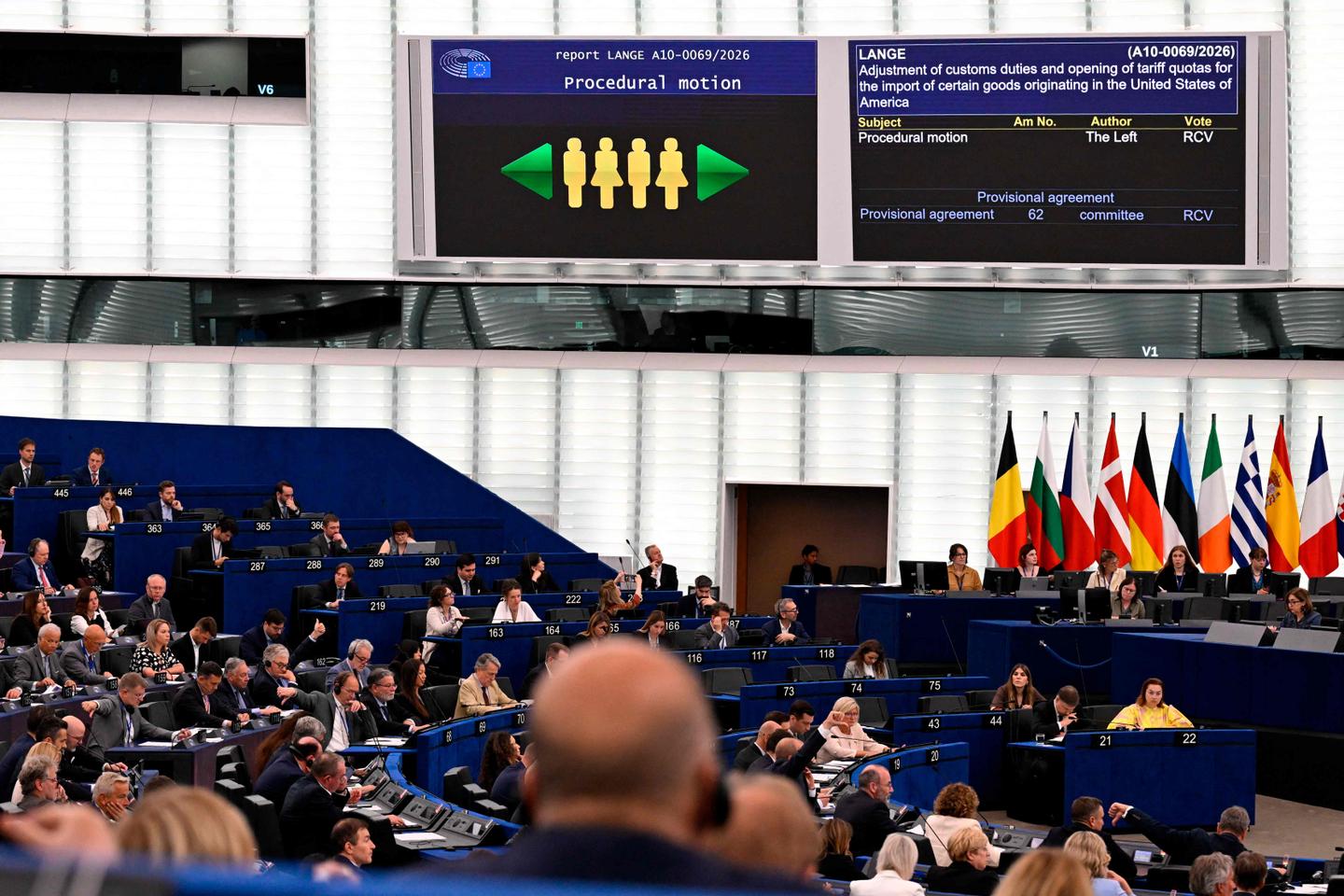
The French reaction to the same logic is considerably more politicized. A Le Monde report on approval of the EU-U.S. trade agreement reveals an unusual consensus in French politics: from the left to the far right, most French members of the European Parliament opposed lifting European tariffs on American imports. Manon Aubry, co-president of the left-wing group, called the compromise a “capitulation before Trump,” while Social Democrats Raphaël Glucksmann and Jean-Marc Germain criticized the weakening of the EU’s automatic response mechanisms. For Paris, the dispute is no longer only about exports: it is about whether Europe can respond collectively to American economic pressure instead of relying on individual exemptions. (lemonde.fr)
Finally, the Japanese and French press highlight another concern—the United States’ diplomatic improvisation in East Asia. Trump’s proposal to meet Kim Jong Un again is viewed not as an opportunity for a breakthrough in itself, but as the danger of reaching a deal over the heads of America’s allies. In a column published in France, Richard Haass warns that if complete denuclearization of Pyongyang remains the measure of success, the talks are doomed; arms control is more realistic, but it could look like de facto recognition of North Korea as a nuclear power. For Japan and South Korea, he emphasizes, this would cause profound concern. (lemonde.fr)
An unusually coherent international picture thus emerges. In Canberra, the United States is seen as an indispensable ally that requires constant protection against its own decisions. In Tokyo, it is viewed as a security guarantor whose unpredictability simultaneously raises the cost of energy, trade and regional deterrence. In Paris, it is seen as a power whose pressure demands not personal deals, but European political autonomy. What unites them is not a rejection of relations with America, but a departure from the old assumption that American power automatically creates order. Today, Australia, France and Japan increasingly believe the opposite: power without a stable objective can itself become the main source of instability.