In the first days of October 2026, the image of the United States in Australia, Brazil and Japan is shaped not by a single news story, but by a sense of Washington’s constant unpredictability. Local debates focus on U.S. tariff policy, the protracted war with Iran and the unexpected shift toward more manageable U.S. relations with China. In three very different countries, these issues are linked by one idea: an alliance or partnership with America no longer guarantees either economic protection or political certainty.
The most practical concern is trade. In Australia, the issue returned to the forefront on October 6, when the ABC 7.30 program discussed the consequences of Trump’s new tariffs for the country. Australians see them as more than a dispute over percentages: for exporters, they are proof that even a close military alliance and AUKUS provide no immunity from American protectionism. In July, the United States imposed a 12.5% tariff on Australian goods; businesses warned that tariff changes were disrupting pre-agreed prices and investment plans. Tom Wilson, founder of Nashie, put it in businesslike terms: changing the price of a product that has already been labeled and is covered by wholesale contracts is far from as simple as policymakers in Washington assume. ABC captured the characteristic reaction: not fury, but exhaustion at having to “weather yet another blow.”
In Brazil, the tone is sharper, but the conclusion is more paradoxical. Adam Goldsmith, a former U.S. Treasury financial attaché for South America, described current relations in a column for Folha de S.Paulo as historically poor: tariffs, sanctions against Brazilian officials, visa restrictions and pressure over organized crime. But his main argument is unexpected: Brazil’s weak interdependence with the United States is temporarily protecting it. In his assessment, after exemptions and court rulings, the actual U.S. tariff burden has fallen, while the overall impact on Brazil’s GDP is small. In other words, Brazil is suffering primarily politically and symbolically, but is not being immediately economically paralyzed. This is not a compliment to bilateral relations, but a diagnosis: their limited depth has become a safeguard against American pressure—and, at the same time, a missed opportunity for trade and investment.
Japan views the same tariffs differently. For Tokyo, the problem lies not only in the rates but also in the model of dependence: the United States can simultaneously demand strategic alignment against China, seek investment in American supply chains and retain the right to revise trade terms. Japan’s Ministry of Economy emphasizes that, under previous agreements, Tokyo committed to large-scale investment in strategic U.S. sectors—from semiconductors and critical minerals to energy and AI. The official METI overview shows how closely trade and security are already intertwined in Japan’s thinking. But Japan’s current debate increasingly comes down to an uncomfortable question: if trade concessions do not rule out new tariffs, what exactly is an ally buying with its investments?
The second common theme is the U.S. war with Iran and its cost for allies that control neither the campaign’s objectives nor when it will end. ABC analyst Alan Kohler directly linked Trump’s war with Iran and the tariffs to external inflationary shocks pushing up interest rates in Australia. In his analysis, U.S. foreign policy is not distant geopolitics but a factor affecting Australian mortgage payments and fuel prices. Even more sharply, commentator Laura Tingle writes that the end of the U.S. presence in Iraq coincided with a war against Iran that has already entered its eighth month—and sees this as a repetition of an old American mistake: the mission is unclear, while no exit is in sight. In her column, the Iraq experience is not the past but a warning about how a war with vague objectives can expand under its own momentum.
Australia’s reaction is especially telling because it comes from a country that for decades regarded its alliance with the United States as the foundation of its security. After speaking with Trump, Prime Minister Anthony Albanese called for a full exemption from the tariffs—or at least for the rate not to be increased—and at the same time reiterated that the war with Iran must end. Yet in the same conversation, the two sides confirmed that AUKUS was moving “full steam ahead.” The ABC report conveys Canberra’s ambivalence: it cannot abandon the United States as a military partner, but it is increasingly forced to publicly distance itself from Washington’s decisions. It is no coincidence that Albanese says Trump’s America now plays “a different role” in the world, and that Australia is therefore drawing closer to other middle powers. ABC
In Brazil, the Iran issue matters mainly as confirmation of a broader conclusion: the Trump administration uses force, sanctions, tariffs and political pressure as instruments of a single foreign policy. As a result, local concern is focused not only on the Middle East but also on Brazil’s own democracy. Before the first round of Brazil’s elections, Trump said he was closely following the vote; in Brazil, this came against the backdrop of the earlier tariff war and sanctions against Brazilian authorities. Folha reported that Brazilian intelligence classified the likelihood of external U.S. interference in the election as highly critical. After the first round, the international press was already describing the success of right-wing forces as a potential “missing trophy” for Trump, which only intensified a concern in Brazil itself: that the United States sees Latin America’s largest country not as an independent partner but as an arena for ideological competition. Folha
The most subtle and perhaps most important debate is taking place in Japan after Trump and Xi Jinping’s September meeting in Washington. What worries Tokyo is not the trade war itself, but the possibility that the United States and China will manage their rivalry through a bilateral deal, leaving allies’ interests secondary. Shinji Yamaguchi, a senior researcher at Japan’s National Institute for Defense Studies, wrote in a commentary published on October 6 that Beijing seeks to establish a formula of “constructive strategic-stability relations” with America, in which respect for China’s “core interests”—above all, on Taiwan—becomes a condition for stability. His warning is distinctly Japanese in its implications: if China concludes that Washington is willing to accept this logic, it could give Beijing excessive confidence and make it tougher toward its neighbors, including Japan.
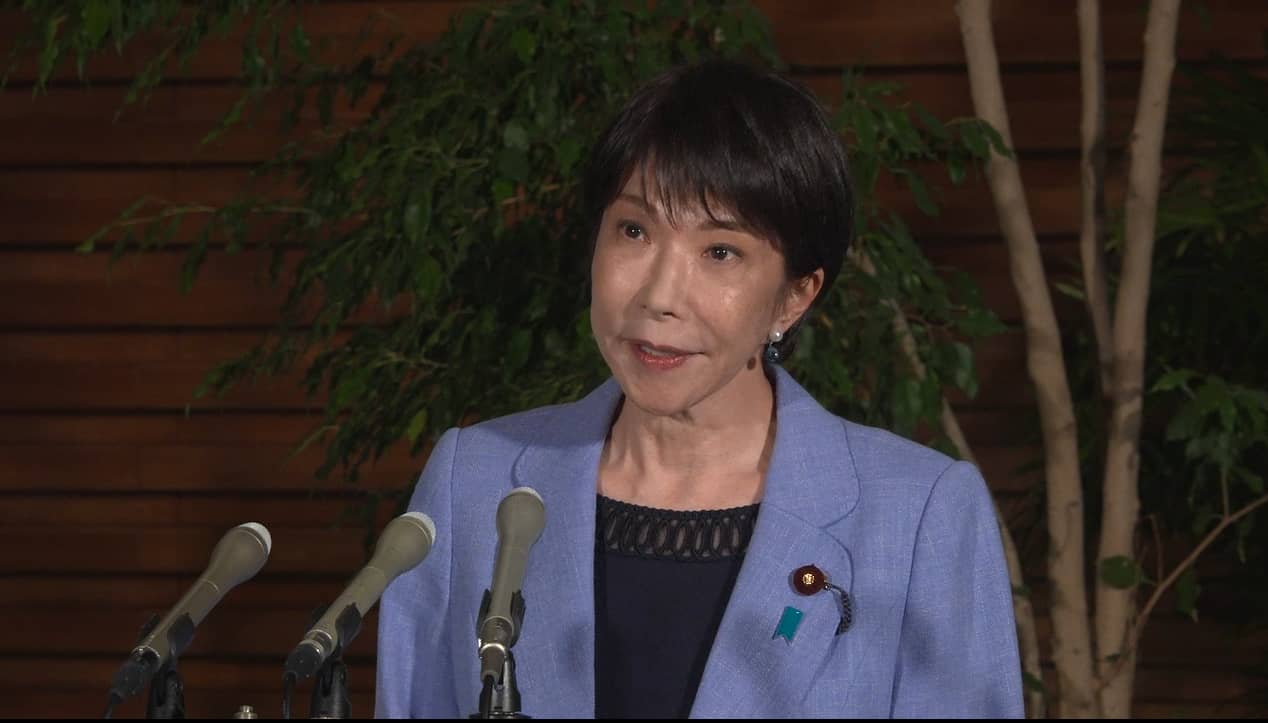
This explains Tokyo’s nervous reaction to the summit’s language. The Japan Research Institute interprets the meeting as an extension of the trade truce, but stresses the need to prepare for changes in U.S.-China negotiations rather than regard their stabilization as final. The Japan Research Institute advises taking advantage of the benefits of reduced tensions while avoiding policies based on the assumption that the United States will consistently defend Japan’s priorities. After speaking with Trump, the government of Sanae Takaichi sought publicly to refocus attention on the reliability of the Japan-U.S. alliance: the prime minister said that the two countries had “become allies who trust each other more than anyone else,” and confirmed their intention to jointly uphold the regional order. The Prime Minister’s Office Nevertheless, the very need for such emphasis reveals the scale of the concern.
The broader international view of the United States today cannot be reduced to anti-Americanism. Australia is not prepared to abandon AUKUS, Japan is not turning away from its alliance, and Brazil does not regard an economic break with America as beneficial. But in each of these countries, the United States is increasingly seen as a country against which one must hedge. Australians are hedging through ties with middle powers and efforts to limit their involvement in American wars; the Japanese through their own rearmament, economic security and wariness of U.S.-China deals; and Brazilians through relative autonomy and protection of the electoral process. The most unexpected conclusion they share is this: the problem for allies and partners is no longer whether America is strong enough, but whether it is possible to predict how exactly it will use its power tomorrow.