By September 27, 2026, discussion of America in South Africa, Israel and Germany had unexpectedly shifted away from the familiar question of U.S. power toward the price of that power for allies, trading partners and countries seeking to preserve their independence. The main issues are the U.S. and Israeli war with Iran, Washington’s threats to impose new tariffs on Europe, and increasingly intense pressure on Pretoria over its domestic and foreign policies. These issues are perceived differently in each of the three countries, but local commentators share a clear conclusion: under Donald Trump, American policy has become less predictable and therefore requires not loyalty, but safeguards against Washington.
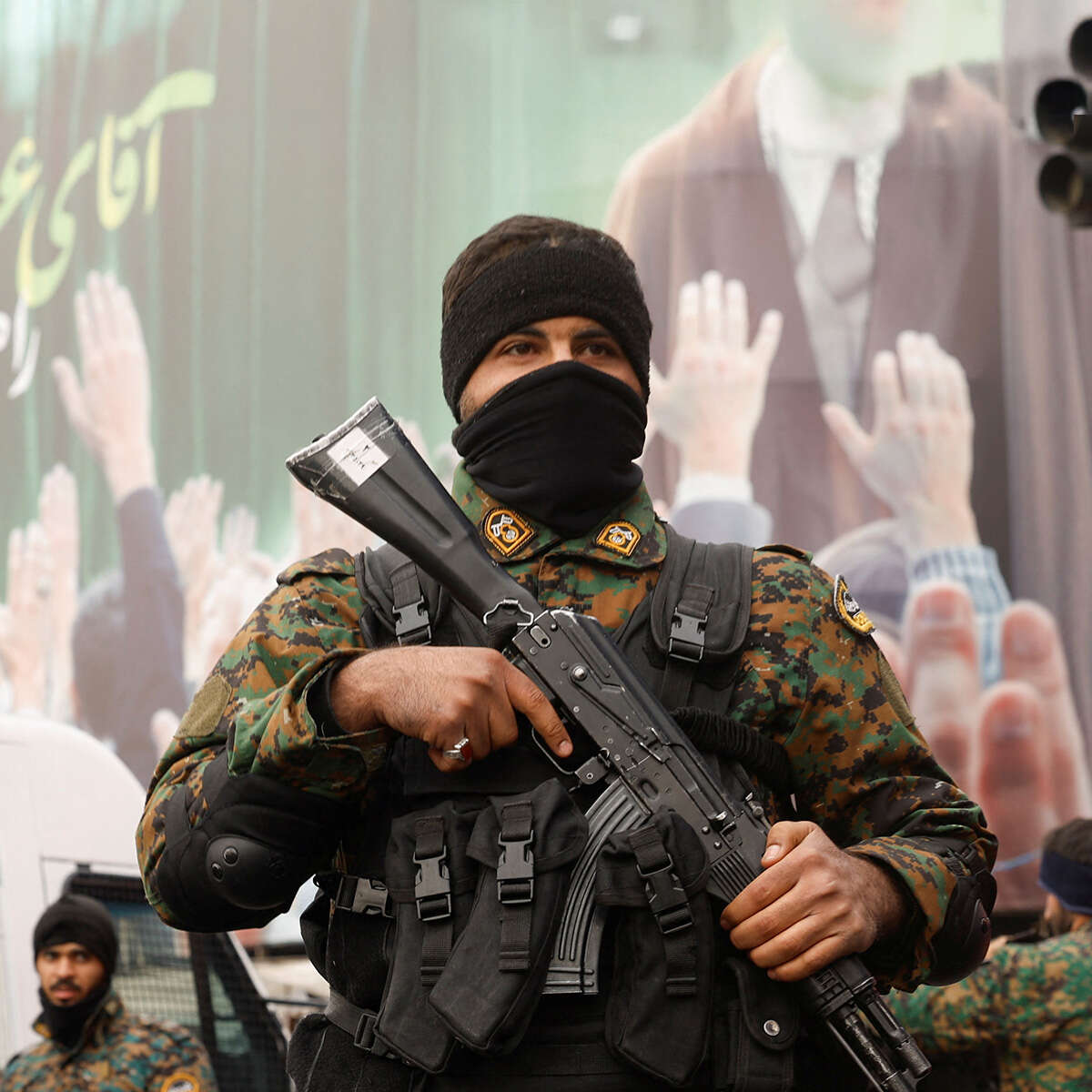
The most acute issue is Iran. In Israel, American involvement is still viewed primarily through the lens of security: the ability of the United States to deter Tehran, prevent it from acquiring nuclear weapons and maintain pressure in the Strait of Hormuz. The Israeli press is discussing in detail Trump’s rejection of Tehran’s proposed seven-day pause. According to Israel Hayom, the U.S. administration prefers to continue economically strangling Iran and has not ruled out a new broad campaign of strikes after the U.S. midterm elections in November. For a significant part of the Israeli discourse, this appears to confirm that Washington is unwilling to trade its strategic objective—the weakening of Iran’s military machine—for short-term de-escalation. (israelhayom.co.il)
But this is precisely where a more alarming view is gaining ground in Israel: American resolve is not the same as a sustainable strategy. Israeli analysts have long warned that Trump remains both Israel’s primary external resource and a politician whose decisions depend on his personal image, domestic political pressure and his desire to declare a conflict over on terms favorable to himself. An analysis published by Israel’s Institute for National Security Studies emphasized that Jerusalem must operate in a zone of uncertainty: inflict maximum damage on Iran’s capabilities while not losing access to American support. This formula is particularly important now, when the question is no longer whether the United States will support Israel, but how long and at what cost it is prepared to support its chosen course. (inss.org.il)
In Germany, the same war provokes an almost opposite reaction. Here, the American operation is perceived not as a distant display of force, but as a direct source of energy and industrial risk. On September 23, German government spokesman Stefan Kornelius explicitly linked the need for diplomacy to how “enormously significant” the conflict is for Germany in energy terms, and said that the war must end “as soon as possible.” Berlin is simultaneously calling for Iran to return to negotiations and for the blockade of the Strait of Hormuz to end—but the local debate is increasingly noting a contradiction: Germany is calling for diplomacy while remaining politically aligned with the U.S.-Israeli course. (auswaertiges-amt.de)
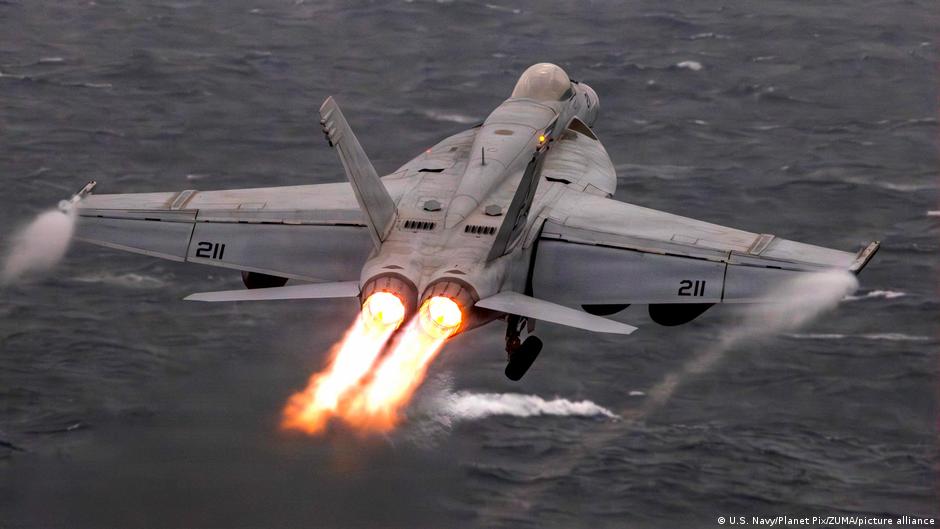
German media are developing this criticism even more sharply. A Deutsche Welle analysis describes the possible American model as “mowing the lawn”: the United States regularly destroys Iran’s recovering radars, missiles and maritime infrastructure without promising a final victory. The problem is that such a tactic could turn the conflict into an endless cycle of strikes and subsequent reconstruction. Experts warn that if Tehran concludes that constant American attacks are inevitable, the pursuit of nuclear weapons could become an even more attractive means of deterrence. For Germany, this is not an abstract military dilemma, but a scenario of constant pressure on oil markets, transportation and the European economy. (amp.dw.com)
South Africa views America through a different, but no less painful, experience: Washington’s attempt to turn differences over values into an instrument of direct political coercion. In Pretoria, the discussion is not about the Strait of Hormuz, but about U.S. visa restrictions against individuals whom the Trump administration considers responsible for racial discrimination, uncompensated land reform and policies toward minorities. The South African government rejects this interpretation, saying that measures to correct the legacy of apartheid are a constitutional duty of the state. International Relations Minister Ronald Lamola urged the country to prepare for the “worst-case scenario” because, in his words, the United States is demanding a de facto surrender of sovereignty on issues including black economic empowerment, land policy and foreign-policy direction. (mg.co.za)
The South African story produces perhaps the most unusual local conclusion: the dispute with America is increasingly interpreted not as an ordinary diplomatic conflict, but as a dispute over who has the right to define the meaning of democracy and equality after apartheid. Former U.S. ambassador Leo Brent Bozell III was even drawn into a controversy surrounding possible mediation by former President Thabo Mbeki. The South African side considered the very idea of imposing an external negotiator on the country humiliating; Clayson Monyela, head of public diplomacy, sarcastically suggested imagining the reverse situation—if Pretoria tried to “appoint” Barack Obama as a negotiator for the current American president. (mg.co.za)
Trump’s trade policy creates another common thread between Berlin and Pretoria. Germany sees it as a threat to Europe’s economic autonomy, while South Africa sees it as proof that access to the world’s largest market can be made conditional on political obedience. Germany was particularly irritated by Trump’s reaction to closer ties between the EU and Canada: he called possible Canadian associate membership in the European Union a “hostile act” and threatened high tariffs or restrictions on trade with Europe. For German audiences, this became more than another flare-up in the tariff conflict; it became an argument for a more independent Europe capable of building ties with Canada and other partners without American permission. (tagesschau.de)
Finally, another reaction to the United States is especially noticeable in Germany: interest in domestic American resistance to Trump. In an editorial comment, Der Spiegel journalist Britta Kollenbroich suggests that Germany should view American civil society not as a victim of an authoritarian shift, but as an example of the ability to defend institutions and rights. This is an important shift: America remains both a source of external instability and an internal example of democratic resistance to it. (spiegel.de)
Ultimately, Israel wants America not to waver in confronting Iran, but fears its political inconsistency; Germany wants the war stopped and its dependence on American economic dictates reduced; South Africa sees Washington’s pressure as an attempt to revise its post-apartheid social contract. The international reaction is not reducible to anti-Americanism. Rather, it reflects a more sober view of the United States: an alliance with Washington remains valuable, but fewer and fewer countries see it as a guarantee of predictability.