Discussions of the United States in Germany, France and Turkey as of September 21, 2026, are dominated not by individual statements from Donald Trump, but by a sense that American policy is simultaneously changing the rules of security, trade and domestic European politics. The focus is on the protracted US war with Iran and instability around the Strait of Hormuz, American tariff pressure on European exports, and Trump’s openly ideological sympathy for Europe’s right-wing populists. However, the overall conclusion differs in the three countries: Paris and Berlin are increasingly speaking of the need to protect European agency from American unpredictability; Ankara, by contrast, is trying to turn its personal channel with Trump into practical concessions, while remaining skeptical of Washington’s declarations.
The most difficult issue is Iran. The German reaction is particularly sharp: in a commentary by ARD correspondent Carsten Küntopp, titled “Trump Has Squandered American Power”, the war is presented not as a demonstration of strength, but as the self-weakening of the United States, whose consequences are already affecting Europe as well. From this perspective, Washington is losing on two fronts at once: it is diverting resources needed to deter other threats and forcing its allies to live with energy, logistical and military risks they did not choose. This marks an important shift in the German debate: the question is no longer whether the United States is being decisive enough, but whether it has become the main generator of strategic instability for its own partners. (tagesschau.de)
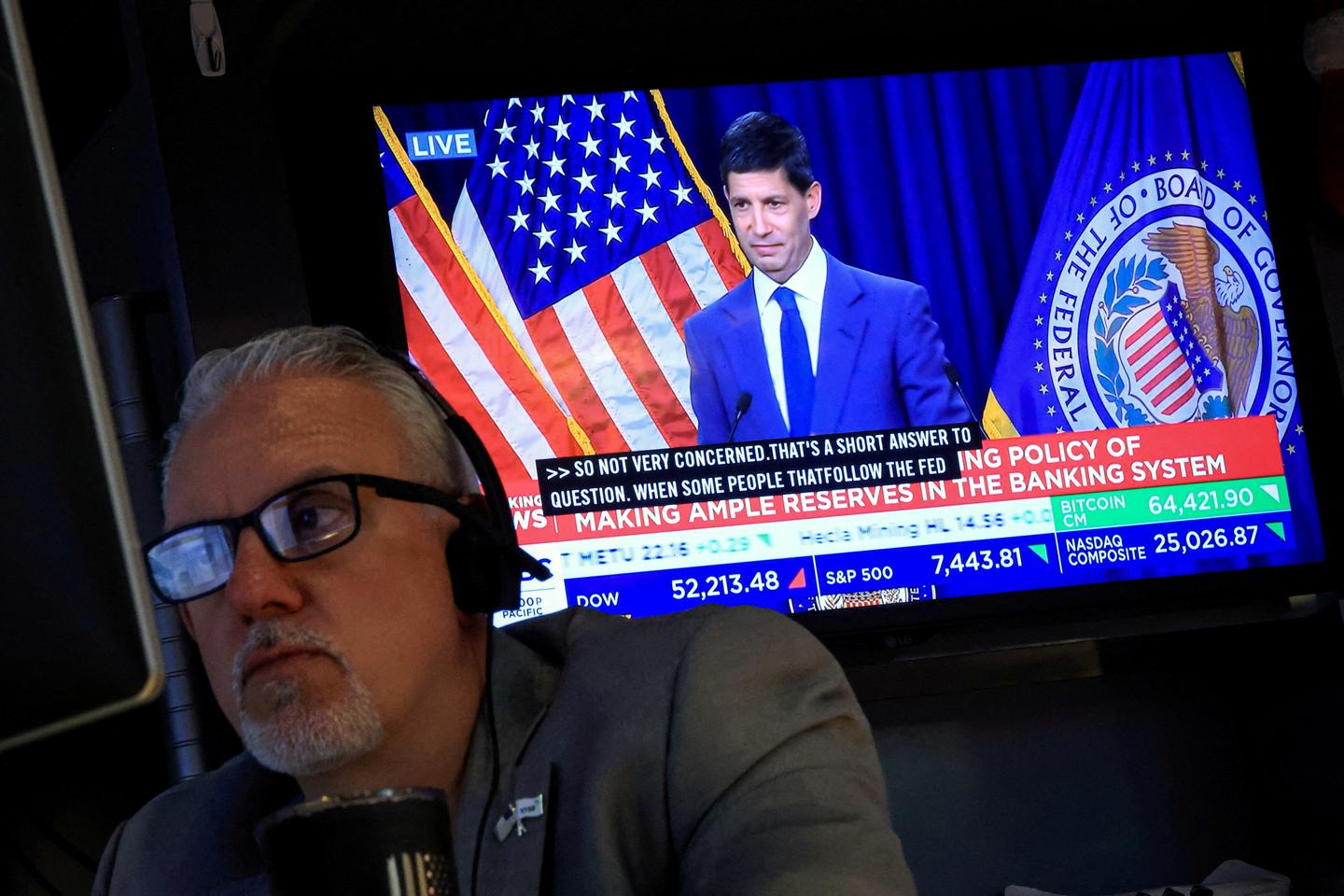
In France, the same war is viewed through the lens of America’s economic vulnerability and the danger of an internal political breakdown. Le Monde links the Federal Reserve’s rate hike on September 16—made despite Trump’s demands—to the inflationary effects of both the military campaign against Iran and the trade war. To French observers, this amounts to an almost mirror-image refutation of Trump’s promise: a president who came to power pledging to reduce the cost of living and avoid expensive foreign wars has become entangled in a conflict that is raising fuel prices, putting pressure on debt and turning the US economy into a source of external shock. (lemonde.fr)
The Turkish debate is less moralizing and considerably more practical. For Ankara, the war in Iran is not a distant crisis, but a security factor on its own borders, a threat to trade with Iran and a potential bargaining chip with the United States. Political scientist Necmettin Acar, in an Anadolu Ajansı analysis, emphasizes that Trump’s hard line grew out of a long-standing anti-Iran consensus among the American elite, but that this consensus is no longer as firmly rooted in American society. From Turkey, this is read as a sign that Washington’s current policy may be loud, but not necessarily sustainable. Ankara is therefore interested not in choosing a side in the US-Iran confrontation, but in avoiding the secondary economic and political consequences of the conflict. (aa.com.tr)
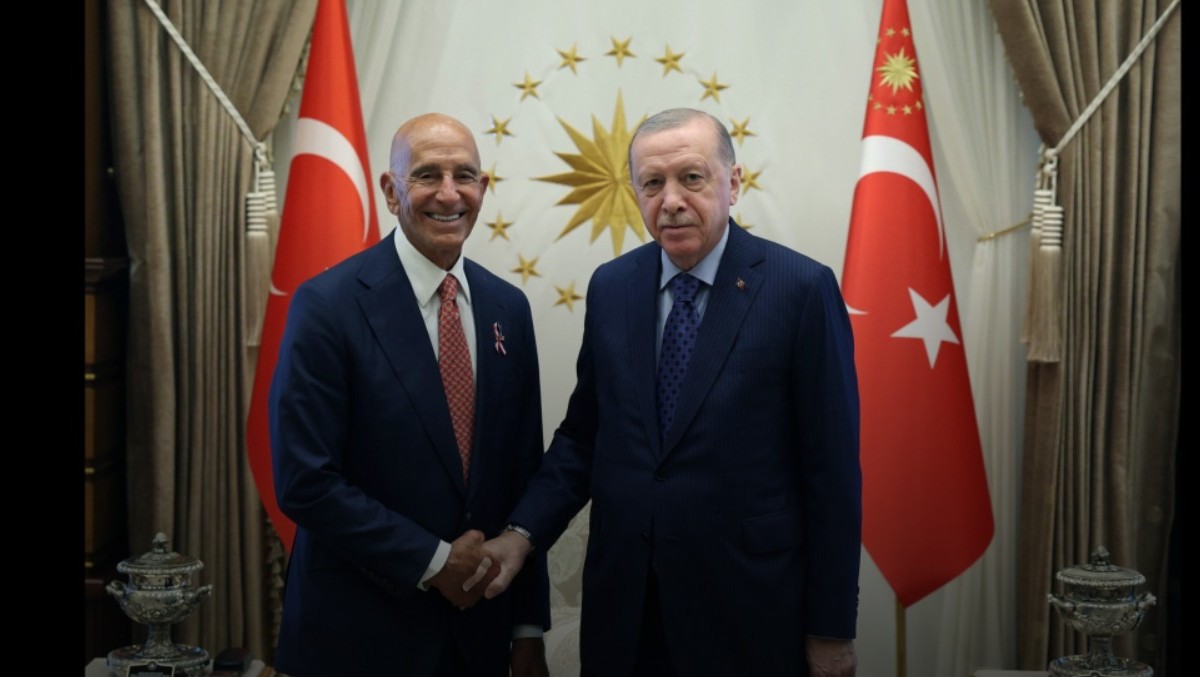
It is here that the most distinctive Turkish reaction to America becomes apparent: the closeness between Erdoğan and Trump is viewed as a useful but highly unreliable asset. In an article published today by DW Türkçe, the leaders’ expected meeting on the sidelines of the UN General Assembly is linked not to rhetoric about friendship, but to concrete unresolved dossiers—CAATSA sanctions, the F-35 program and the war in Iran; at the time of publication, neither the format nor the exact timing of the talks had been confirmed. In his column, journalist Murat Yetkin ironically questions US Ambassador Tom Barrack’s claim that relations between the two countries are supposedly at their best in history. Turkey’s conclusion is straightforward: warm personal relations may open a door, but they do not eliminate American sanctions mechanisms, disagreements over Syria or Washington’s dependence on its own Middle East strategy. (amp.dw.com)
The second major line of dispute concerns tariffs. In France, this is no longer an abstract debate about free trade, but an assessment of damage by sector. In a September study, the French Treasury states that after the alignment of US tariffs for different partners, the EU has found itself in a less favorable position than Canada, Mexico and the United Kingdom; competitive pressure is increasing most sharply on European machinery, chemicals, agriculture, steel, electronics and automobiles. French Customs separately notes that the additional Section 301 regime for imports from the EU has been in effect since July 24, while a number of metal-containing goods face much higher rates. (tresor.economie.gouv.fr)
In German and French perceptions, the tariffs have become proof that Trump’s economic nationalism cannot be separated from his geopolitics. The United States demands European solidarity on security issues, while simultaneously restructuring the market so that European manufacturers either move production to America or lose their competitiveness. As a result, what is growing is not so much old-style anti-Americanism as a demand for European protection against the United States: an independent industrial policy, less vulnerable supply chains and the ability to act without automatically relying on Washington. For France, this continues the familiar language of “strategic autonomy”; for Germany, which built its prosperity over many years on exports and the transatlantic market, it represents a far more painful rethinking.
Finally, the most politically explosive issue is the transfer of the Trumpist model to Europe. Following the AfD’s success in Saxony-Anhalt, Trump publicly welcomed the result, ending his message with the formula “MGGA”—an obvious imitation of MAGA. In a Deutschlandfunk analysis, historian Volker Depkat advises against reducing the AfD to a German version of Trumpism, but acknowledges a deep ideological and stylistic affinity: anti-elite mobilization, a hard-line migration agenda, distrust of institutional constraints and a politics of permanent conflict. For many Germans, American support for the AfD looks not like ordinary sympathy for an ideologically similar party, but like interference by an ally in Germany’s extremely sensitive history. (deutschlandfunk.de)
In France, the reaction to the same episode is more mixed. In a tribune for Le Monde, historian Frédéric Bozo warns that the breakthrough of the far right in Germany could strengthen existing French Euroskepticism, because Germany is ceasing to appear an unquestioned model of a stable European democracy. But France’s far-right political landscape reacted unevenly: Reconquête welcomed the AfD’s success, while Rassemblement National preferred cautious silence, aware of the toxicity of too close an association with the German party, particularly over the issue of “remigration.” (lemonde.fr)
An unexpected common picture thus emerges. Germany sees today’s America as a risk to its democracy and security; France sees it as a risk to European economic and political sovereignty; Turkey sees it as a risk that can be partially converted into deals, but cannot be taken on trust. Trump remains the most influential external actor for all three countries, but the image of the United States as a predictable guarantor of order is giving way to that of a power with which they must negotiate, hedge against and account for its impact on their own domestic politics.