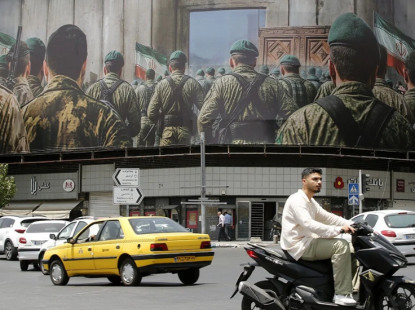
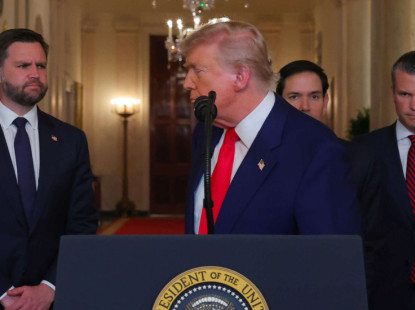
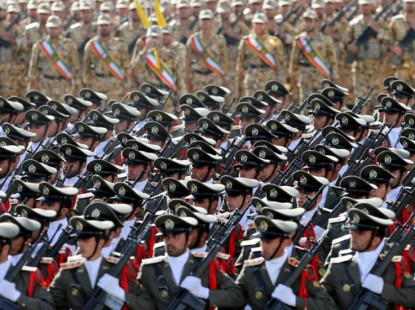
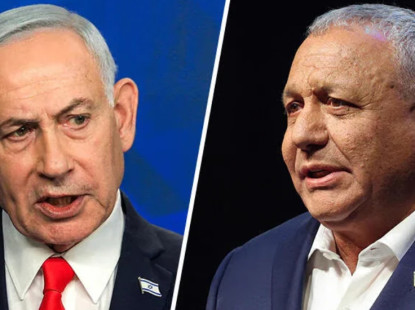
By November 17, 2026, three issues had converged in Indian, Japanese and Turkish discussions of the United States: uncertainty surrounding the U.S.-Iran confrontation, the fallout from the Democrats’ victory in the midterm congressional elections, and the growing cost of American decisions for trade, energy and currency markets. In all three countries, the United States is still seen as an indispensable player, but the tone has clearly shifted. The question is no longer so much what Washington can guarantee as what costs it might suddenly pass on to its partners.
The main concern shared across all three is Iran and the Strait of Hormuz. For India, this is first and foremost a question of inflation, the current account deficit and access to oil. A report by Indian agency CareEdge Ratings states plainly that the most immediate way the U.S. elections will affect India is through oil prices: with Brent at around $104 a barrel, developments in the Strait of Hormuz could quickly affect India’s macroeconomic stability. This reflects a distinctively Indian perspective: war is assessed not in abstract terms of alliance, but through import costs, the budget and household prices. (careratings.com)
The Japanese debate follows a similar logic, but goes further, focusing on the security of sea lanes and international law. In an analytical column by Japan’s Maritime Self-Defense Force, the U.S.-Iran clash is treated not as a distant regional crisis, but as a test of the rules governing navigation by neutral states. The authors stress that a blockade also affects third-country vessels and is lawful only if five conditions are met: it must be officially declared, enforceable in practice, applied impartially, subject to humanitarian restrictions, and not prevent access to the coasts of neutral countries. In Japan’s view, the central concern is that the conflict zone could turn shared sea lanes into an arena where economic dependence on oil becomes a strategic vulnerability. (mod.go.jp)
Turkish analysts view the same issue both as a crisis on their doorstep and as a diplomatic opening. Çağatay Balcı, a researcher at the Center for Iranian Studies (İRAM), writes that U.S.-Iran talks have proceeded in “waves” since April: the prospect of a deal and the likelihood of a new military clash have remained almost equally plausible. His analysis is notable for its lack of illusions about a swift resolution: Washington accuses Tehran of maximalism, but diplomacy itself remains hostage to incompatible opening demands. (iramcenter.org) Turkey’s distinctive position is that Ankara is interested not only in lower oil prices, but also in preserving its role as a mediator between the United States, Iran and the Gulf states. This accounts for the ambivalent tone: U.S. pressure on Iran is criticized as a source of regional instability, while the negotiations are welcomed because they enhance Turkey’s standing as an independent center of diplomacy.
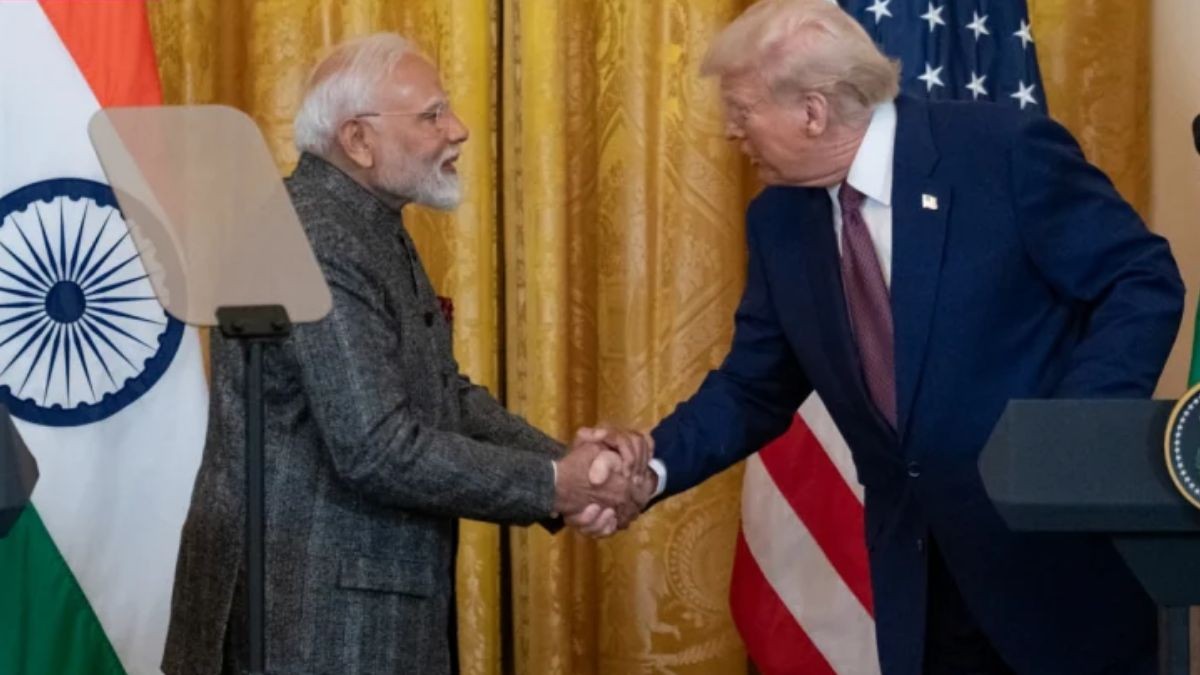
The second issue shared across all three is the U.S. midterm election on November 3, after which the Democrats gained majorities in both chambers of Congress. In New Delhi, the result did not prompt euphoria. Indian strategist C. Raja Mohan, writing in Jansatta, warns against the familiar assumption that one American party is automatically “good” for India and the other “bad.” His recommendation is straightforward: India should accelerate talks with the Trump administration while also rebuilding ties with Congress, universities, corporations, think tanks and new groups within the Democratic Party. As he points out, a lasting partnership cannot be built on personal chemistry between leaders. (jansatta.com)
This matters especially to India because of sanctions on buyers of Russian oil, tariffs and visa rules for skilled workers. CareEdge does not expect tariffs to ease automatically: many restrictions are imposed by presidential authority rather than Congress. Moreover, the risk of secondary measures against major buyers of Russian oil remains even under a Democratic majority, since a tough stance toward Moscow has bipartisan support. (careratings.com) India’s response is therefore pragmatic: it welcomes Congress’s ability to constrain Trump, but does not take that as a guarantee that trade protectionism or pressure over Russian oil will end.
In Japan, the same result is viewed with even greater caution. Philip Bushman, a researcher at the Japan Institute of International Affairs, notes that the change in the balance of power in Congress will strengthen oversight, impose budgetary constraints and increase scrutiny of appointments, but will not necessarily deprive the president of the ability to pursue his agenda. His report emphasizes that the Trump administration has already made extensive use of executive orders, emergency powers and administrative tools. Congress may therefore make it harder to pass new legislation, but will not automatically halt the White House’s approach to tariffs, immigration or foreign policy. (jiia.or.jp) For Tokyo, this means the U.S. alliance must be complemented by greater economic and energy autonomy of its own, rather than resting on the assumption that a shift in Washington’s domestic political balance will automatically make American policy more predictable.
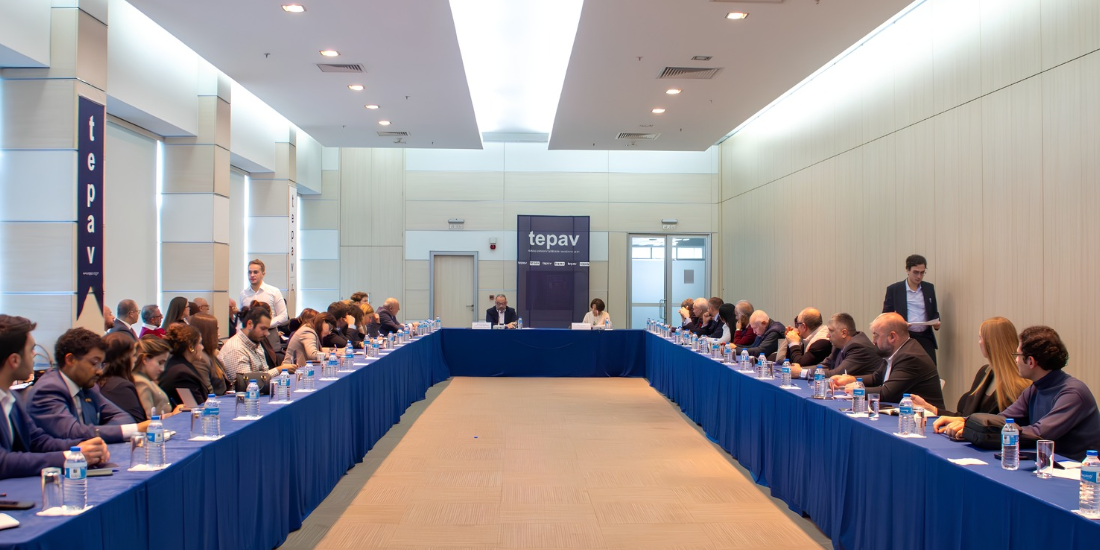
Turkey’s expert community has reached a similar conclusion, though it applies it to different issues: NATO, defense procurement, Syria and bilateral political dialogue. At a meeting hosted by the Turkish think tank TEPAV, former ambassador Tahsin Timur Söylemez and other participants stressed that the new Congress would likely strengthen oversight of the executive branch, but Turkey should not reduce its relations with America to leader-to-leader contacts. TEPAV’s account of the discussion presents this as a need to supplement high-level dialogue with institutional ties to both parties. (tepav.org.tr) This is an important corrective to the widespread belief that weakening Trump would automatically improve Ankara’s position: a more assertive Congress could not only restrain the White House’s military adventurism, but also raise tougher questions about sanctions, arms and human rights.
Finally, the economy of American unpredictability has emerged as a theme running through all three debates. For India, the concerns are tariffs, pharmaceutical and smartphone exports, skilled workers’ access to the U.S. labor market, and oil. For Japan, they are fuel, sea lanes and the need to safeguard Asian supply chains. For Turkey, they are oil, the dollar, U.S. yields and the cost of external financing. In İşbank’s daily market report, U.S. inflation, the dollar exchange rate and bond yields are explicitly linked to Turkey’s markets, the lira and the country’s credit risks. (ekonomi.isbank.com.tr)
The most unexpected shared conclusion of these local debates is that India, Japan and Turkey do not expect U.S. domestic politics to provide a simple answer to their problems. A Democratic Congress may constrain the president, but it does not cancel his powers; talks with Iran may reduce risks, but do not create a lasting peace; and partnership with the United States remains necessary, but is no longer seen as sufficient insurance. American power still sets the boundaries of international politics. Yet in Delhi, Tokyo and Ankara, there is a growing desire not merely to operate within those boundaries, but to develop their own safeguards against sudden changes in them.