In Turkey, Saudi Arabia and Germany, discussions of the United States in recent days have focused not simply on Donald Trump as an individual, but on a more troubling question: Is America still capable of serving as an organizing force in international politics—or has it itself become the main source of unpredictability? The immediate trigger was a new phase in the U.S.-Iran confrontation. After the 60-day period for the framework agreement with Tehran expired, Washington moved to threaten Iran with unprecedented economic isolation and secondary sanctions against countries and companies that continue to do business with it. On August 24, U.S. Treasury Secretary Scott Bessent explicitly called the policy an “economic exclusion operation.” (aa.com.tr)
The broadest reaction in all three countries is distrust toward the idea that military pressure and sanctions will bring the crisis closer to resolution. But the reasons for this distrust differ. In the Turkish debate, America is seen primarily as a force capable of drawing the neighboring region into war and striking Turkey itself. In Saudi Arabia, it is viewed as an indispensable but increasingly unpredictable security partner whose decisions directly threaten oil infrastructure, the investment climate and economic-diversification projects. In Germany, it is regarded as an ally whose policy is becoming both necessary and strategically unreliable.
For Turkish commentators, the main issue is not an abstract dispute over Iran’s nuclear program, but the danger of “managed escalation” that could cease to be manageable at any moment. In an analysis by Anadolu Ajansı, Marmara University lecturer Bilgehan Alagöz describes the current phase as a combination of limited military operations, sanctions and diplomatic pressure: in his assessment, neither the United States nor Iran seeks total war, but both are prepared to raise the stakes in pursuit of their own political objectives. (aa.com.tr) For Ankara, what is particularly dangerous about this formula is that regional states become not observers, but the territory through which the conflict passes: bases, airspace, trade routes, migration flows and the Kurdish issue immediately become elements of someone else’s war.
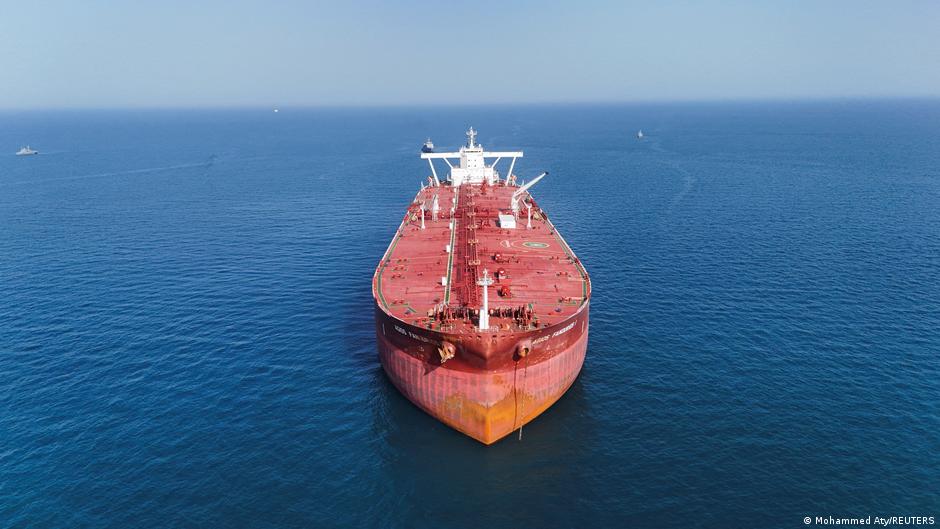
This explains why the Turkish discussion of the United States is far more practical and alarming than rhetoric about the “geopolitics of great powers.” In a DW Türkçe article, the conflict over the Strait of Hormuz is examined through the lenses of inflation, the current-account deficit and oil prices: for energy-importing Turkey, a prolonged blockade of the sea route would directly worsen its economic outlook. (amp.dw.com) Meanwhile, the Turkish expert debate, reflected in another DW analysis, has embraced the formula of “active neutrality”: staying out of the war, strengthening its own security and at the same time maintaining a role as mediator. (amp.dw.com) This is an important local distinction: in the Turkish view, success does not mean an American victory over Iran, but preventing an American move that would force Turkey to choose between alliance commitments, border security and relations with its neighbors.
In Saudi Arabia, the same American policy is viewed through the prism of the Gulf’s vulnerability. The question here is not whether Washington is acting forcefully enough against Iran, but whether it is making the region pay for a strategy developed outside it. Discussing the U.S.-Iran crisis, Al Riyadh outlines three possible horizons for the Arabian Peninsula—peace, war or nuclear proliferation—and stresses the need for a regional strategic balance capable of preventing chaos. (a5.alriyadh.com) From this perspective, the United States is not a guarantor of stability that follows automatically, but a participant in the crisis whose signals must constantly be double-checked.
The Saudi press has placed particular emphasis on the idea that the conflict has not only a military but also an economic dimension. In the Saudi newspaper Al Watan, the U.S. war with Iran is presented as part of a broader regional realignment in which American support for Israel is intensifying concerns among Arab societies. The paper also notes a shift within America itself: an increasingly visible share of American public opinion is asking whether Washington has become entangled in a war that is difficult to end. (alwatan.com.sa) For Riyadh, this domestic American debate has practical significance: if the White House can change course under pressure from its own political environment, Saudi security cannot be built solely on the expectation of consistency from Washington.
This leads to a more unexpected Saudi conclusion: Gulf stability must be created not only through an American military presence, but also through regional diplomacy, economic interdependence and alternative channels of mediation. Saudi assessments recall China’s role in restoring Saudi-Iranian relations in 2023—not as a replacement for the United States in every respect, but as proof that Washington’s monopoly on negotiations in the region is no longer taken for granted. (alwatan.com.sa) This is not anti-Americanism in its purest form; rather, it is a demand for insurance against American impulsiveness.
The German reaction to the same events raises the question of the quality of American leadership most sharply. German commentators do not dispute that Iran is capable of destabilizing the Middle East and threatening shipping, but they much more often link the current impasse to the White House’s inconsistency. In an interview with Tagesschau, Sascha Lohmann, a political scientist at the German Institute for International and Security Affairs, says bluntly: “Trump’s policy is characterized by a lack of strategy.” The immediate occasion was Washington’s proposal for a fee on passage through the Strait of Hormuz, which the president quickly abandoned. (tagesschau.de)
This criticism intensified after the August statements about an “economic D-Day” for Iran. Tagesschau notes that Germany sees the new threat of economic warfare not as evidence of a carefully planned escalation ladder, but as an attempt to compensate for the lack of progress both militarily and diplomatically. (tagesschau.de) In the German reading, Trump’s problem is not merely his toughness: sanctions, threats of strikes, announcements of negotiations and subsequent denials create a situation in which the adversary tests U.S. resolve while allies cannot plan their own course.
This is where all three national debates converge. Turkish observers fear that the United States will expand the war to Turkey’s borders and undermine economic stability. Saudi observers fear that Washington’s struggle with Iran will turn the Gulf states into hostages to attacks on energy infrastructure and maritime communications. German observers fear that American unpredictability is depriving the Western alliance of its strategic foundation. In other words, in all three countries the United States is no longer discussed solely as a superpower capable of using force. It is being discussed as a state whose decisions create secondary risks for its partners.
The most substantive local conclusion sounds paradoxical: neither Ankara, nor Riyadh, nor Berlin is proposing simply to “move away from America.” Turkey seeks to preserve room for mediation, Saudi Arabia aims to combine its partnership with the United States with regional balance, and Germany wants to maintain the transatlantic alliance while also strengthening European autonomy. But in every case, the same new norm is emerging: cooperation with the United States no longer means automatic trust in the United States. The Hormuz crisis has become a test for these countries not only of America’s power, but also of its ability to turn power into order—and it is precisely this ability that is increasingly being called into question.