By November 24, 2026, discussion of the United States in India, Australia and Germany has increasingly moved beyond the familiar question of whether Washington will “remain the leader of the West.” A different question is heard far more often: how can countries protect their own interests when White House decisions shape oil prices, the prospects for war, trade terms and the resilience of alliances all at once—but those decisions themselves seem ad hoc and reversible? Three issues stand out in local debate: the unfinished US war with Iran, the fallout from the Republicans’ November midterm defeat, and concern over Donald Trump’s diplomacy with China and Russia.
The most tangible source of concern is Iran. For Indian commentators, this is not an abstract debate about US Middle East strategy, but a question of energy supplies, shipping costs, fertilizers, maritime routes and the safety of Indian workers in the Persian Gulf. In an editorial, The New Indian Express called the war a conflict “no one has won”: US pressure has failed to deliver a verifiable resolution of the nuclear issue, while uncertainty over the Strait of Hormuz continues to hurt importing countries. For New Delhi, the priority is not only to secure freedom of navigation, but also to avoid simultaneously severing ties with Washington, Tehran and Israel. (newindianexpress.com)
India’s response is therefore more pragmatic than ideological. Navtej Sarna, a former Indian ambassador to the United States and Israel, noted in an analysis for Indo-Pacific Affairs that a “costly and unnecessary war of escalation,” along with inflationary tariffs, had been punished by American voters. But his main point is not that a shift in the balance of power in Congress will automatically make the US easier for India to deal with: any constraint on Trump’s “aggression and adventurism” matters above all because it restores at least a little predictability to the world. (indopacificaffairs.lk) This is a characteristically Indian perspective: not betting on American goodwill, but seeking more room to manoeuvre among the US, Russia, China and the Gulf states.
In Australia, the same war is viewed through the cost of instability, but the political emphasis is different. Canberra remains closely tied to the US militarily, but no longer assumes that an alliance automatically means shared interests. An ABC analysis notes that Prime Minister Anthony Albanese is trying to keep Trump onside while urging him to de-escalate in Iran, yet has little visible influence over Washington’s course. Australian concern here is almost institutional: the country is becoming more closely tied to the US through AUKUS and the Quad [a four-way grouping of the US, India, Japan and Australia], but key decisions about war and peace are made without it. (abc.net.au)
The German press voices the same mistrust even more forcefully. BR24 called the current lull around Iran not the end of the war, but merely a pause for breath. The logic German observers see is simple and alarming: after the Republicans’ defeat, Trump spoke more cautiously not necessarily because he had chosen diplomacy, but because a new escalation would once again drive up petrol and oil prices. (br.de) For Germany, already dealing with the fallout from energy and military upheavals in Europe, this means that US domestic politics can now directly alter the foreign-policy risks facing its allies.
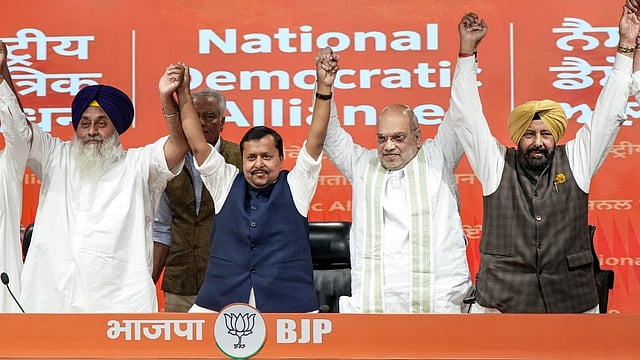
The midterm elections have produced both hope and scepticism in all three countries. In India, former diplomat Rajiv Bhatia warns that a Democratic victory “will not necessarily make Trump more accommodating” toward other countries; New Delhi is more likely to wait and see until the fate of a trade agreement and tariff threats becomes clearer. In the same ThePrint article, Bernd Lange, chair of the European Parliament’s trade committee, puts Europe’s concern even more starkly: a weakened president may become not more conciliatory, but “even more aggressive and unpredictable.” (theprint.in)
This conclusion matters more than the election result itself. Indians see Trump’s weakened position as a chance to bargain harder over tariffs and Russian oil. Australians see an opportunity for middle powers not to submit automatically to the logic of two superpowers. Germans fear that a president who has lost support at home may seek quick foreign-policy wins. The prevailing mood, then, is not simply one of waiting for America to “return to normal”: local analysts believe that the White House’s domestic weakness could both restrain it and provoke it.
The differences became especially clear after Trump’s meeting with Xi Jinping and Vladimir Putin in Shenzhen. In Germany, the episode is viewed primarily through the lens of Ukraine and NATO. Jana Puglierin, an expert at the European Council on Foreign Relations, warned in an interview with Tagesschau that talk of a comprehensive “European security architecture” sounds threatening to Europeans: Putin and Trump could try to arrange something like a “new Yalta”—that is, to determine spheres of influence over the heads of those directly affected. (tagesschau.de) Süddeutsche Zeitung commentator Hubert Wetzel takes this concern to its extreme, arguing that a single photograph and two words from Trump about his friendship with Putin are enough to undermine trust in NATO. (sueddeutsche.de)
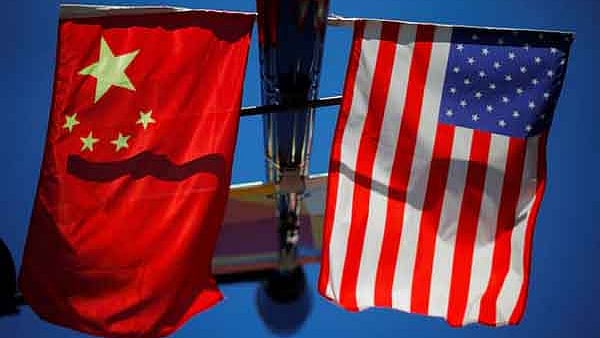
Australia’s interpretation of the same summit is less closely tied to Ukraine, but no less wary. On November 24, Foreign Minister Penny Wong told the Senate that the US and China are competing “in every domain” and are increasingly disregarding the guardrails that once kept competition from turning into conflict. Her response is not to break with Washington, but to strengthen diplomacy among middle powers: Australia, India, Indonesia, Japan, South Korea and partners beyond the region. What is particularly notable in ABC’s report on Wong’s remarks is that she frames the issue not as a choice between America and China, but as protecting national sovereignty from both centres of power. (abc.net.au)
For India, this may be the most interesting element of the whole picture. New Delhi is part of the Quad and sees value in a US counterweight to China, but does not want to become an appendage of American containment strategy. The Australian idea of a coalition of middle powers therefore resonates naturally in India: it allows cooperation with the US on maritime security and technology without giving up independent trade, ties with Russia or channels of communication with Iran. Germany, by contrast, views the same trend from a different vantage point: it needs not the freedom to balance between blocs, but assurances that the US will not discuss European security as a deal with Moscow and Beijing.
The overall picture in these countries is rather bleak, but not fatalistic. In India, America is increasingly seen as a necessary but difficult partner whose inconsistency makes strategic autonomy essential. In Australia, it is viewed as an indispensable ally on which the country must nevertheless avoid relying without political safeguards. In Germany, it is seen as a power whose sudden diplomatic gestures can shake the very foundations of postwar European security. The same thought is taking hold in Delhi, Canberra and Berlin: the problem is no longer whether the United States is powerful enough, but how predictably it uses its power.