In the Israeli, South Korean and Chinese press, discussion of America in recent days has focused not on a single statement by Donald Trump, but on a broader question: can Washington’s policy of coercion—military threats, a naval blockade, secondary sanctions and pressure on allies—actually restore order, or does it merely push crises into a new, more costly and unpredictable phase? Iran and the Strait of Hormuz have been at the center of the debate, but two other issues are visible behind them: the price of the American alliance and Washington’s readiness to turn access to the dollar system into an instrument of global discipline. (hani.co.kr)
In Israel, the reaction to the American line is mixed. On the one hand, U.S. firmness toward Iran is seen as a necessary continuation of the broader campaign to contain Tehran. On the other, concern is growing that Trump could trade Israel’s long-term interests for a short-term deal to reopen the Strait of Hormuz and lower oil prices. In a commentary for Walla, Professor Uzi Rabi describes a possible “Trump victory” as a package consisting of freedom of navigation, calmer energy markets and a regional political realignment. But his key warning is that an agreement giving Iran economic and political space before its main instruments of power are dismantled would become not a mechanism of containment, but a mechanism for restoring Tehran. (news.walla.co.il)
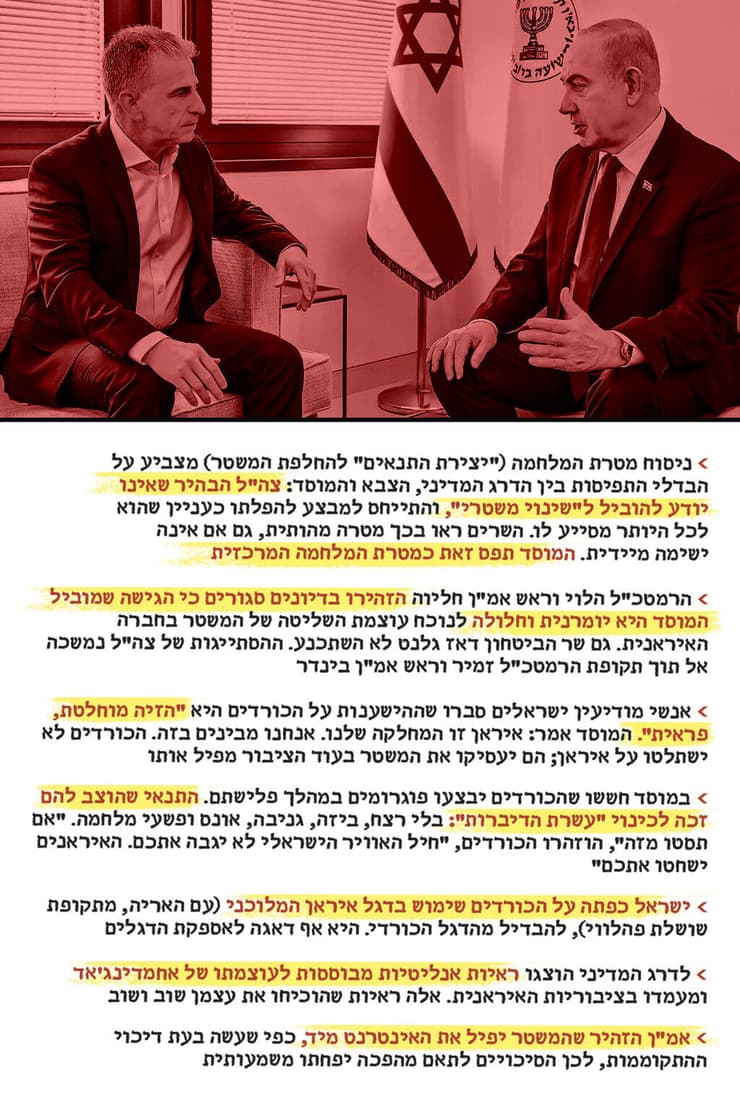
Israeli commentators are particularly troubled by the inconsistency of U.S. tactics. Trump alternately speaks of being ready for negotiations and rules them out; he threatens to declare Hormuz “American territory,” then relies on pressure without launching a new major operation. In a Ynet analysis, this is interpreted not simply as presidential eccentricity, but as a symptom of failed coordination: according to the author, Israel does not understand the American position on Hormuz, even though the strait remains Iran’s main strategic asset in the war. For Israeli audiences, this represents an important and rather unexpected shift: the danger is now seen not only in an Iranian missile or nuclear infrastructure, but also in the possibility that the United States could independently determine the terms for ending the conflict, leaving Israel to deal with the consequences. (ynet.co.il)
In South Korea, the same American policy is viewed primarily through the lens of the export economy’s vulnerability and dependence on energy from the Middle East. The Korean debate is less focused on whether Washington will defeat Iran and more on why an ally is demanding political and possibly practical support from Seoul in a conflict whose consequences would be particularly severe for Korea. After Trump publicly expressed displeasure at Seoul’s refusal to participate in the operation around Hormuz, the Korean press noted that President Lee Jae-myung had effectively found himself caught between his alliance obligations to the United States and the national interest of avoiding becoming a party to the war. The Chosun Ilbo quoted Trump as saying he was “unhappy” with Korea’s refusal to help, while also emphasizing the country’s dependence on supplies passing through the strait. (chosun.com)
In South Korea, however, the dispute extends far beyond oil. The Hankyoreh calls the American campaign against Iran an “operation of isolation” and warns that secondary sanctions could affect Korean companies and financial institutions even if their direct ties to Iran are limited. In the Korean reading, the problem is that the United States demands solidarity while leaving its allies to bear the commercial, energy and diplomatic risks. This also explains fears of South Korea being “sidelined” on another sensitive issue—possible Washington–Pyongyang contacts: if the White House is capable of conducting Middle East diplomacy without regard for its partners, why would it not do the same on the Korean Peninsula? (hani.co.kr)
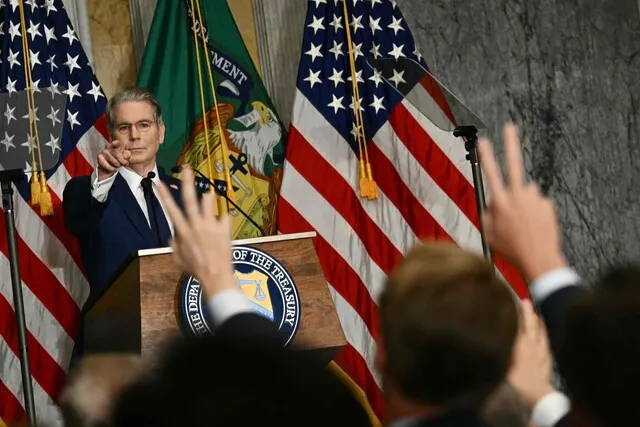
China’s reaction most sharply rejects the very principle of American pressure. Chinese media and experts describe the new U.S. measures not as sanctions in the narrow sense, but as an attempt to create an “economic Cold War” against Iran and force third countries to choose between trade with Tehran and access to the American financial system. In an analysis by The Paper, Sun Degang, director of the Middle East Studies Center at Fudan University, says that after the 60-day negotiating window ends, the United States seeks to “wear Iran down” economically, while Iran is becoming increasingly prepared for an active military response to force Washington to make concessions. His formula—“a post-American era in the Persian Gulf”—is telling: the Chinese debate sees the crisis as evidence not of American omnipotence, but of the limits of U.S. power. (thepaper.cn)
At the same time, the Chinese view is not limited to ideological condemnation of Washington. A Pengpai article emphasizes the practical weakness of the American strategy: Iran has long adapted to sanctions, and an attempt to completely cut off its trade and financial channels could push Tehran toward a new round of military escalation and even more aggressive use of Hormuz. Beijing also sees U.S. calls to join the restrictions as a direct test of its own sovereignty in foreign trade. China’s official position is expressed diplomatically—Beijing calls for a political settlement and says that “economic war” and “maximum pressure” only intensify the conflict—but its meaning is clear: China does not want the United States to turn the sanctions regime against Iran into a universal mechanism for controlling Chinese companies and energy supplies. (zaobao.com.sg)
A striking common picture therefore emerges. Israel fears that America will conclude an overly narrow deal and underestimate Iran’s remaining potential; South Korea fears that its alliance with the United States will become a one-sided distribution of risks; and China fears that American financial pressure will be extended to everyone who refuses to accept Washington’s foreign-policy objectives. All three reactions converge on one point: the United States remains the central force in the crisis, but is no longer automatically perceived as its neutral arbiter or guarantor of a stable order. To some, it is too inclined toward compromise; to others, too inclined toward coercion. It is precisely this contradiction that makes American policy the main focus of international anxiety today.