In mid-August 2026, the United States is simultaneously seen in Israel, Russia and Brazil as a force capable of radically changing the rules—military, diplomatic and trade-related. But a shared diagnosis does not mean a shared conclusion. In Israel, the main fear is that Washington may fail to push its pressure on Iran through to an outcome vital to Israeli security. In Russia, American involvement in the war with Iran is read as a sign of the United States’ strategic overstretch and as a possible opening for a new discussion on Ukraine. In Brazil, meanwhile, American policy is viewed primarily through its cost: oil-market volatility, the threat of inflation and unilateral tariffs on Brazilian exports. (ynet.co.il)
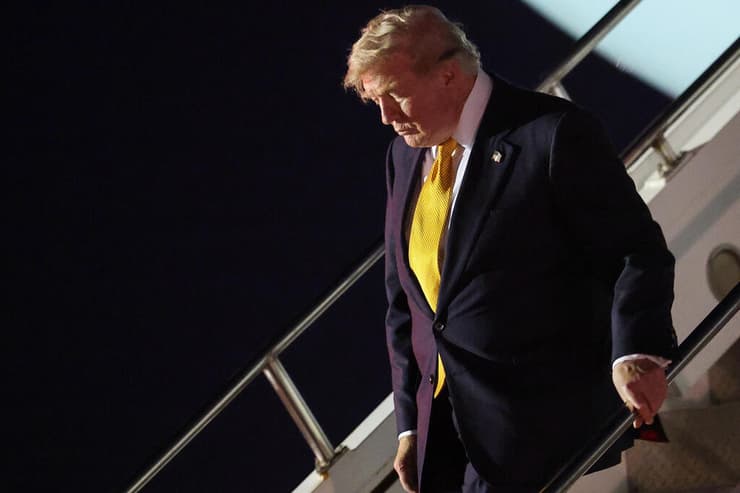
The most prominent common theme is the US war with Iran and the uncertainty surrounding the Strait of Hormuz. Israeli commentators are less concerned with the legality of the American strikes than with doubts about their political consistency. In an analysis by Ynet, Itamar Eichner describes the US precision attacks as a form of negotiation “by means of bombs”: according to this logic, Trump wants to punish Tehran, bring it back to the negotiating table and demonstrate resolve to his domestic audience, but does not want a new full-scale war. For Israel, this is an alarming scenario: limited force may keep the crisis in motion without eliminating either Iran’s missile capabilities or Tehran’s regional levers of pressure. (ynet.co.il)
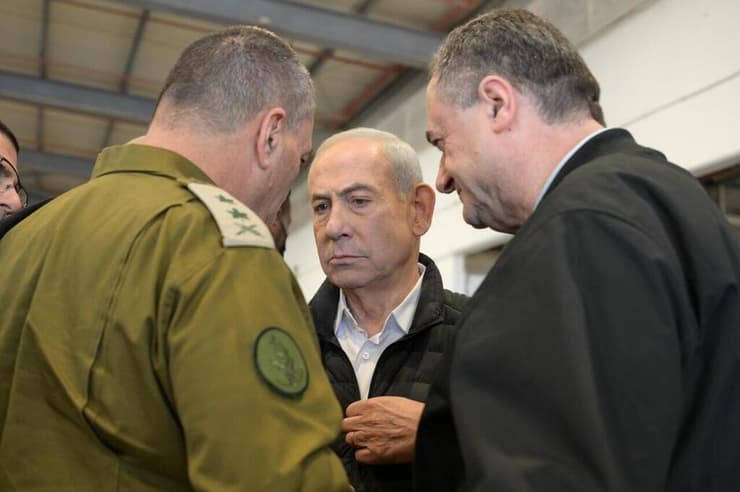
This concern is also evident in Israel’s broader perception of its American ally. A June poll by the Institute for National Security Studies in Tel Aviv found that only 12% of respondents considered Trump “very committed” to protecting Israel’s interests; 66% said the recent US-Iran memorandum was bad for the country. Particularly telling here is not merely the decline in trust, but the acknowledgment of dependence: 58% of those surveyed believed that, in the event of a disagreement with Washington, Israel could act independently only to a limited extent or not at all. (inss.org.il)
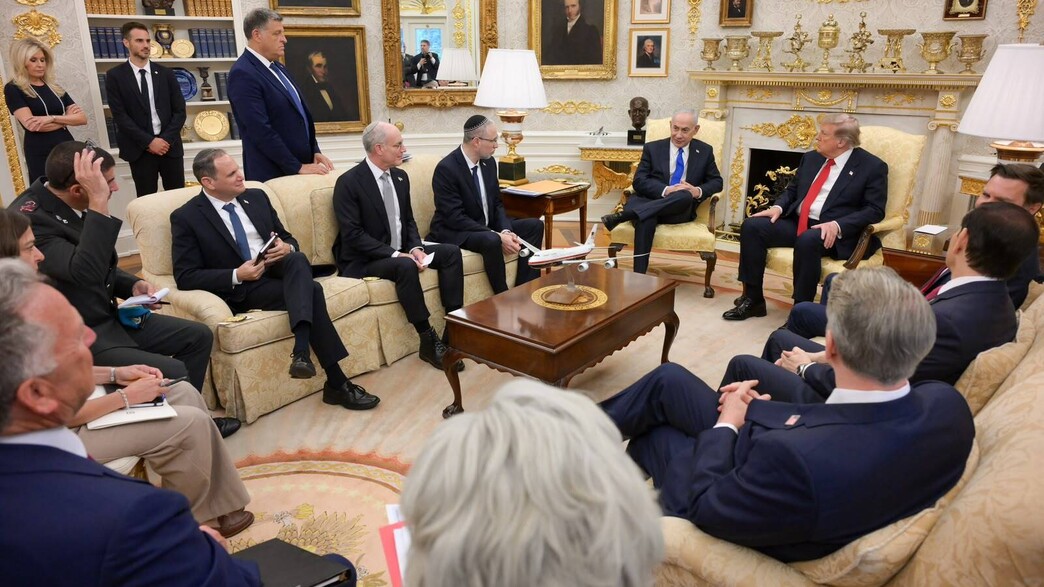
That is why criticism of Trump in Israel’s debate does not amount to a call to distance the country from the United States. On the contrary, the author of an N12 column sets out an almost pragmatic doctrine: Washington should be addressed not in the language of emotional closeness, but in the language of American interests. This view is especially important because it reflects a shift within Israel’s elite: the problem is seen not only as an unpredictable president, but also as the weakening of public support for Israel within the United States itself. American power remains indispensable to Israel, but it is no longer perceived as automatically reliable. (mobile.mako.co.il)
The Russian public interpretation of the same crisis is almost a mirror image. Here, American restraint does not raise concerns for an ally; instead, it is presented as evidence that Washington is unable to achieve a strategic victory by force. In a commentary by RIA Novosti, the formula “neither war nor peace” takes hold: negotiations may be extended for short periods, Iran may remain ready to retaliate, and the United States may limit itself to threats and occasional strikes. From this perspective, Hormuz is not merely a sea route, but proof that even the superior military power of the United States cannot painlessly impose a new regional order. (ria.ru)
This leads to Russia’s interest in a second issue: the possible return of the United States to mediation over Ukraine. Marco Rubio’s statement that Washington would assess the possibility of resuming talks between Moscow and Kyiv in the coming weeks is perceived in Russia as a signal that, after being distracted by Iran, the White House is seeking a foreign-policy result in another war. (interfax.ru) In an article by Gazeta.Ru, this expectation takes the form of hope for a direct Russia-US-Ukraine format, combined with skepticism about European participation, which Russian commentators often view as that of a party interested in continuing maximum pressure on Moscow. (gazeta.ru)
Here, an important difference from the Israeli reaction becomes apparent. Israel sees America’s inclination toward a deal as a risk of a premature compromise with Iran; Russian discourse, by contrast, sees in that same inclination an opportunity to establish a negotiating format in which the United States would be not the arbiter of the Western bloc, but an independent power willing to bargain. Yet both countries agree on one point: Trump’s policies are perceived not as a system of lasting commitments, but as a series of deals dependent on current military pressure, energy prices and the US domestic political calendar. (ynet.co.il)
Brazil’s reaction to America is the most material—and therefore perhaps the most unexpected. For Brasília, the war in the Persian Gulf is not distant geopolitics, but a factor in domestic economic stability. In a document from Brazil’s Ministry of Development, Industry, Foreign Trade and Services, the US-Iran escalation is directly linked to threats to shipping, higher freight and insurance costs, and a jump in Brent crude above $78 a barrel. For an oil-exporting country, expensive oil simultaneously generates revenue and heightens the risk of inflation, which is why Brazilian authorities do not romanticize the crisis as a favorable market situation. (gov.br)
Political scientist Oswaldo Deon, speaking in an interview with the parliamentary television channel of the state of Minas Gerais, drew a broader conclusion: “the post-World War II architecture has come to an end.” In the Brazilian context, this is not merely a criticism of the war. It describes a world in which the United States uses force in the Middle East, employs tariffs as a political instrument in relations with partners and at the same time demands security cooperation from countries in the Western Hemisphere. That is why in Brazil the war with Iran and the trade dispute with Washington are increasingly being connected in a single discussion about sovereignty. (almg.gov.br)
The tariff issue is even more acute in Brazil than the Iranian one. According to Brazil’s Ministry of Development, Industry, Foreign Trade and Services, additional US tariffs of 25% and 12.5% affected 23.1% of Brazilian exports; during the first half of the year, shipments to the United States fell by 13% compared with the same period in 2025. Lula’s government responded by requesting consultations at the WTO, calling the measures unjustified and incompatible with US obligations under the rules of global trade. (gov.br)
This produces the main common conclusion from the Israeli, Russian and Brazilian debates. America remains the central power—military, financial and diplomatic—but its partners and rivals are increasingly planning their policies not around American guarantees, but around American unpredictability. Israel is trying to persuade Washington not to replace pressure on Iran with an overly lenient deal. Russia hopes that US fatigue with foreign wars will bring Washington back to bilateral diplomacy over Ukraine. Brazil is seeking to limit the damage from American policy through the WTO, market diversification and protection of its domestic economy. The three countries speak in different languages, but all their reactions share one idea: today, the United States is not only a source of decisions, but also an independent source of global instability.