In recent days, the United States has found itself at the center of a simultaneous military, economic and legal crisis—and in China, Israel and Japan, it is being discussed very differently than in Washington. The main irritant is the Trump administration’s August 24 decision to expand the regime of “economic isolation” against Iran: aviation, crypto assets, gold, shipping and technology were placed under restrictions, while around 60 Iran-linked individuals, companies and vessels were added to sanctions lists. But local commentators see a larger question behind this episode: Can Washington use military force, the dollar infrastructure and its alliance commitments without ultimately shifting the costs onto its partners and the global economy? (thepaper.cn)
China’s response is the harshest and most ideologically coherent. The debate in Beijing is not limited to defending Iran as a trading partner; it is centered on opposition to America’s extraterritorial sanctions power. In an editorial published by Global Times on August 22, the new campaign was described as an attempt to force third countries to choose between the United States and Iran according to the formula “whoever is not with us is against us.” The authors insist that accepting this logic would mean international trade would cease to be interaction among sovereign states and become a system in which every movement of goods requires Washington’s political approval. In an editorial reprinted by The Paper, this is stated in particularly direct terms: China “will not play along with the United States” on the Iran issue. (thepaper.cn)
It is notable that Chinese analysts do not portray the sanctions as a sign of American confidence. On the contrary, they interpret them as an acknowledgment of a military and diplomatic deadlock. Sun Degang, a professor and director of Fudan University’s Center for Middle Eastern Studies, says in an analysis for The Paper that the roles are changing: the United States is seeking to wear Iran down through an “economic cold war,” while Tehran is attempting to use military pressure to force Washington to make concessions more quickly. In this interpretation, the American strategy does not resolve the problem of the Strait of Hormuz; instead, it turns the strait into an instrument of prolonged bargaining, while the risk of a new direct confrontation continues to grow. (thepaper.cn)
A particularly important Chinese detail, easy to miss when reading American news, is that the debate in the PRC links Iran not only to the Middle East but also to the future of China’s financial sovereignty. U.S. Treasury Secretary Scott Bessent’s threat to disconnect entities assisting Iran from the dollar system is seen as a test of Washington’s readiness to use the dollar not merely as a means of pressuring an adversary, but as a disciplinary mechanism against any banks and countries that refuse to follow the American line. Chinese authors are therefore debating not so much whether Iran will hold out as how far the United States is prepared to go in punishing those conducting what Beijing considers legitimate foreign trade. (thepaper.cn)
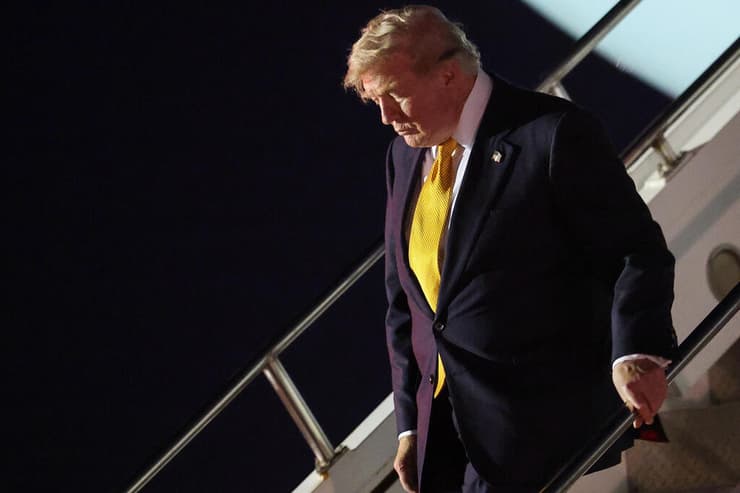
In Israel, the picture is more complicated: there is far less doubt that Iran must be contained, but considerably more concern about the quality and predictability of American leadership. Israeli commentator Itamar Eichner, in an analysis for Ynet, describes the strikes and sanctions not as a consistent strategy for victory, but as a form of negotiation “with bombs.” In his view, Trump does not want another full-scale war, but is simultaneously seeking to punish Tehran, force it into substantive negotiations, demonstrate toughness to American voters and prevent a surge in oil prices ahead of the midterm elections. This is a distinctly Israeli view of the United States: the White House is seen not as an unconditional strategic anchor, but as an actor whose decisions increasingly depend on domestic political circumstances. (ynet.co.il)
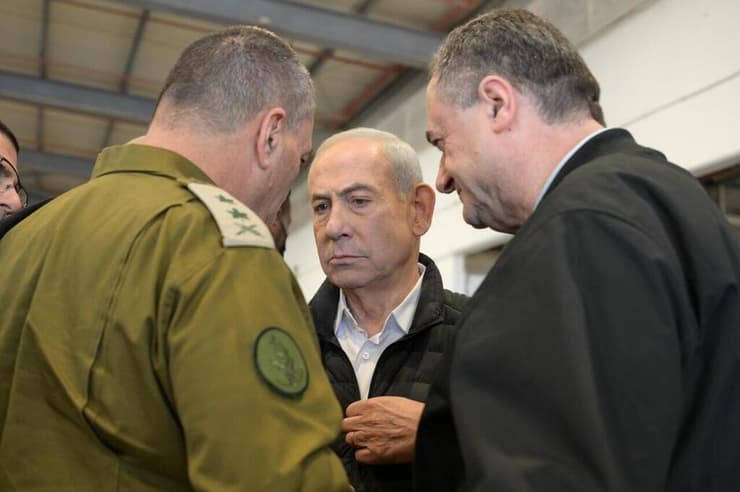
There is also a more painful line of criticism in the Israeli press. Military correspondent Ron Ben-Yishai warns in a Ynet column that Israel risks becoming a “U.S. appendage”: Trump alternately threatens Iran and backs down, while Israel is becoming less and less able to influence its own strategic destiny. This is an important difference from the Chinese narrative. Beijing accuses America of hegemony; Israel fears not an excess of American power, but its inconsistency. For a country that relies on American military and diplomatic support, the U.S. president’s abrupt reversals represent not an abstract geopolitical risk but the threat of losing independent control over war and peace. (ynet.co.il)
At the same time, Israel’s business press views the American sanctions more pragmatically than political commentators do. Globes notes that the new campaign will be judged not by the volume of official statements, but by whether Iran’s financial and trade channels can actually be shut down—primarily through the Persian Gulf states. The publication also draws attention to the cost of the campaign: Brent crude is already trading above $90 a barrel amid concerns about supplies and the Strait of Hormuz. The Israeli perspective is therefore dual: pressure on Iran is considered necessary, but Israelis are not convinced that American economic escalation will force Tehran to capitulate rather than encourage it to launch new strikes and cause even greater regional destabilization. (globes.co.il)
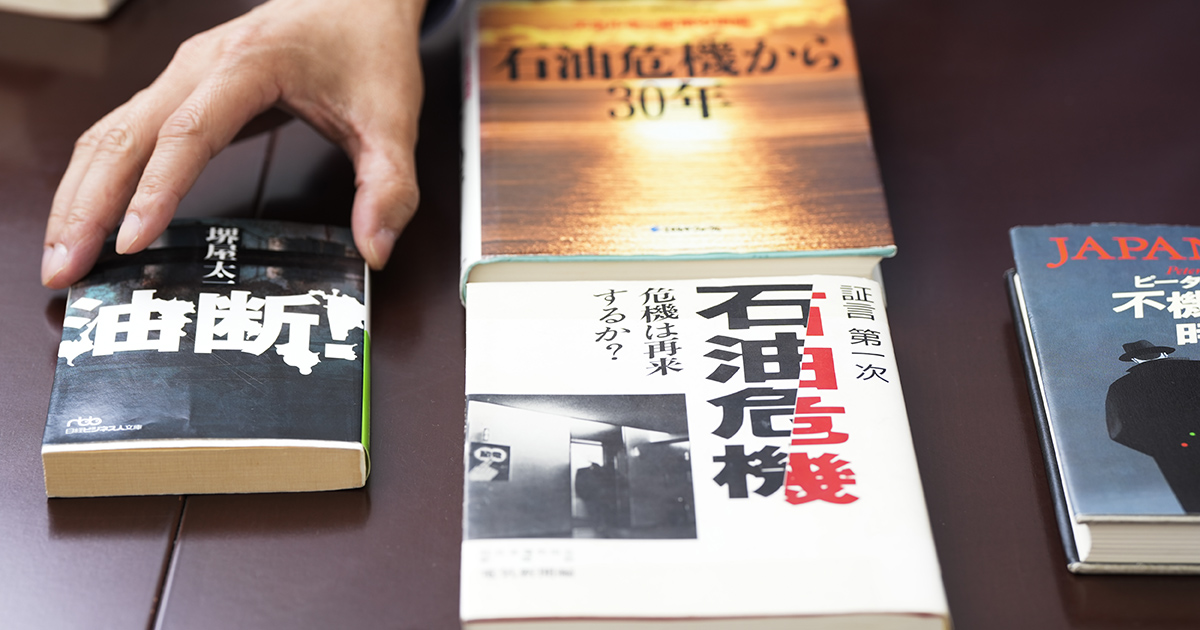
Japan sees the same events primarily through the vulnerability of its own economy and through the crisis of international law. In Japan’s energy debate, the Strait of Hormuz ceased long ago to be a distant point in the Middle East: Japan imports around 90% of its oil from Middle Eastern countries. The U.S.-Iran conflict is therefore viewed through the historical memory of the oil shocks of the 1970s. In an article for Nikkei Book Plus, experts directly raise the question of a “new oil crisis”: even after the June ceasefire, the mutual attacks continued, while disruptions to shipping in the Strait of Hormuz could turn a regional conflict into an inflationary and industrial shock for Japan. (bookplus.nikkei.com)
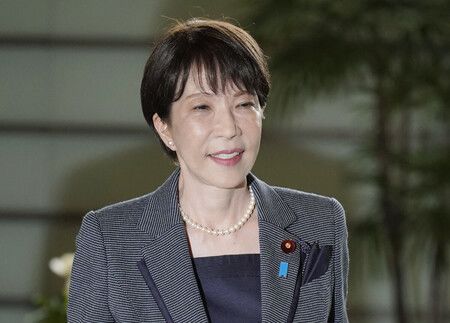
But what stirred Japanese public reaction even more strongly was not Iran, but the American sanctions against Tomoko Akane, president of the International Criminal Court—a Japanese national who heads the ICC. After the U.S. decision of August 18, Tokyo limited itself to the formula “deep regret.” Formally, this is a diplomatic protest, but within Japan it was considered too cautious. According to nippon.com, lawmakers demanded that the sanctions be revoked and that Akane be “protected”; the government of Prime Minister Sanae Takaichi was criticized for its “weak diplomacy.” (nippon.com)
Akane herself responded not with a political slogan but in the language of principles. In a comment quoted by TBS Cross Dig, she said that the key thing was “not to let this become the beginning of the end of the international rule of law.” This is especially sensitive for the Japanese: the country is one of the ICC’s key financial supporters, and American sanctions are now targeting a citizen of an allied country who works at an institution that Japan publicly supports. (newsdig.tbs.co.jp)
This is where the Chinese and Japanese reactions converge, albeit for different reasons. China criticizes America’s ability to unilaterally punish foreign banks, companies and states for their ties with Iran. Japan is encountering the same problem in another form: the American sanctions apparatus can target a Japanese lawyer and an international court that Tokyo regards as part of the rules-based global order. The difference is that China turns this into an argument against American hegemony, while the Japanese debate asks whether the alliance with the United States has a limit beyond which Tokyo must defend its own institutions, citizens and legal obligations.
Ultimately, China, Israel and Japan are now arguing about different aspects of American policy, but they share one diagnosis: Washington is increasingly acting through coercion—sanction-based, military or financial—without offering a convincing mechanism for resolving the crisis. China sees a threat to sovereign trade; Israel sees the risk of dependence on an impulsive ally; Japan sees a threat to energy security and international law. The most unexpected common feature of these reactions is that the issue is no longer whether the United States is strong enough to impose its will. The question being voiced ever more loudly in Beijing, Tel Aviv and Tokyo is a different one: Who will pay for American power if it fails to produce a stable order?