By mid-August 2026, the United States had simultaneously become India’s, China’s and Ukraine’s main external partner, main source of uncertainty, and the center of several interconnected crises. Local discussions are no longer focused so much on the abstract concept of “American leadership” as on practical questions: Is it possible to build a trade strategy around tariffs that Washington changes through legal maneuvering? Could the US war with Iran turn global energy into another instrument of pressure? And will the White House continue to pay political attention to the war in Ukraine?
The broadest reaction in all three countries is distrust of America’s predictability. Yet this distrust means something entirely different in each case. In India, it does not cancel out the desire to reach an agreement with Washington. In China, it serves as an argument against America’s right to set rules for everyone else. In Ukraine, it is seen as a direct existential risk, but also as an opportunity to prove the country’s strategic usefulness to the United States.
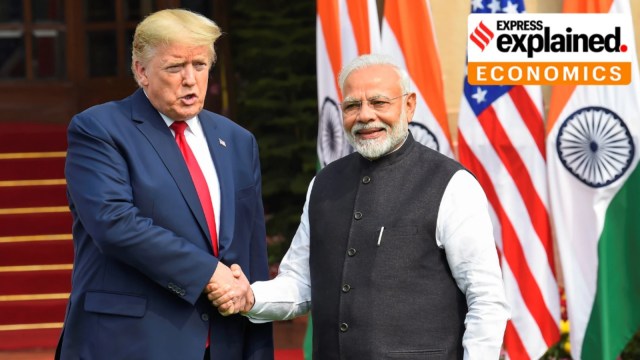
The Indian debate shows particularly clearly that even a relatively mild tariff outcome is not perceived as normalization. After the United States imposed a 10 percent tariff as part of Section 301 investigations, New Delhi found itself in the same group as Canada, the United Kingdom, Mexico and several Asian countries, while China faced a rate of 12.5 percent. Formally, this looks like a concession to India. But the key conclusion in an Indian Express analysis is different: American trade policy is increasingly linking market access to demands that go far beyond trade itself.
This is precisely what Indian commentators call the “carrot-and-stick” problem. An Indian Express column emphasizes that an agreement with the United States could require India to make concessions on its agricultural market, energy and trade sovereignty, while refusing a deal could bring fresh pressure on the rupee, investment and exports. For Indian commentators, the key question is no longer whether America serves as a counterweight to China—which remains important—but whether a partnership with the United States can exist without a constant price being demanded for political loyalty.
Significantly, the editorial position of Business Standard does not call for a retaliatory trade war. The newspaper advocates continuing negotiations while acknowledging that tariffs are a central instrument of American policy. This is a pragmatic but non-capitulationist line: India sees the United States as a market and a technological and defense partner, but seeks to prevent the relationship from becoming one of dependency. Harsh Pant, a researcher at the Observer Research Foundation, describes the new phase as a combination of strategic rapprochement and anxiety over American “transactionalism”—that is, the White House’s tendency to turn every form of interdependence into an object of bargaining—in his paper on a new lexicon for Indian-American relations.
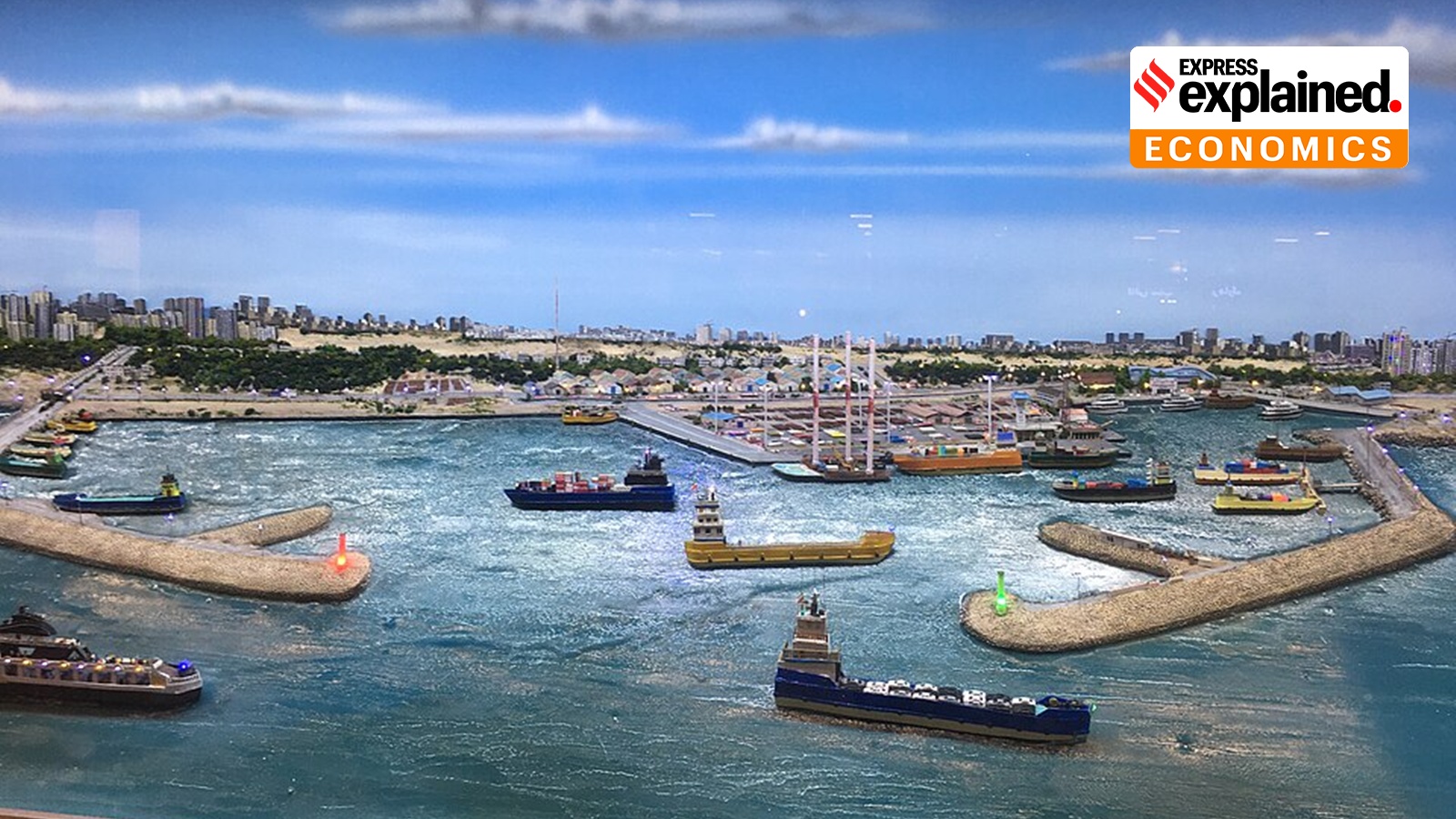
The war involving Iran makes this anxiety even more concrete. For India, this is not only geopolitics, but also the price of oil, the security of maritime routes and the future of the port of Chabahar, which it needs as an alternative route to Afghanistan and Central Asia. A temporary US authorization allowing Iranian oil sales until August 21 created an opportunity for Indian refineries, but Indian Express notes that they are in no hurry to resume purchases: the danger of another policy reversal in Washington is too great. From the Indian perspective, America creates a shortage and then offers a temporary exemption from the rules it created itself.
China’s reaction to the same picture is much harsher and more ideological. Beijing interprets American tariffs and sanctions threats not as a dispute over “fair trade,” but as an attempt to preserve the United States’ ability to unilaterally decide whom other countries are allowed to trade with. Chinese Foreign Ministry spokesman Lin Jian said that China “opposes all forms of unilateral tariff measures,” and that tariff and trade wars serve the interests of no party, Pengpai reported. This formula has both a defensive meaning—the protection of Chinese exports—and an offensive one: Beijing seeks to present itself as the party favoring more stable and universal trade rules.
The US attempt to tie relations with China to purchases of Russian and Iranian oil is especially irritating. Chinese diplomats insist that sanctions without a UN Security Council mandate are illegal; this position was reported by Global Times. But the local debate is not limited to diplomatic statements. Chinese commentators use American tariff policy as evidence that the global economy cannot safely depend on a single jurisdiction. In a Global Times editorial about a new escalation in the US-Iran conflict, the war is described as a threat capable of dragging the world into prolonged “attrition”: a strike on the Strait of Hormuz would mean higher energy prices, disrupted supply chains and weaker global growth.
This reveals an interesting contrast with India. New Delhi is seeking a comparative advantage over China within the American tariff system—even if that advantage is temporary. China, by contrast, is trying to show that the system itself is a symptom of the decline of the old model of globalization. India wants a better place within the American system; China is publicly challenging the United States’ right to serve as that system’s architect. Yet both countries arrive at the same practical conclusion: markets, energy routes and financial risks must be diversified.
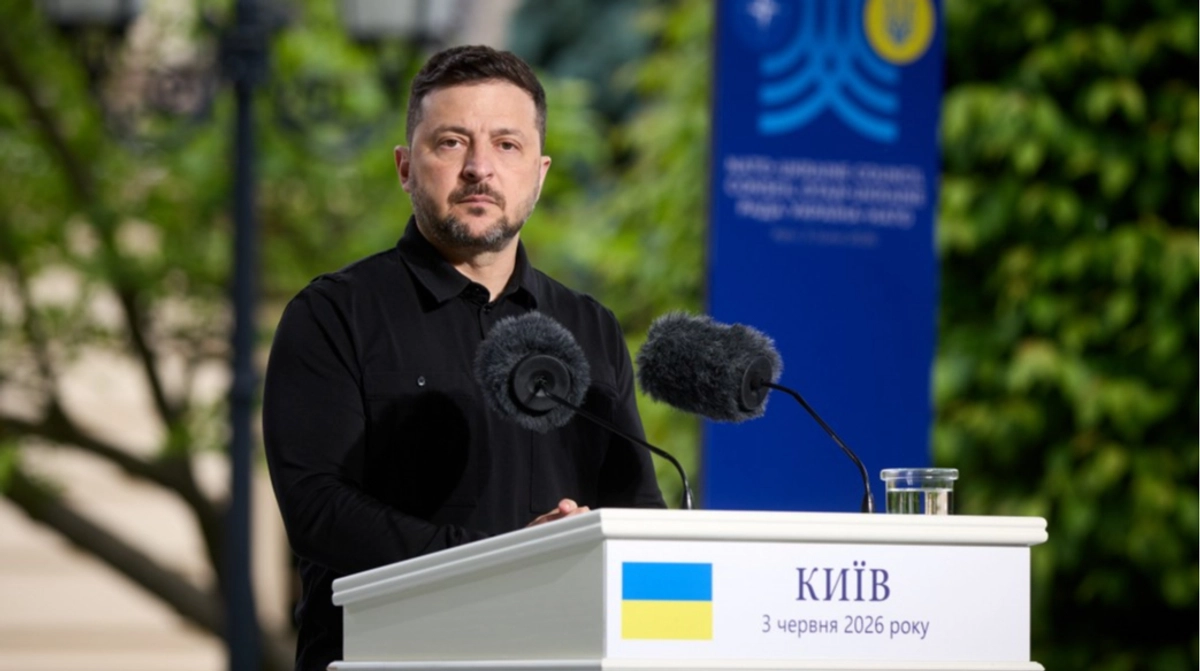
Ukraine views the United States through a different, far more tragic lens. For Kyiv, the American operation against Iran is not a distant Middle Eastern story, but competition for ammunition, air defense, diplomatic attention and the White House’s political will. Volodymyr Zelensky put it bluntly: “Iran is the number one issue for the United States of America, and then comes Ukraine,” Ukrainska Pravda reported. In the Ukrainian perception, this is not merely resentment at being relegated to second place, but a lesson that security cannot be built solely around waiting for an American decision.
At the same time, Kyiv is trying to turn the war in the Middle East into an argument for a closer alliance with Washington. Zelensky said that Russia was conducting satellite surveillance of US military facilities in Persian Gulf countries and passing the materials to Iran; the Ukrainian side sees this as confirmation of a single military-technological network involving Russia, Iran and North Korea. Ukrainska Pravda reported on this in detail. Ukraine’s message to the United States is as follows: the war in Ukraine is not a European sideshow; it is already connected to the security of American bases, shipping and the confrontation with Iran.
This is also why Kyiv is placing particular emphasis on drones. Ukraine is presenting itself not only as a recipient of aid, but also as a provider of combat experience and technology. In an LB.ua analysis, Ukrainian expertise in unmanned systems is described as a resource capable of making the country a “contributor to European security,” rather than a permanent recipient. This is perhaps the most substantive and unexpected local response to American unpredictability: if Washington’s guarantee becomes conditional, Ukraine wants to become too valuable to be pushed into the background.
Thus, the overall picture cannot be reduced to the familiar formula of “declining American influence.” The United States remains powerful enough to reshape India’s trade flows, determine the risks facing China’s energy sector and influence the course of Ukraine’s war against Russia. But it is precisely the scale of this power that makes its instability the central international issue. India is learning to bargain with America without illusions; China is countering it with the language of sovereignty and multilateral norms; and Ukraine is seeking to prove that its war is inseparable from American interests. This is the new international view of Washington: not a rejection of America, but preparation for a world in which even an alliance with it is no longer considered sufficient insurance.