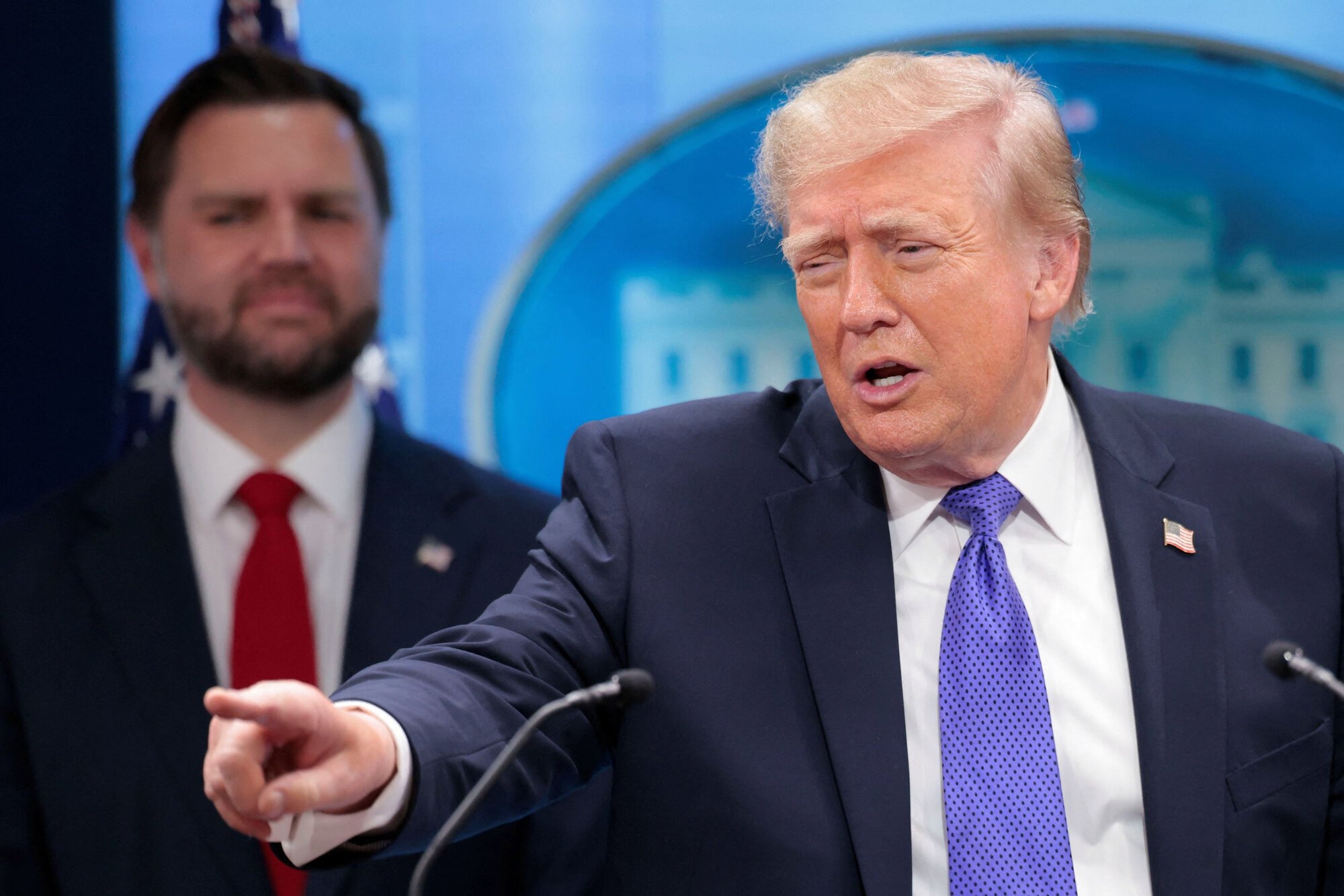
In late November 2026, the US is being discussed in Japan, Saudi Arabia and Russia less as the familiar “guarantor of order” and more as a country whose domestic political weakness directly reshapes the external environment. America’s midterm elections, uncertainty over Donald Trump’s policies, negotiations on Ukraine and the threat of a new round of confrontation with Iran have converged into a single story: Washington’s partners and adversaries are trying to understand where the president’s tactical improvisation ends and a lasting course begins.
The most prominent theme shared by all three countries is the fallout from a weakened White House after the elections. In Japanese analysis, the main concern is that a president constrained by Congress on domestic policy will make greater use of the areas where his powers are strongest: tariffs, investment pressure and diplomacy. In an analysis by the Mitsubishi Research Institute, Yuta Asai warns that difficulties advancing Trump’s domestic agenda could push him to seek a foreign-policy “legacy.” For Japan, this means more than simply keeping an eye on American polarization: Tokyo fears fresh demands to increase investment in the US and defense spending, and to align more closely with Washington’s approach to China and North Korea.
This explains Japan’s particular anxiety about an America that is becoming both a less predictable ally and a more demanding economic partner. Japanese commentators see the danger not in an American withdrawal from Asia as such, but in a shift toward a transactional alliance, where security guarantees become the subject of continual bargaining. Another sign of this nervousness was Trump’s statement that US companies could be punished for building data centers abroad to support the development of artificial intelligence. The Japanese press noted that he also spoke of Japan and other allies feeling “somewhat isolated” in a configuration involving direct US, Chinese and Russian contacts. The Asahi Shimbun reported on the remarks. For a country building its strategies around semiconductors, cloud infrastructure and technological cooperation with the United States, American tech nationalism is not an abstract debate but a threat to existing investment plans.
In Russia, American domestic political weakness is read differently: not as an automatic advantage, but as a narrowing window for reaching agreements. Anton Grishanov, chief research fellow at the Institute of Contemporary International Studies of the Diplomatic Academy of the Russian Foreign Ministry, put it bluntly in a comment to RBC: “We need a strong Trump.” His reasoning is that Congress can block appointments, budget decisions and long-term foreign-policy agreements. In this view, Moscow is interested not merely in dialogue with Washington, but in an American president capable of giving its results institutional backing.
Alongside this hope, however, is a more cautious Russian conclusion. Political scientist Alexander Konkov, in the same article, urges against betting on either a “strong” or a “weak” Trump, and instead calls for focusing on Russia’s own national interests. This is an important qualification to the widespread notion that Russian experts see the current US administration solely as an opportunity for a breakthrough. Pragmatic calculation is more prevalent: negotiations on Ukraine and a potential easing of economic restrictions may bring short-term benefits, but US policy shifts every two years, so any agreement should be considered reversible. In Russian discussions, Washington is seen as a mediator willing to move away from its former policy of unconditional support for Kyiv, but not as a reliable strategic partner.
The Saudi response focuses on another facet of American unpredictability: who will pay the price if tensions between the US and Iran escalate. Here, the US is not a distant player, but a power whose decisions immediately affect the kingdom’s security, maritime trade, oil infrastructure and prospects for economic transformation. Saudi researcher Hassan Al Mustafa writes in a column for Arab News that a settlement between Washington and Tehran “remains elusive, but not impossible.” His main point is that the US position—that there is no urgent need to make concessions—only deepens Iran’s mistrust and leaves negotiations in a dangerous state of “neither war nor peace.”
For Saudi commentators, this formula is especially unacceptable. It means Washington can keep up the pressure on Iran while the risks of retaliatory strikes, attacks on shipping and price spikes are borne by the Gulf states. Dr. Abdulaziz Aluwaisheg, assistant secretary-general for political affairs at the Gulf Cooperation Council, argues in his article that the region should not passively await a decision by the superpowers, but develop its own strategy based on the “four Ds”: diplomacy, defense, deterrence and development. This is perhaps the most substantive local response to the US: Saudi Arabia and its neighbors do not want to choose between an American military campaign and Iranian coercion through the straits and missile threats; they want to become independent architects of regional security.
This is where the conclusion shared by the three countries comes into view. Tokyo fears that America will use alliance commitments as leverage for economic pressure. Moscow believes it is possible to reach an agreement with the US, but worries that the American domestic political cycle could overturn any deal. Riyadh wants the US to avoid turning the region into a battlefield, leaving its allies to rescue global trade and energy markets afterward. Their interests differ, but they share the same feeling: today’s America is powerful enough to change the rules, yet not stable enough to inspire confidence that those rules will last.
The most unexpected element in this picture is the absence of simple anti-Americanism in local debates. Japanese analysts are not calling for distance from Washington, Russian experts are not ruling out negotiations, and Saudi commentators are not demanding that the US be pushed out of the region. On the contrary, all three responses are based on the need to engage with America. But this is no longer the language of unconditional reliance on American leadership. It is the language of hedging against America—against its elections, tariffs, military decisions and the capacity of a single domestic political struggle to alter strategic calculations in Tokyo, Moscow and Riyadh all at once.