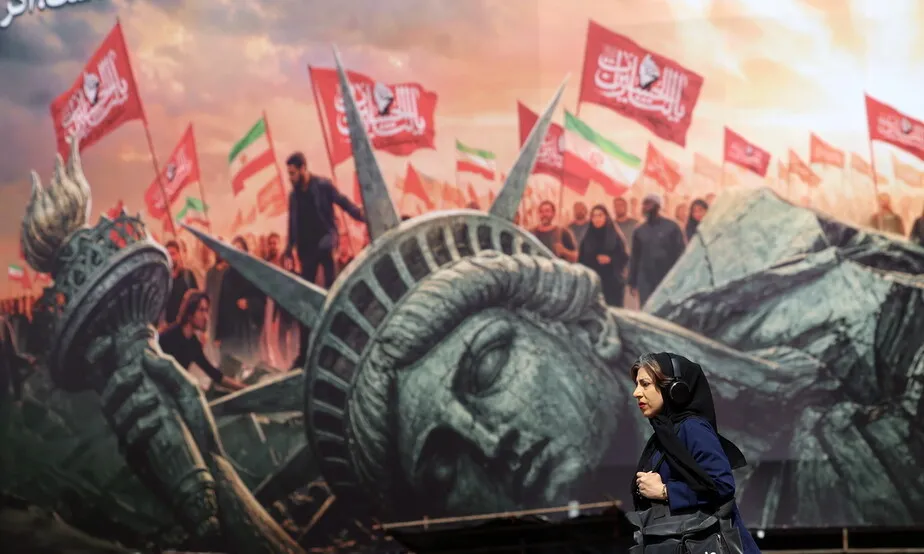
By mid-August 2026, the image of the United States in Turkish, Russian and South Korean discussions is shaped not by a single news story but by a common perception: Washington is simultaneously trying to act as a military superpower, an arbiter of conflicts and the center of global economic policy—but each of these roles is now seen as a source of instability. The main shared topic is the confrontation between the United States and Iran and the fate of the Strait of Hormuz. In Seoul, however, it is viewed primarily through the risks to trade, energy supplies and export industries; in Ankara, through the security of the Middle East and the right of regional countries to shape the regional order themselves; and in Moscow, as evidence of the limits of American pressure and as a backdrop to a broader debate over whether America is capable of imposing terms simultaneously on Iran, Russia and its own allies. (hani.co.kr)
Hormuz has become the point where these three perspectives diverge most clearly. In an analysis for Anadolu Ajansı, Turkish analyst Yusuf Bahadır Keskin describes the crisis not as an ordinary bilateral confrontation between the United States and Iran, but as the collapse of the previous regional architecture: Iran is using the strait as leverage to consolidate a new status quo, the United States is continuing its strategy of strikes and blockade, and the Gulf states are trying to turn their own vulnerability into diplomatic pressure on both sides. This Turkish tone is important: the problem is seen not as Washington being insufficiently determined, but as the fact that coercive pressure itself is making compromise nearly impossible. Another Turkish researcher, Bilgehan Alagöz, in an AA article, focuses on the logistical dimension: in Iran, US actions are perceived as a threat not only to nuclear and military infrastructure but also to transport corridors, including links with China. This is particularly sensitive for a Turkish audience: Ankara traditionally views the Middle East through the prism of energy, trade and transit routes, not solely through the balance of aircraft carriers and missiles. (aa.com.tr)
In Russian public analysis, the same situation serves as an argument against the American negotiating strategy. Expert Sergei Balmasov, commenting on Donald Trump’s statements about a possible new round of contacts with Tehran, told Gazeta.Ru that Trump “bluffs constantly,” while Iran understands this and is pressuring the United States through restrictions in the Strait of Hormuz. International affairs specialist Marat Zembatov, in a column for Izvestia, interprets the conflict as a struggle not so much over shipping as over the right to set the rules governing access to a critical energy artery. The Russian perspective here is pragmatic: it is not solidarity with Iran as such, but the argument that US economic and military power does not automatically translate into political control. This also explains the continuing interest in oil-price volatility: Russian analysts see it not only as a threat to the global economy, but also as a reminder that American Middle East policy can affect exporters’ revenues, exchange rates and sanctions calculations far beyond the region. (iz.ru)
The South Korean reaction is noticeably less ideological, but no less critical. Seoul views the US-Iranian deadlock as a threat to predictability—the very condition on which the country’s export economy depends. In an article on the end of the 60-day truce, Hankyoreh emphasizes that Washington is intensifying its combination of sanctions and economic isolation, while Tehran retains control over the situation in the strait. For Korea, this means the risk of another wave of expensive energy, higher insurance costs and disruptions to maritime trade. Notably, South Korean discussion is rarely reduced to the question of “who is right” in the US-Iran dispute: what matters more is how quickly political confrontation translates into the cost of raw materials, freight and finished products.
The same concern about dependence on American decisions is especially evident in South Korean debates over trade. The Republic of Korea’s government is negotiating with the United States simultaneously on tariffs, non-tariff barriers and the first project under a $200 billion investment package for the US economy. Industry Minister Kim Jung-kwan, who arrived in Washington on August 16, acknowledged that the talks had produced more contentious details than expected, although the goal remains to announce the first project by the end of August. This was reported by the Maeil Business Newspaper. Meanwhile, Hankyoreh writes of concerns that Seoul has too many unresolved trade issues and that the institutional organization of the negotiations remains insufficiently robust. Behind the bureaucratic wording lies a fairly harsh perception: an alliance with the United States does not eliminate the need to literally pay for access to the American market through investment, production localization and constant concessions in tariff disputes. (stock12.mk.co.kr)
The Turkish economic press sees a similar, though less direct, dependence through the Federal Reserve and the dollar-based financial system. In an article on the markets, Habertürk columnist Abdurrahman Yıldırım argues that markets now influence Trump’s policies no less than policy influences the markets. His point is telling: American decisions on interest rates, debt, currencies and trade are no longer perceived as the United States’ internal affairs. For Turkey, where sensitivity to the dollar exchange rate, import costs and capital flows is particularly high, America appears not simply as a NATO partner but as an external factor capable of shifting prices, risk premiums and inflation expectations with a single change in tone from Washington. (haberturk.com)
The Russian debate adds another layer: disappointment in the expectation that US-Russian dialogue would quickly lead to lasting détente. Fyodor Lukyanov, director of research at the Valdai Discussion Club, describes in a commentary for the Russian International Affairs Council the year since the Russian-American meeting in Alaska as a transition from tentative signs of an agreement to a new escalation. In his interpretation, the United States initially tried to achieve a political result through negotiations, but, having failed to obtain a rapid effect, once again reverted to a logic of pressure. Meanwhile, Kommersant notes that after the New START Treaty expired on February 5, 2026, Russia and the United States have now spent six months without an active strategic arms control regime, although Moscow says it is ready to temporarily observe the previous limits provided Washington acts symmetrically. (russiancouncil.ru)
This is where perhaps the most unexpected common conclusion from Turkey, Russia and South Korea emerges. In none of these countries is the United States perceived as a declining power: its military actions in the Persian Gulf, trade demands toward Seoul, sanctions policy and Federal Reserve decisions are too significant to ignore. But America is increasingly less often viewed as a force capable of unilaterally creating a stable order. From the Turkish perspective, it creates a vacuum that regional actors must fill; from the Russian perspective, it demonstrates the limits of coercion and the inconsistency of its negotiating line; and from the Korean perspective, it remains an indispensable ally and market while simultaneously turning the alliance into a costly transaction. Today’s shared unease about the United States stems not from doubts about its power, but from doubts about whether its course can be relied upon.