In South Korea, Brazil and Ukraine, the United States has been discussed in recent days not as a distant superpower, but as an immediate factor in domestic politics, economic resilience and military security. The focus is on America’s war with Iran, Washington’s trade pressure and the Donald Trump administration’s attempts to accelerate negotiations on Ukraine. The common thread running through these discussions is that U.S. allies and partners are increasingly trying to understand not only America’s goals, but also how dependent those goals are on Washington’s domestic political calendar—above all, the midterm elections to Congress in November 2026.
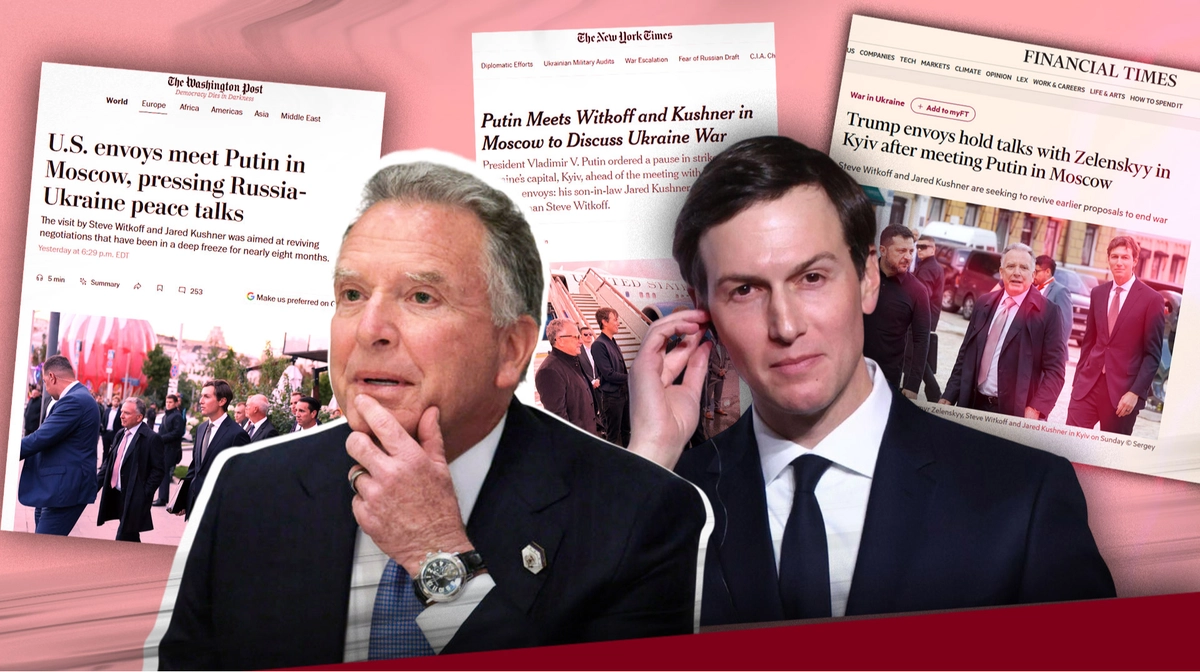
This is especially evident in Ukraine. Kyiv’s discussion of the recent trip by U.S. envoys Steve Witkoff and Jared Kushner to Moscow and Kyiv is far from euphoric. In an analysis by Ukrainska Pravda, an Americanist directly warns that the visit may have only a limited effect, because only Trump himself is capable of becoming truly involved in the settlement, while his attention has already been consumed by the elections. Ukraine’s response is pragmatic: Washington is still viewed as an indispensable participant in any potential agreement, but its mediation is judged by results—fewer Russian strikes and deliveries of air-defense equipment—not by the number of diplomatic missions. It is no coincidence that Ukrainian authors link talk of “progress by winter” to the chronic shortage of Patriot interceptor missiles.
The U.S. war with Iran is intensifying these concerns. A February review by the Razumkov Centre articulates Ukraine’s key fear: American military and diplomatic resources are shifting toward a theater that Trump considers a higher priority, threatening to reduce assistance to Ukraine, above all in air defense. There is also a bitter paradox here. A weakening of Iran could potentially complicate Russia’s position, since Moscow has long used Iranian technology and connections. But Ukrainian analysts do not consider this an automatic benefit: Russia could turn the Middle Eastern crisis into a new bargaining chip with the United States and Europe, offering mediation, oil or gas in exchange for political concessions. For Kyiv, American power is important, but the unpredictable use of that power may prove no less dangerous than its absence.
In South Korea, American policy is also viewed through the lens of dependence—but a different kind: energy, military and technological dependence. The ongoing conflict with Iran is causing concern over the Strait of Hormuz, energy prices and the possibility that Seoul will be pressured to expand its role in ensuring freedom of navigation. Korean commentator Moon Hee-jeong, speaking on Kyunghyang, links the protracted U.S.-Iranian confrontation specifically to the possibility of pressure on South Korea to send forces to the Hormuz region. For a country that remains a U.S. ally amid the North Korean threat, this is not an abstract dispute over the international order, but a question of where an ally’s obligations end and unacceptable risks begin.
At the same time, Seoul is seeking not to oppose Washington, but to expand its room for maneuver. Ahead of President Lee Jae-myung’s trip to the UN General Assembly, National Security Adviser Wi Sung-lac spoke about contacts with American leaders and cooperation in energy, semiconductors and technology, while also emphasizing a policy of “practical diplomacy oriented toward national interests.” This is the logic of South Korea’s response: the alliance with the United States remains the foundation of security, but U.S. economic policy is now perceived as an independent threat. Industry Minister Kim Jung-kwan said Seoul was seeking to ensure that American tariffs on Korean chips did not put the country at a disadvantage compared with its competitors; Washington is discussing tariffs not only on semiconductors, but also on finished electronics. This is turning South Korean investment in the United States from a symbol of the alliance into an object of constant bargaining. (admin.korea.kr)
Brazil views the same American trend even more harshly: not as an awkward negotiation between allies, but as the return of spheres-of-influence politics. The main topic of Brazil’s debate is concern over U.S. interference in the 2026 presidential election. According to Agência Brasil, a report by Brazil’s intelligence agency Abin, sent to the president, the electoral court and the Justice Ministry, raised the risk of American influence on the campaign to the level of a critical threat. In Brazil’s perception, this is not an isolated diplomatic episode: tariffs, pressure over social-media regulation, sanctions, disputes over criminal groups and contacts between U.S. authorities and Bolsonaro-aligned circles combine into a single picture of external pressure.
Particularly controversial was a report by Folha de S.Paulo about a draft U.S. demand to allow “political dissidents” to participate in the election. President Luiz Inácio Lula da Silva called the document a “dead file” for his government and responded in the most sovereignist terms possible: Brazil’s critical minerals belong to Brazil, just as its elections do. This statement matters as more than campaign rhetoric. In Brazil, two issues that are often handled separately in American policy are converging: control over strategic resources and control over the country’s political direction. As a result, American pressure is perceived not as an ordinary trade conflict, but as a dispute over Brazil’s right to choose its economic partners and political model independently. (www1.folha.uol.com.br)
This is where the differences among the three countries are most revealing. Ukraine fears that the United States will withdraw from its war too far or too soon; South Korea fears that Washington will drag it into someone else’s conflict while also exploiting its trade dependence; Brazil fears that the American administration will try to influence the very mechanism by which power changes hands. Yet all three responses converge on one point: the old formula under which closeness to the United States automatically meant predictability no longer works.
The most unexpected common feature is not anti-Americanism. Neither Seoul nor Kyiv, nor even Brasília, sees a realistic alternative to engagement with the United States. South Korea continues to discuss chips, investment and security with America; Ukraine regards Washington as a key player in any peace; and despite the conflict, Lula has maintained a channel of personal communication with Trump. But the relationships are becoming increasingly less ideological. Their new formula is this: cooperation is necessary, but every American promise is now assessed through its concrete cost—Patriot missiles, tariffs on chips, election security, control over resources and the right not to become a participant in a war they did not choose themselves.