In Brazil, Türkiye and Russia, attention to the United States in the first days of October has focused not on any single statement by Donald Trump, but on a broader and more troubling pattern: Washington is increasingly perceived as a power that simultaneously bargains, threatens and interferes—from the Strait of Hormuz to the election campaigns of allies and partners. The common thread in the debate is that U.S. policy appears increasingly unpredictable, while its foreign-policy moves are ever more clearly subordinated to domestic electoral considerations ahead of the U.S. congressional midterm elections on November 3. (kommersant.ru)
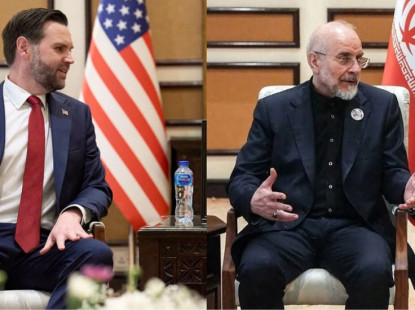
The main common theme has been U.S. policy toward Iran. In Turkish expert circles, it is viewed less as another turn in the familiar U.S.-Iran conflict than as a dangerous game involving regional communications, one that directly affects Türkiye. Serhan Afacan, president of the Center for Iranian Studies in Türkiye, emphasizes in his column for İRAM that tensions could produce new limited clashes, but that a full-scale war is not inevitable. This is an important qualification to the alarmist tone: Ankara sees room for mediation, but believes the central problem is the inconsistent signals from the United States, which oscillate between discussions of specific points of dispute and threats to destroy the Iranian regime. (iramcenter.org)
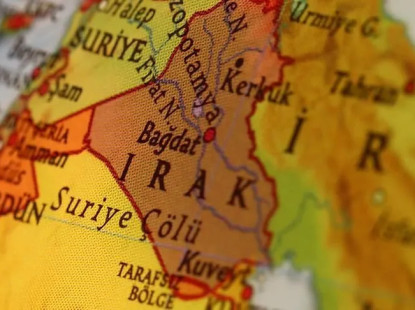
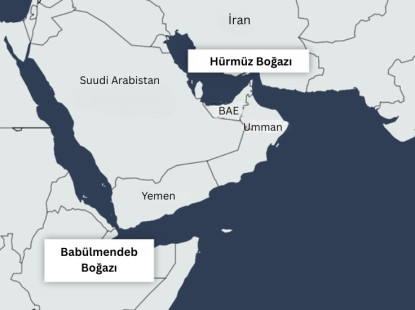
The Turkish perspective is particularly practical. For Türkiye, Hormuz is not an abstract oil artery, but the starting point of a chain reaction affecting trade, borders and security. Afacan notes that Iran’s attempts to offset maritime restrictions with overland routes are already causing congestion along routes through Pakistan, Afghanistan, Türkiye and Turkmenistan. In other words, Turkish discussions of American pressure on Tehran focus not only on the nuclear program or the balance of power with Israel, but also on the risk of turning the country into a transit valve for a regional crisis—with queues at the borders, rising costs and new threats along its southeastern frontier. (iramcenter.org)
In Russia, the same issue is viewed much more harshly: not as the risk of an uncontrollable war, but as evidence that Washington has failed to formulate a political objective that can be achieved through military force. In a comment for Kommersant, Iran expert Farhad Ibragimov points to a fundamental contradiction in Trump’s rhetoric: if Iran has already been defeated, as the White House claims, why does the United States need additional forces and Tehran’s acceptance of American terms? His conclusion is even more telling: a new operation appears more likely after the U.S. elections, but there is no reason to believe that further destruction will force Iran to accept a deal. (kommersant.ru)
Russian commentators also see an economic calculation in the wavering policy toward Iran. In a Kommersant analysis, American policy is described as managing oil-market expectations: when it is necessary to ease price pressures, officials speak of negotiations; when greater pressure is needed, threats of strikes return. Under this interpretation, instability in the Middle East becomes not merely a problem for the United States, but a resource—a way to push energy buyers toward American suppliers while also constraining China’s energy space. This does not necessarily mean that Moscow believes Washington wants a war; rather, the Russian debate assumes that the U.S. administration has learned to extract political and market dividends from an unresolved conflict. (kommersant.ru)
Brazil’s reaction transfers the same logic—pressure for political ends—to the Western Hemisphere. But here the concern is not Hormuz, but electoral sovereignty. After the first round of the presidential election on October 4, the Brazilian press has extensively discussed Trump’s previous support for Flávio Bolsonaro, his statement that he was following the election “very closely,” and the combination of diplomatic demarches, tariffs and pressure on Brazilian institutions. In a Folha de S.Paulo article, Trump’s failure to comment immediately after the vote is itself interpreted against the backdrop of accumulated fears of foreign interference, rather than as evidence of neutrality. (www1.folha.uol.com.br)
It is especially telling that the Brazilian debate links American influence not only to Trump’s ideological affinity with the Bolsonaro family. Adam Goldsmith, a former U.S. Treasury financial attaché for South America, lists a whole set of interconnected levers in an article for Folha: tariffs, sanctions against Brazilian officials, visa restrictions and the inclusion of major criminal groups on U.S. terrorist lists. His paradoxical conclusion is that Brazil’s relatively weak economic ties with the United States partly protect the country from immediate damage, while simultaneously highlighting the scale of the opportunities missed in bilateral relations. (www1.folha.uol.com.br)
The most unexpected common theme linking Brazil with Türkiye and Russia is not anti-Americanism as such. In all three countries, the United States is still recognized as a power with which it is necessary to negotiate. But perceptions of American reliability are changing. In Brazil, there are fears that Washington wants to restore Latin America to its own sphere of political influence and force Brazil to distance itself from China, including on infrastructure and critical minerals. In Türkiye, the recent U.S.-China trade truce is viewed as a tactical pause rather than the end of strategic rivalry. In an analysis for Anadolu Ajansı, Kürşat Korkmaz, a lecturer at the Gendarmerie and Coast Guard Academy, notes that the agreements merely reduce economic tensions temporarily without resolving the underlying contradictions. (www1.folha.uol.com.br)
A common picture thus emerges. For Brazil, the United States is now a potential arbiter capable of becoming a participant in domestic political struggles. For Türkiye, it is a military superpower whose actions against Iran could affect its borders, trade and regional stability. For Russia, it is an actor that uses conflict, sanctions and threats as interchangeable instruments of influence. Interests and sympathies differ, but the conclusion is increasingly similar: Trump’s America is perceived not as a guarantor of clear, predictable rules, but as a powerful, situational and electorally motivated negotiator, with whom any agreement may prove to be merely a pause before the next round of pressure.