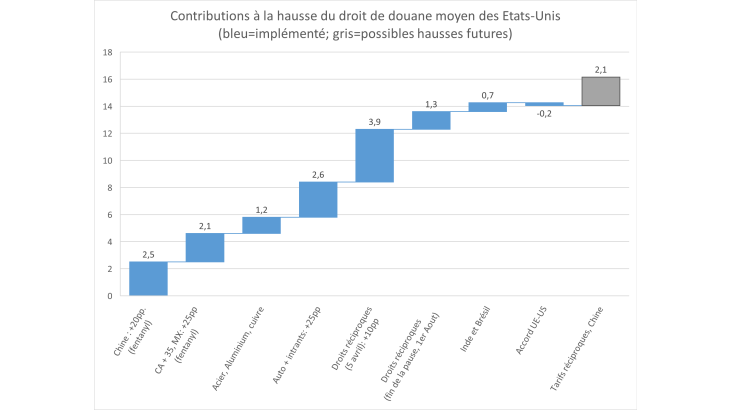
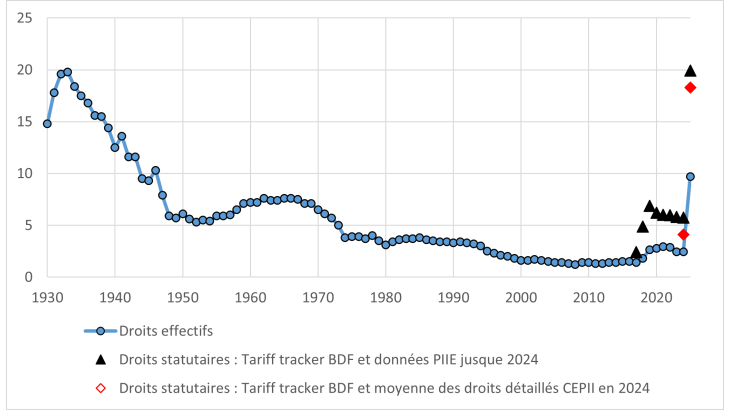
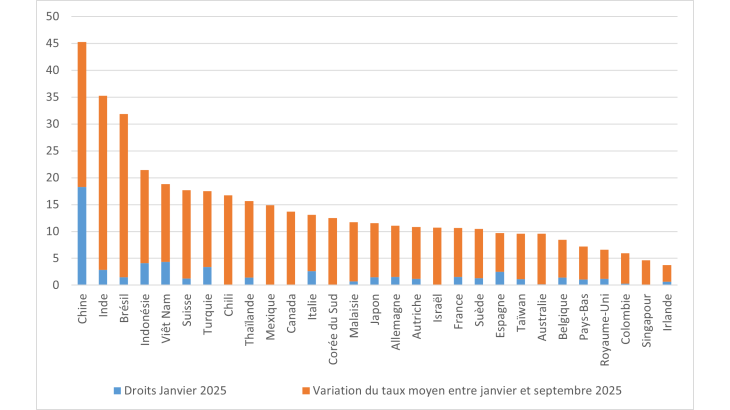
In recent days, Paris, Tokyo and Beijing have been discussing the United States less as an individual ally, competitor or adversary than as a country that has turned unpredictability into a policy tool. The central issue in these discussions is American tariffs: after the US Supreme Court restricted the previous legal framework for broad-based tariffs, Washington did not abandon protectionism but began seeking new legal mechanisms to preserve it. For France, this is primarily a question of European economic autonomy; for Japan, a risk to its export model and supply chains; for China, evidence that the United States is replacing universal trade rules with unilateral pressure. Yet in all three countries, a broader conclusion is becoming increasingly apparent: the problem lies not only in the size of the tariff, but in the fact that US policy is becoming difficult to predict even when its formal parameters are known in advance.
The French response is marked especially by irritation at the fact that US tariff policy simultaneously appears to be a commercial measure and a form of political coercion. France’s customs administration explicitly notes that, following the court ruling in the United States, the previous tariffs were abolished, but a significant share of sectoral restrictions—on automobiles, steel, aluminum, copper and timber—remained in place, while new measures continue to reshape the conditions for access to the US market. In the French customs service’s explanation, this is presented in bureaucratic language, but the political meaning is clear: European companies have to operate in an environment where trade rules change faster than they can revise their investment plans.
French economists view the situation even more harshly. In its April forecast, OFCE describes American protectionism not as a bilateral dispute between Washington and Beijing, but as a blow to Europe, caught “between” restrictions on exports to the United States and intensifying Chinese competition. France’s main concern is the trade-diversion effect: if Chinese goods lose access to the US market, some of those flows will inevitably seek buyers in the EU. According to OFCE, the experience of the first trade war shows that a substantial share of Chinese exports displaced from the United States can be redirected to Europe. This is why Trump’s tariffs are perceived paradoxically in Paris: they simultaneously complicate French exports to America and increase competitive pressure on French producers at home.
This logic is also changing France’s attitude toward the idea of a “deal” with Washington. The question is no longer simply how advantageous it would be to agree on a rate of 10, 12.5 or 15 percent. Much more important is whether an agreement can be considered durable if the US administration is capable of replacing one legal instrument with another. The Banque de France previously calculated how sharply the average tariff burden on imports from France increased after the United States returned to large-scale protectionism. Today, the French debate has shifted from tariff arithmetic to the question of strategic dependence: how can industrial and trade policy be built if access to the largest external market becomes the subject of constant political bargaining?
In Japan, the same US policy is prompting less publicly confrontational but more practical concern. Japan’s economy is too deeply integrated into both the American market and Asian production chains to view the trade war as a distant dispute between superpowers. In the White Paper of Japan’s Ministry of Economy, Trade and Industry, US decisions are linked to the need to strengthen Japan’s industrial and technological base: tariffs, export controls and competition for critical materials are becoming parts of a single economic-security policy.
The Japanese perspective differs from the French one in its emphasis on risk management rather than political emancipation from the United States. Tokyo has no doubt that its alliance with Washington remains the foundation of national security. But the question is increasingly being raised of whether the military alliance can be separated from trade coercion. In an analysis by the Marubeni Research Institute, the “America First” policy is viewed as a single package: military intervention, tariffs, pressure on partners and efforts to bring production back to the United States. For Japanese business, this means that even a formally friendly country can simultaneously be a source of tariff shocks, demands to localize production and political risks to supplies moving through the Middle East and Asia.
This explains Japan’s characteristic response: not rhetorical confrontation with Washington, but an accelerated search for safeguards. These include diversifying markets, developing production facilities in North America, stockpiling critical components and closer coordination with Europe and Southeast Asian countries. Japan sees American tariffs not as the temporary eccentricity of a single president, but as a new normal in which US trade policy is subordinated to a domestic political demand for reindustrialization. Even when tariffs are reduced or postponed, the mere risk of their return is already changing companies’ decisions.
China’s response is the most ideological, but it is not limited to propagandistic condemnation of America. Chinese official and expert texts consistently advance the argument that the United States is not correcting trade imbalances, but creating a system in which the law is adapted to political objectives. In an analysis published by Xinhua on July 24, the new wave of US tariffs was described as “unending”: when one legal avenue is blocked, Washington switches from the law on emergency economic powers to provisions of the 1974 Trade Act. The article’s formula is exceptionally clear: “the pretext changes, but the logic of protectionism does not.”
Chinese discussions also contain a more pragmatic layer. In a column for Caixin, economist Wei Shangjin noted that the US Supreme Court’s decision could change the legal foundation of the tariffs, but would not necessarily reduce the overall level of trade barriers: the US administration could restore them by other means. This is an important observation because it coincides with the French and Japanese conclusions. In Beijing, the US tariff policy is viewed not as a chaotic series of orders, but as a durable, bipartisan shift by the United States toward economic nationalism—one that will outlast individual court decisions and negotiating pauses.
At the same time, China’s official line seeks to combine criticism with a demonstration of readiness for limited stabilization. In the Chinese Ministry of Commerce’s explanation following trade contacts, the emphasis is on reducing tariff escalation, reciprocal market access and maintaining dialogue. This does not imply trust in the United States. Rather, Beijing is showing that negotiations are needed to buy time while Chinese companies accelerate export diversification, the localization of production overseas and the development of new markets. Materials from China’s commerce authorities state directly that, for exporters, a tariff pause means only short-term stability, while the long-term task is to reduce dependence on a single market and strengthen overseas supply chains.
The most interesting point is that France, Japan and China, despite their completely different relationships with Washington, converge on one conclusion: they have stopped viewing American tariffs as an ordinary dispute over the trade balance. In France, this is prompting discussion of European sovereignty and protection against double pressure from the United States and China. In Japan, it is raising the question of how to preserve the alliance with America while reducing vulnerability to its economic decisions. In China, it is reinforcing the need to turn external pressure into an impetus for technological and market self-reliance.
This is where the most important international shift is visible. The United States remains at the center of the global financial, technological and military system, but allies and rivals are increasingly planning their policies not around American promises, but around American reversals. For Paris, Tokyo and Beijing, America today is not simply a market or a geopolitical player. It is a risk variable that must be factored into every long-term strategy.