By August 19, 2026, American policy in South Korea, Japan and Israel had become not an abstract matter of interest in Washington, but an almost daily exercise in risk calculation. Three issues connect local debates: Donald Trump’s willingness to alter military commitments for the sake of negotiations and domestic political gains; US trade policy, which turns allies into targets of tariff pressure; and the war with Iran, which exposed the limits of American control over a crisis that the United States itself has largely shaped. The common conclusion among local commentators is stark: America remains indispensable, but it is no longer predictable.
The most acute issue in Seoul and Tokyo is Trump’s order to reduce the scale of the US–South Korean Ulchi Freedom Shield exercises, accompanied by his statement about having “very good relations” with Kim Jong-un. In South Korea, this is seen as more than an attempt to reopen a channel of dialogue with Pyongyang. Local analysis reflects a clear suspicion that the White House views the exercises primarily as an expensive budget item rather than as a demonstration of the alliance’s readiness. The newspaper Hankyoreh notes that the decision was made immediately before the exercises began and may be part of Trump’s attempt to shift attention from the protracted conflict with Iran to a high-profile North Korean diplomatic initiative. Kim Seong-bae, director of the Institute for National Security Strategy, proposes an alternative scenario: Seoul should use possible talks among the United States, China, North Korea and South Korea to discuss a peace regime and at least halt further expansion of North Korea’s nuclear capabilities. In his logic, this is no longer the old dream of rapid denuclearization, but a more modest strategy of limiting the threat. This South Korean debate is notable precisely for its realism: there is little hope for a grand bargain, but diplomatic space must be preserved.
In Japan, the reaction is much more cautious. For Tokyo, reducing the exercises is not an isolated Korean episode but a test of the entire deterrence architecture in Northeast Asia. A senior Japanese official quoted by Kyodo stresses that “the response to the threat must not be weakened,” especially as North Korea improves its missile and nuclear technologies and deepens military cooperation with Russia. Government circles assume that Trump’s primary aim is to reduce the cost of overseas defense; at the same time, they do not expect significant progress in US–North Korean negotiations. According to a representative of the Japanese headquarters dealing with the abduction issue, the United States “appears to have no trump card” for a new breakthrough. Yonhap reports on this in detail, citing Japanese sources. In other words, Seoul is still trying to see a diplomatic opening in the American maneuver, while Tokyo primarily sees the risk that Trump’s economic logic will begin to erode military deterrence.
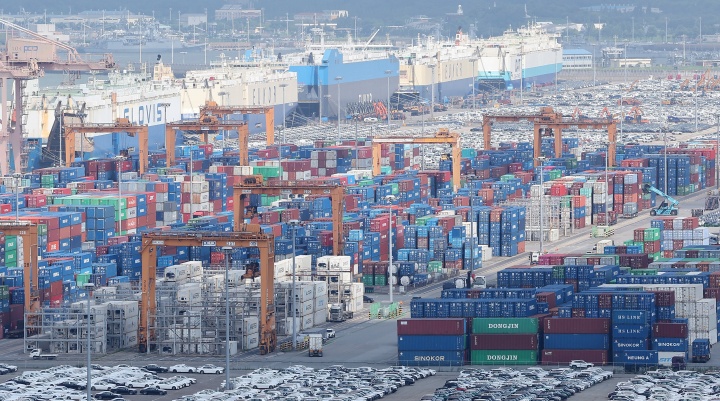
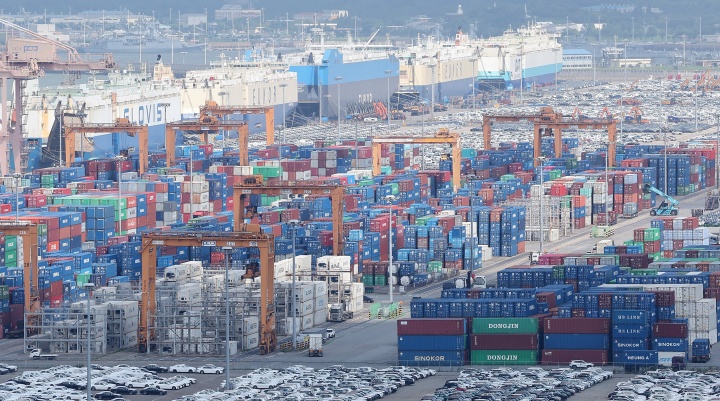
The second shared source of anxiety is tariffs. In July, the US administration finalized measures under Section 301, formally justified by insufficient efforts to combat goods produced using forced labor. For South Korea and Japan, the applicable regime raises the combined tariff rate on many goods to 12.5%. Formally, this looks like a relatively mild outcome compared with the harsher rates imposed on other countries, but Seoul does not regard it as a victory. South Korea’s Ministry of Trade emphasizes that the negotiations only “partially reduced uncertainty,” since the US investigation into “excess capacity” is continuing. In other words, the agreement reached does not close the issue: Washington has retained an instrument that can be used to revise the terms again. The South Korean government’s explanation explicitly says that Seoul intends to preserve the previously agreed balance of interests and prevent the total tariff burden from exceeding the agreed ceiling.
Japan’s reaction is similar, but has its own nuance. Tokyo likewise stresses the principle of “non-stacking”—that new duties should not be imposed indefinitely on top of those already in effect. Japanese cabinet documents record that previous agreements set a ceiling for certain Japanese goods, but separate, particularly painful sectoral measures remain in place for automobiles and components, steel, aluminum, pharmaceuticals and high-tech semiconductors. To Japanese companies, American policy looks less like a unified tariff system than a constantly shifting map of exemptions and threats. The Tokyo government’s review effectively shows why Japan’s bureaucracy is so determined to secure confirmation of earlier agreements: what matters is not only the tariff level, but also confidence that it will not be revised after the next political statement from Washington.
This is where an unexpected common theme between Seoul and Tokyo becomes visible. Neither capital is publicly pursuing an anti-American line or speaking of a trade war with an ally. Their response is technocratic: establish ceilings, seek exemptions, invest in US production, and keep channels with the USTR and the US Department of Commerce functioning. But beneath this outward restraint lies a deeper sense of unease. An alliance with the United States no longer eliminates commercial vulnerability; on the contrary, it can sometimes make a country more vulnerable, since it is expected to provide both strategic loyalty and economic concessions.
In Israel, the same question of dependence on the United States is framed much more painfully—through the war and Iran. Israeli commentators are debating not whether America is strong enough, but whether a national strategy can be built on the expectation that Trump will carry the threat through at the decisive moment. Military commentator Ron Ben-Yishai expressed the concern in particularly stark terms in a commentary for Ynet: in his assessment, Israel has become a “US satellite” with little ability to influence its own fate. In another column, he identifies Trump’s main strategy as an effort to avoid a global energy crisis and defeat in the midterm elections, rather than to achieve the outcome in Iran that Israel considers necessary.
This assessment reveals an important divide between Jerusalem and Tokyo and Seoul. For the Asian allies, US unpredictability primarily means uncertainty about the durability of deterrence commitments. For Israel, it means the fear that American de-escalation could cement a dangerous but Washington-friendly equilibrium: oil continues to flow through the Strait of Hormuz, prices do not surge, while Iran’s infrastructure and regional network of pressure remain intact. Conservative Israeli columnist Ben-Dror Yemini describes the current formula of “quiet in exchange for quiet” as a gift to Tehran, allowing it to continue its nuclear program without sufficiently stringent oversight. Even in Israeli circles traditionally oriented toward the closest possible ties with the United States, the idea is gaining ground that close ties with one American president do not amount to a long-term guarantee.
Japan’s intellectual debate over the war with Iran leads to a similar, though less emotional, conclusion. At a forum organized by Genron NPO, researchers Kenta Aoki, Koichiro Tanaka and Yukihiro Suzuki agreed that the temporary US–Iran agreement had not eliminated the underlying contradictions, left the conditions for implementation vague and therefore could not reliably prevent hostilities from resuming. Their broader argument is especially important for Tokyo: the era in which the United States could single-handedly shape the regional order is coming to an end; Japan needs an independent diplomatic strategy, not merely the status of an American ally. This conclusion was articulated in the Genron NPO discussion. For a country whose postwar security was built around the American presence for decades, this represents an almost tectonic shift in language: not a rejection of the alliance, but recognition of its inadequacy.
In Seoul, the war in the Persian Gulf is discussed primarily through the lens of energy and export-oriented industry. South Korean experts emphasize that instability in the Strait of Hormuz quickly becomes a cost for the entire manufacturing economy—from petrochemicals and transportation to semiconductor production. A study by the Korea Institute for Industrial Economics and Trade warned that, under an extreme scenario involving a spike in oil and LNG prices, production costs in South Korean industry could rise by nearly 12%. For South Korea, therefore, American policy toward Iran is simultaneously a matter of security, inflation and the competitiveness of its exports. The contrast with Israel is particularly clear here: Jerusalem fears that Washington will be too accommodating toward Tehran, while Seoul fears both a new war and any breakdown in the ceasefire that could disrupt energy routes.
Taken together, these reactions do not paint a picture of “America’s decline,” but of an America whose power has become too concentrated in a single political center and therefore too dependent on the style of one president. Israel fears being drawn into an American deal that does not resolve its threats; Japan fears that savings on alliance commitments will undermine deterrence against North Korea; and South Korea is trying simultaneously to preserve the American shield, prevent Washington from imposing new trade costs and use a possible dialogue with Pyongyang to its own advantage.
The most substantive local idea uniting all three countries is that dependence on the United States can no longer be measured solely by the number of American bases, the volume of bilateral trade or the number of joint exercises. It is measured by an ally’s ability to withstand a sudden change in American policy. In Jerusalem, Seoul and Tokyo alike, governments are beginning to look not for a replacement for America—there is no such replacement for now—but for ways to reduce the cost of American unpredictability.
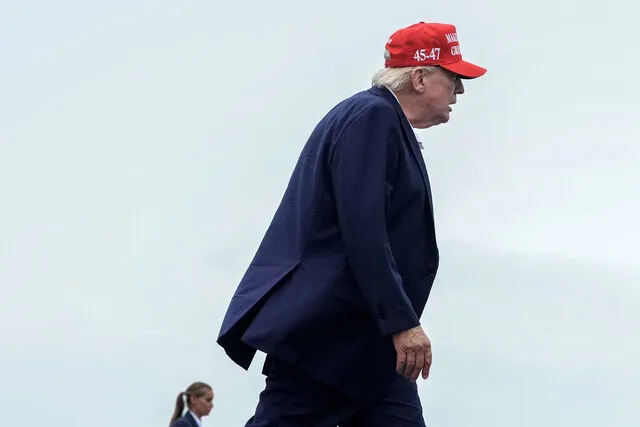
![President Trump [AP-Yonhap News file photo]](https://img2.yna.co.kr/etc/inner/KR/2026/08/17/AKR20260817059000073_01_i_P4.jpg)