By October 3, 2026, discussion of the United States in South Africa, India and Germany has been united not by a single event, but by a single sentiment: Washington is increasingly seen as a partner that offers negotiations and applies pressure at the same time, changing the rules depending on the deal at hand. In India, this is particularly evident against the backdrop of a US law allowing tariffs of up to 100% on major buyers of Russian energy; in South Africa, because of visa restrictions, tariffs and a political dispute over land reform; and in Germany, following Donald Trump’s conspicuous intervention in the issue of the AfD’s success and growing concern that the fate of the European economy once again depends on US-China bargaining. It is not anti-Americanism as such, but distrust of America’s unpredictability that has become the common thread running through these reactions. (mg.co.za)
The main theme shared by all three countries is the transformation of trade and access to the US market into instruments of foreign-policy coercion. In India’s debate, the new sanctions law is read not simply as punishment for Russia, but as an attempt to force New Delhi to choose between energy security and exports to the United States. The Indian Express analysis highlights a paradox: the US-China truce has been extended, but India remains under threat of tariffs because of its purchases of Russian oil. This is particularly painful for New Delhi amid a tight global energy market: quickly replacing large volumes of inexpensive crude would mean higher domestic costs and greater economic vulnerability. India’s view is therefore noticeably more pragmatic than the rhetoric of a “values-based partnership”: an alliance with the United States is needed to balance China, but it must not mean giving up the right to choose energy suppliers independently. (indianexpress.com)
South Africa’s reaction is sharper still, because its dispute with the United States concerns not only tariffs but also the country’s painful domestic history. Pretoria sees US pressure as an attempt to link trade and visa measures to abandoning policies of economic redress after apartheid, land reform and South Africa’s position in the genocide case concerning Gaza at the International Court of Justice. In an interview with Mail & Guardian, International Relations Minister Ronald Lamola described what is happening as effectively a “diplomatic war” built on “fabrications and outright lies.” This is not merely a diplomatic outburst: in the South African interpretation, the US program to accept white Afrikaners as refugees turns the country’s old racial trauma into an instrument of external pressure. (mg.co.za)
This gives rise to a distinctly South African argument that is almost absent from American debates: the issue is not whether ANC reforms are useful, but whether a foreign power can determine how the country should remedy the consequences of colonialism and apartheid. The Thabo Mbeki Foundation warns that abandoning redress policies—that is, measures aimed at overcoming historically created racial and economic inequality—could deepen rather than ease social divisions. Thus, in the South African perception, American criticism of land reform becomes not a defense of property rights but interference in an unfinished national compromise. (mg.co.za)
In Germany, the American factor is discussed differently, but the logic is the same: concern is driven by the mixing of foreign policy, commerce and ideological pressure. After the AfD’s victory in elections in Saxony-Anhalt, Trump publicly congratulated the party and accompanied his message with the slogan “MGGA”—“Make Germany Great Again.” Chancellor Friedrich Merz replied that interference in German affairs was unacceptable. As ZDF notes, for Berlin this was not simply an eccentric message from the US president, but an unpleasant signal: the White House is prepared to publicly encourage forces that challenge Germany’s postwar political consensus. (zdfheute.de)
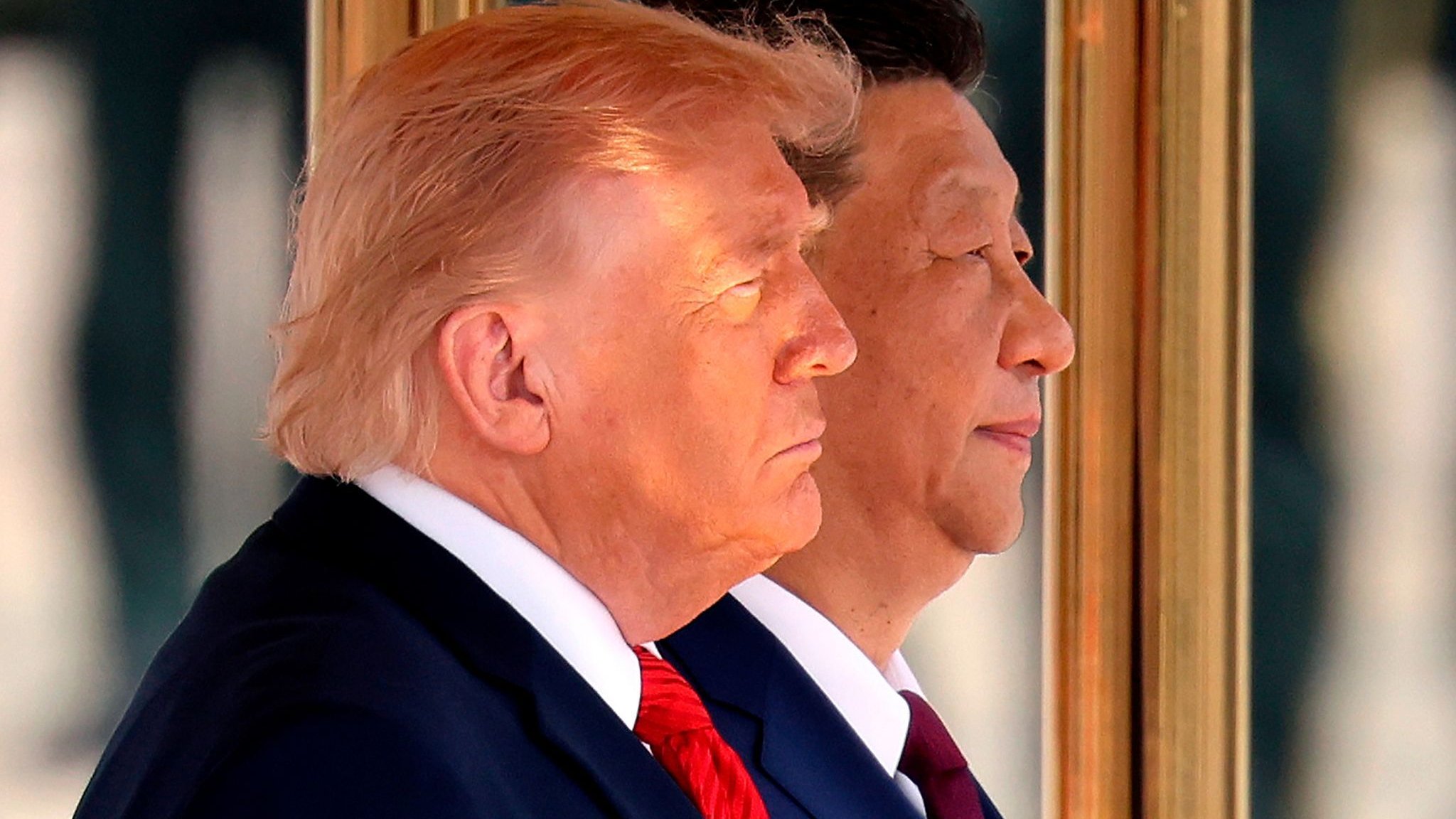
But German anxiety is not limited to domestic politics. The Trump–Xi Jinping summit in Washington became a symbol in Germany of a world in which key decisions are made by two superpowers while Europeans pay the price for the consequences. In a Handelsblatt commentary, the meeting is interpreted as posing a risk of a new escalation in trade confrontation, while economists and industrialists fear not so much an immediate rupture as chronic uncertainty: German exports and production chains are deeply connected to both the US and Chinese markets. The state agency Germany Trade & Invest had previously stated explicitly that US-China relations mean no relief for logistics and supply chains for German businesses, even when the leaders display conciliatory symbolism. (gtai.de)
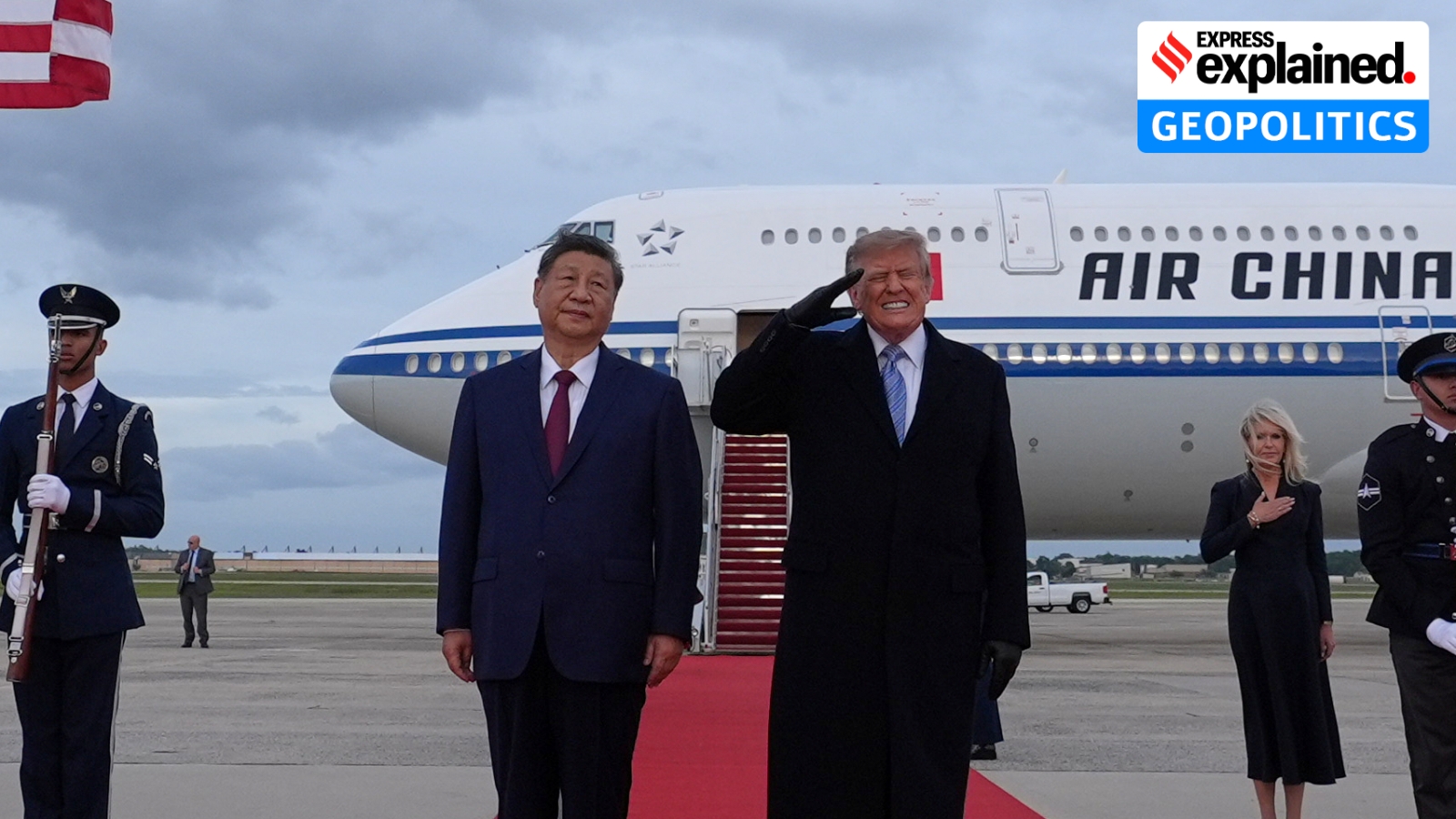
India’s assessment of the same summit is particularly revealing. New Delhi saw plenty of ceremony—the meeting with Xi at the foot of the aircraft stairs, the state banquet and talk of “friendship”—but few guarantees for countries located near the arena of rivalry. Extending the US-China trade truce until January 2027 gives the two giants time to maneuver, but does not eliminate the risks surrounding Taiwan, technology, rare-earth metals and sanctions policy. Indian authors draw attention to the asymmetry: China negotiates with Washington as a rival of comparable scale, while India is simultaneously needed by the United States as a strategic counterweight to the PRC and subjected to American tariff pressure. (indianexpress.com)
This is where the three local perspectives converge. South Africa wants external partnerships not to turn into control over its domestic order; India wants strategic cooperation not to require surrendering its energy sovereignty; and Germany wants the transatlantic alliance not to become a channel for pressure on its democratic politics and industrial model. Their responses differ: Pretoria speaks the language of anticolonial autonomy, New Delhi that of multi-aligned pragmatism, and Berlin that of European self-reliance. But the conclusion is the same: America remains too important to distance oneself from, and too unpredictable to rely on without a safety net.