In recent days, from August 24 to 27, 2026, China, Australia and Japan have been looking at the United States through the same troubling lens: Washington is simultaneously expanding its economic war against Iran, increasing pressure on international institutions and demonstrating a willingness to use trade barriers even in relations with its closest partners. But local reactions differ. In China, this is presented as evidence of the failure of America’s “maximum pressure” policy; in Australia, as a test for an alliance that must be preserved without illusions; and in Japan, as a painful question of whether the country can defend the rules-based international order when its principal ally is attacking it.
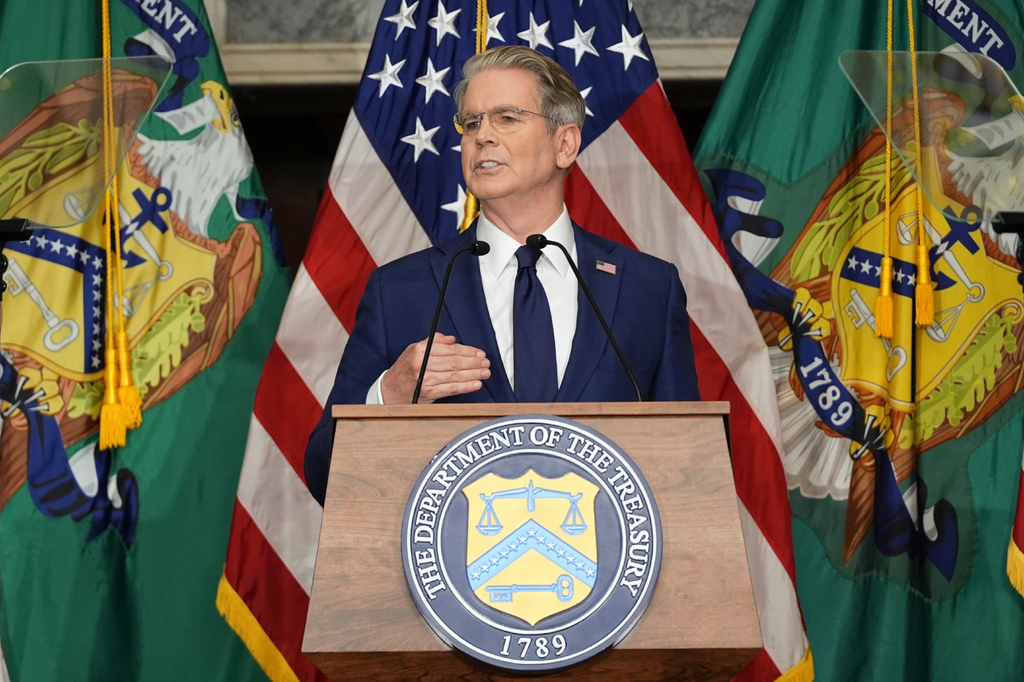
The most discussed issue has been the American operation announced on August 24, Economic Outcast—an expansion of secondary sanctions against states, banks, carriers and companies cooperating with Iran. Formally, the aim is to cut off Tehran’s financial, maritime, technological and oil channels. In practice, however, the campaign extends far beyond Iran: it requires third countries to restructure their own trade around American political objectives. Australia’s ABC News analysis of the operation notes that the US administration is still issuing more threats than concrete deadlines and target lists. Former US diplomat Alan Eyre expressed the skepticism in particularly stark terms: the sanctions field has already been exhausted—“we’ve picked the low-hanging fruit, the middle-hanging fruit, the high-hanging fruit—everything on the tree.” For Australian readers, this is not an abstract dispute about the Middle East: a prolonged war means risks to maritime trade, energy prices and the stability of the US alliance strategy.
China’s reaction is even more categorical. In an editorial in Huanqiu Shibao, reprinted by People’s Daily Online, Washington’s “economic D-Day” is described as the wrong scenario: turning finance and trade into weapons, the newspaper argues, will not remain within the boundaries set by the United States but will spread the costs to everyone. What matters here is not only the anti-American tone. Chinese debate identifies a specific contradiction: for Iran’s isolation to work, the United States must be prepared to punish China—the largest buyer of Iranian oil—but Washington is trying to avoid precisely such a confrontation ahead of high-level contacts. Japanese expert Shin Sasaki reaches nearly the same conclusion in Wedge, albeit from a completely different political standpoint: if the sanctions do not affect China’s independent refineries and the banks servicing the transactions, they will remain a “painted rice cake”—a beautiful but inedible picture. This is a rare point of convergence between Chinese and Japanese analysis: both see the campaign not as a sign of limitless American power, but as evidence of the limits of its applicability.
In Beijing, however, this weakness leads to a geopolitical conclusion: the United States is undermining trust in the dollar-based and sanctions infrastructure itself, forcing countries to seek ways around American control. In Tokyo, the conclusion is more cautious and more alarming: the problem is not that pressure on Iran is insufficiently harsh, but that its unpredictability threatens the global economy. In a forecast by the Daiwa Institute of Research, Japanese analysts Daisuke Yahagi and Tsubasa Fujiwara link the shift in America’s emphasis—from military pressure to a combined sanctions strategy—to rising oil prices, problems in the Strait of Hormuz and declining consumer sentiment in the United States itself. In other words, the Japanese perspective is primarily economic: America is trying to reduce the domestic cost of war while shifting uncertainty onto its partners and markets.
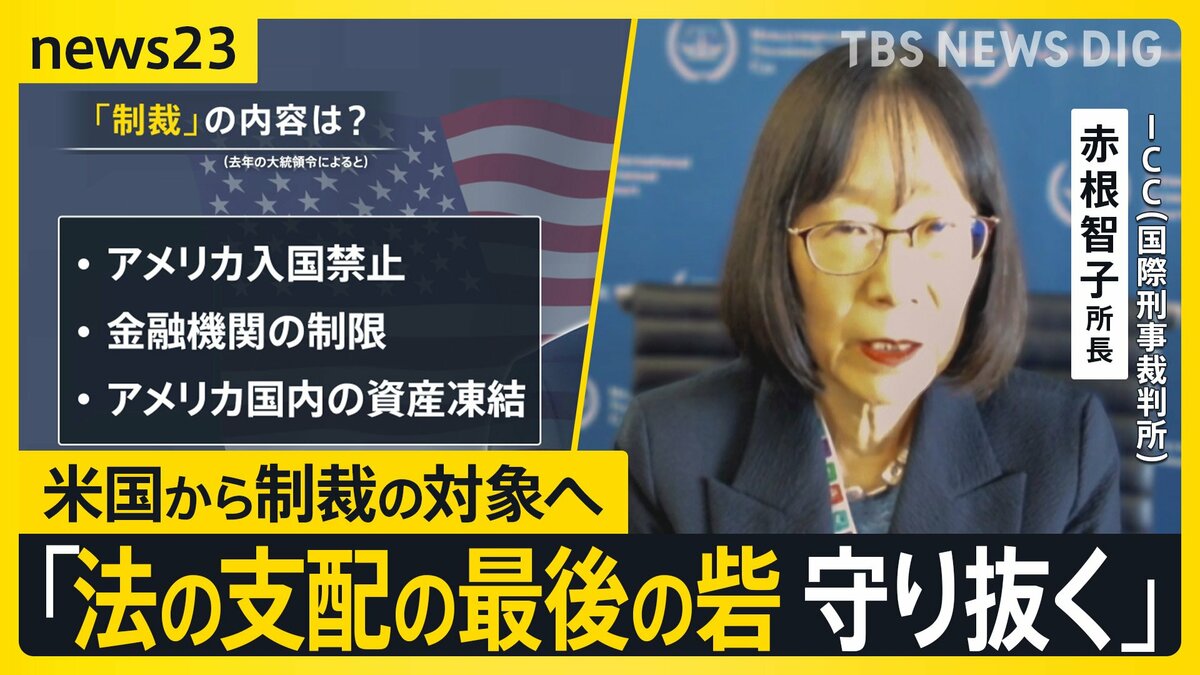
The second common theme is the increasingly open conflict between the United States and international law. New sanctions against International Criminal Court President Tomoko Akane, a Japanese citizen, have transformed what was an abstract dispute over the ICC’s jurisdiction into a personal and national issue for Tokyo. In an interview with TBS, Akane called on the Japanese government to clearly reaffirm that it would continue supporting the Court and would not withdraw from it: “the world is watching” to see whether Japan will yield to pressure or support the ICC together with other states. Her broader warning sounds like a diagnosis of the current moment: the normalization of “might makes right” could make it a customary foundation of the world order.
Notably, criticism in Japan is directed not only at Washington but also at Japan’s own caution. Amnesty International Japan, in a statement dated August 25, urged Tokyo not to limit itself to expressions of regret but to publicly seek the sanctions’ cancellation. Prime Minister Sanae Takaichi says Japan will continue pursuing the matter at “the necessary moment,” without revealing its diplomatic cards in advance. This is a typically Japanese dilemma: Japan cannot break with the United States, on which its security depends, but neither can it silently accept an attack on an institution headed by a Japanese judge.
In Australia, the dilemma looks almost like a mirror image. ABC News reports that the government does not support sanctions against the ICC and its personnel, while Australian officials privately describe the Trump administration’s actions as “destructive.” But the public protest remains restrained. The reason is stated openly by ABC’s source: the campaign against the ICC is closely associated with Secretary of State Marco Rubio, who is simultaneously an indispensable partner for Canberra on security issues. Australian foreign policy finds itself in a position where it must defend the rules without directly quarrelling with the person challenging them.
The third theme is trade as a means of political coercion. Australians are particularly sensitive to this after the United States imposed a 12.5 percent tariff on Australian imports, citing forced-labor problems in supply chains. Prime Minister Anthony Albanese is seeking an exemption, reminding Trump that over two decades the United States has run a $442 billion trade surplus with Australia. In an ABC report, Albanese articulated the fundamental disagreement: tariffs are primarily an economic burden for the country imposing them. That has not stopped Canberra from simultaneously emphasizing its commitment to AUKUS and its military alliance with Washington.
For China, it is particularly revealing that the United States is at the same time escalating its tariff dispute with Canada. Chinese commentators view this not as a separate bilateral quarrel but as an example of a new American model: alliance ties no longer provide immunity from economic pressure. Beijing gains a convenient argument to make to countries in Asia and the Global South: dependence on the US market leaves partners vulnerable regardless of their political loyalty. Watching the Canadian case, the Australian public sees not someone else’s drama but a possible scenario for its own dependence on unpredictable exemptions and personal arrangements with the White House.
The common thread running through the Chinese, Japanese and Australian debates is not simply sympathy or antipathy toward Trump. It is the question of the reliability of American power. Chinese authors argue that Washington is no longer capable of imposing its will without incurring serious costs. Japanese analysts fear that American inconsistency will damage both markets and norms. Australians are trying to develop a practical formula for coexisting with an ally who is simultaneously needed to deter China, capable of imposing tariffs on Australia and willing to weaken the international institutions that Australia itself considers essential.
The most unexpected conclusion from these reactions is this: the United States remains the center of global politics, but it is increasingly perceived not as the architect of a predictable order but as a source of risks that others must hedge against—through trade diversification, quiet diplomacy, support for international courts and the search for new coalitions. Beijing welcomes this as a strategic shift. Tokyo and Canberra, by contrast, are learning to live with it, without being able either to distance themselves completely from America or to return to their former confidence in it.