As of August 31, 2026, the main American issue simultaneously provoking reactions in Saudi Arabia, Germany and Ukraine has been not one specific Washington initiative, but the overall effect of its policy: the United States remains an indispensable power, yet its decisions are increasingly perceived by partners as a source of secondary risks. The resumption of U.S. strikes on Iran, reported by Germany’s Tagesschau on August 31, once again linked the Persian Gulf, European security and Russia’s war against Ukraine in a single political picture. In all three countries, the debate is less about whether America is powerful than about whether it can turn that power into a predictable strategy.
The sharpest reaction is coming from Saudi Arabia, where the U.S.-Iran war is perceived not as a distant conflict between great powers, but as a threat to the kingdom’s own economic heart—its oil infrastructure, maritime trade and the stability of the Persian Gulf. Saudi diplomacy formally supports an end to the hostilities: in a June statement, the Foreign Ministry welcomed the U.S.-Iran agreement, but particularly emphasized the need to restore the security and freedom of navigation in the Strait of Hormuz to the level that existed before February 28. This qualification is more important than an ordinary diplomatic formula: Riyadh is demanding not merely a pause, but a settlement that takes into account the interests of the states in the region themselves, rather than only those of Washington and Tehran. This is evident in the official position of the Saudi Foreign Ministry.
Saudi writers are not calling for a break with the United States. On the contrary, they are advocating a tougher reassessment of the terms of the partnership. An Okaz columnist describes the kingdom’s course as “war diplomacy”: avoiding direct involvement in the conflict while assembling regional coalitions, protecting the sovereignty of neighboring states and seeking an international security regime for Hormuz. What is notable in his column is the underlying logic itself: security can no longer be built on the assumption that the presence of U.S. forces automatically deters escalation. Bases and treaties remain assets, but they also make the Gulf states part of Iran’s retaliation map. For Riyadh, this is a particularly painful paradox: Washington is needed as a guarantor against threats, yet its confrontation with Tehran may bring the threat directly onto allied territory.
This leads to a surprisingly pragmatic Saudi conclusion: the region needs not a replacement for the United States by another external patron, but its own network of safeguards—integrated air defenses, diplomatic ties with Iran, coordination within the Gulf Cooperation Council and diversified international relations. A recent analysis by the Al Jazeera Centre for Studies describes the American campaign as a war in which the United States achieved individual tactical objectives but failed to secure a political exit: the Iranian nuclear issue has not been resolved, while shipping through the Strait of Hormuz remains vulnerable. For Saudi audiences, this is not an abstract assessment of someone else’s war, but a warning: a prolonged American conflict is destroying precisely the regional environment on which Saudi modernization depends.
In Germany, the same question is being voiced differently, but with a similar sense of urgency. Berlin views the United States primarily through the prism of NATO, Ukraine and its own technological and military dependence. An ARD commentary on six months of war with Iran sums up the mood in strikingly stark terms: the administration of Donald Trump, in the view of author Karsten Küntopp, has not strengthened American power but squandered it, ignoring specialists’ warnings and drawing the country into a conflict without a convincing political endgame. In the Tagesschau article, the main fear is framed not as sympathy for Iran, but as Europe’s anxiety: a weakened America, preoccupied with the Middle East and unpredictable, is less capable of serving as a pillar of support for its allies on the continent.
The German debate is therefore becoming less about conventional anti-Americanism and more about the question of “insurance against an ally.” In an analysis of Germany’s dependence on the United States, Die Zeit points out that Germany is tied to American capabilities not only through troops and nuclear deterrence, but also through satellite intelligence, logistics, air defense, munitions and digital technologies. In other words, even the political desire to become more self-reliant does not yet amount to the ability to act independently. This is a key difference between the German and Saudi reactions: Riyadh is trying to reduce the risk of being drawn into someone else’s war, while Berlin fears being left without American resources in its own.
Yet the overall conclusion is the same: it is no longer possible to rely on the United States “as before.” In Germany, this idea is leading to accelerated rearmament, the development of a European defense industry and efforts to preserve Ukraine as a military shield for Eastern Europe. In Saudi Arabia, it is leading to regional diplomacy and a multi-vector foreign policy. In both cases, America remains critically important, but is no longer perceived as a political constant.
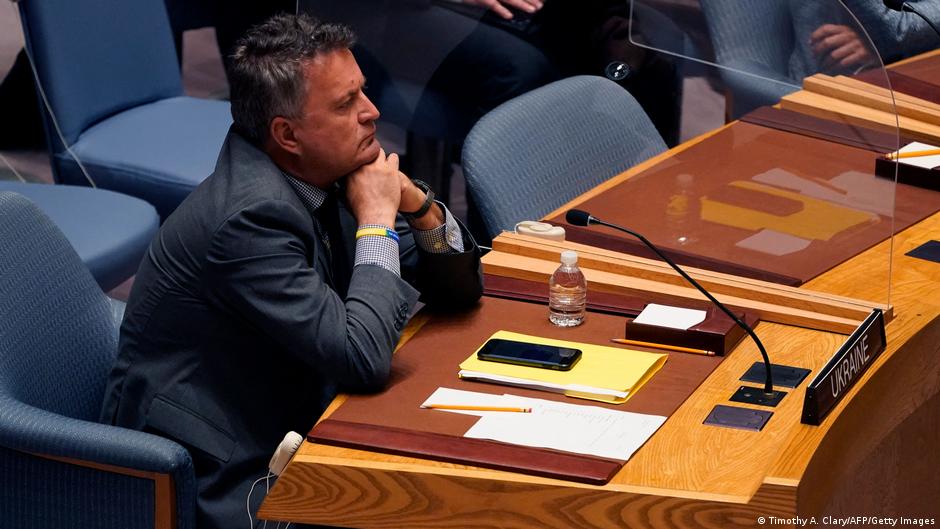
For Ukraine, American unpredictability has an even more tangible dimension—Patriot missiles, funding, sanctions pressure on Moscow and the very possibility of surviving another winter. After Trump’s August 6 statement that Washington would not provide Kyiv with additional interceptor missiles because the United States needed them itself, Ukraine’s reaction was ambivalent. On the one hand, Kyiv cannot afford a public rupture: Serhii Kyslytsia, First Deputy Head of the Office of the President, continues to speak of confidential contacts with American envoys and stresses that U.S. mediation has not stopped. On the other hand, the very fact that visits and closed-door talks are repeatedly postponed has become a symbol of the fragility of the relationship, as described in a report by DW’s Ukrainian service.
Ukrainian commentators are increasingly candid in distinguishing between the United States as a necessary provider of capabilities and the United States as an unreliable political ally. Diplomat and analyst Andrii Melnyk, speaking on Hromadske Radio, put it almost without diplomatic euphemisms: with Trump’s arrival, Ukraine, in his assessment, lost an ally and gained “a partner—and not the most reliable one.” But this does not mean surrendering to circumstances. Ukraine’s strategy is based on trying to make itself useful to Washington where their interests directly overlap: in deterring Russia, striking its military logistics and, as Ukrainian analysts note, restricting Moscow’s ties with Iran.
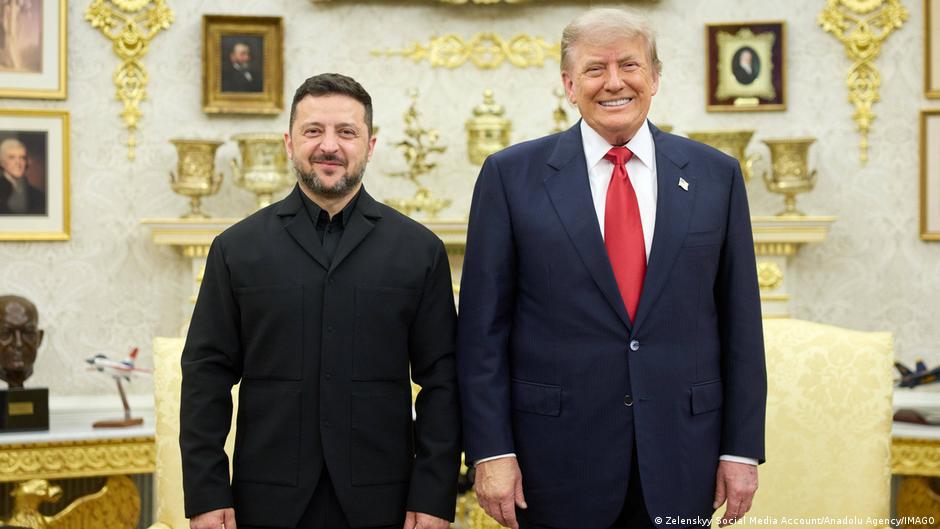
This is where the most unexpected common thread emerges. In Kyiv, some experts see the war with Iran not only as a threat that could divert American resources, but also as an opportunity to prove Ukraine’s usefulness to the United States in the broader confrontation with Moscow and Tehran. Ivan Us, chief consultant at the National Institute for Strategic Studies, argues in a DW article that the rapprochement between Trump and Zelenskyy is connected to Ukraine’s ability to pressure Russian-Iranian military communications in the Caspian region. This idea shows how much Ukrainian diplomacy has changed: Kyiv is forced to prove its right to support not only through the moral argument of defending itself against aggression, but also through its usefulness to current American priorities.
A new international picture of the United States is thus taking shape. Saudi Arabia wants America to stop turning the Gulf’s security into collateral damage in its confrontation with Iran. Germany wants U.S. commitments to NATO to depend less on White House impulses and external wars. Ukraine wants to preserve vital American assistance without harboring illusions about its political durability. All three countries are adapting in different ways to the same reality: American power is still enormous, but allies no longer assume that it automatically serves their interests.
The most significant aspect of these reactions is not a rejection of America, but a rejection of their former passivity. Riyadh is demanding the right to participate in shaping the regional order, Berlin is seeking European strategic agency, and Kyiv is learning to turn its own military capabilities into an argument in negotiations with Washington. In this sense, today’s debate about the United States is less about the decline of American influence than about the coming of age of those who for too long regarded American protection as unconditional.
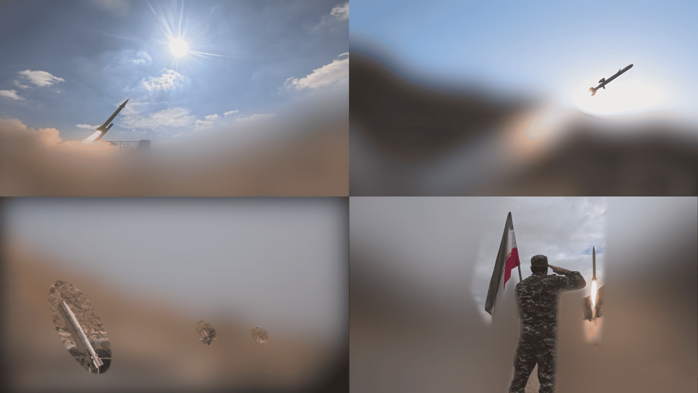
![Figure 2: U.S. attacks on communications infrastructure and bridges in southern Iran, July 2026 [U.S. Central Command/X]](https://studies.aljazeera.net/sites/default/files/inline-images/40.png)
![A U.S. Air Force F-16 fighter on patrol over the skies of the Middle East [U.S. Central Command/X].](https://studies.aljazeera.net/sites/default/files/inline-images/41.jpg)