By August 29, 2026, the main subject of international discussion about the United States was no longer any single initiative by Donald Trump, but rather the style of American policymaking: Washington is simultaneously trying to wage war on Iran, pressure its partners with tariffs, and seek discreet channels of communication with Moscow over Ukraine. In Kyiv, this is seen primarily as a test of whether the White House’s desire for a “quick deal” will turn into pressure on the victim of aggression. In Russia, it is viewed as evidence that without direct dialogue with the Kremlin, the United States cannot resolve either the Ukrainian or Middle Eastern crisis. In Australia, it is painful proof that even America’s closest ally is not protected from trade threats and sudden demands.
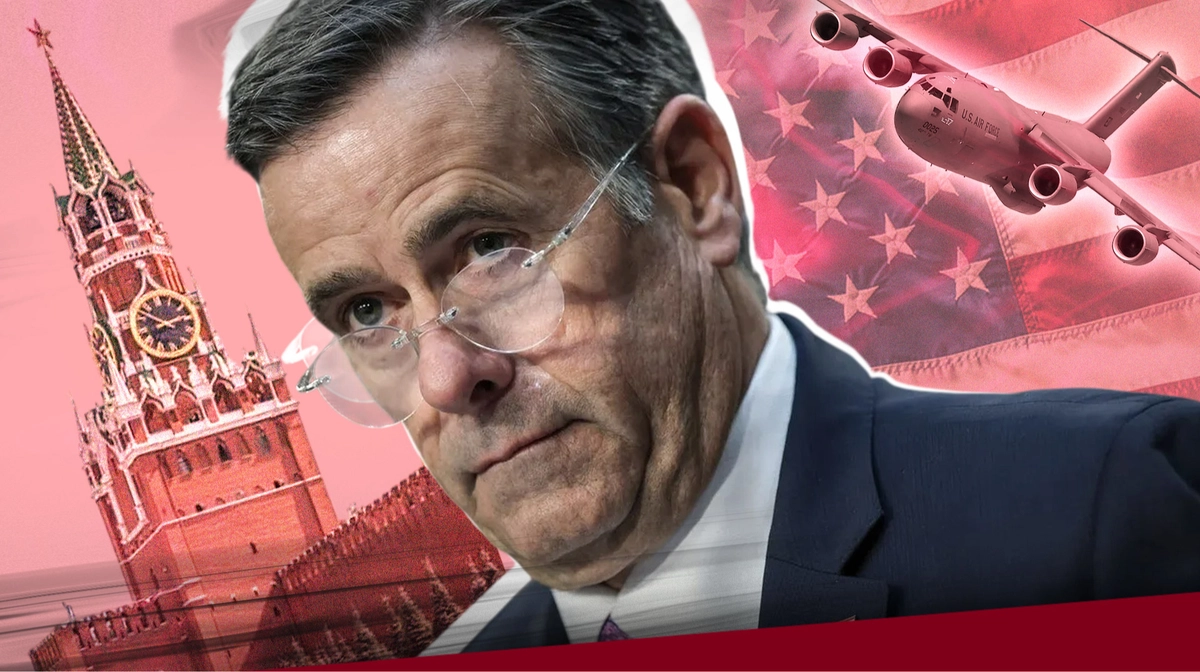
The week’s most discussed signal was CIA Director John Ratcliffe’s unannounced visit to Moscow on August 25. For the Ukrainian audience, the most important aspect was not the intelligence meeting itself, but a detail accompanying it: according to reports in the Western media, Kyiv was asked not to carry out long-range strikes on Moscow, St. Petersburg or Russia’s northern regions for several days. In an analysis by Ukrainska Pravda, former military intelligence chief Valeriy Kondratyuk sees the replacement of customary political envoys with the CIA director as a sign that is, on balance, favorable to Ukraine: it may indicate a shift from vague “peace” rhetoric to a discussion of verifiable threats, Russian mobilization and risks to NATO. In this reading, Ratcliffe came not so much to bargain over Ukrainian territories as to set out to the Kremlin the limits of further escalation.
But the opposite concern remains in Kyiv as well. Political analyst Igor Petrenko, in an interview with the OStriv outlet, stresses that any covert U.S.-Russian mission inevitably raises the question of whether Washington is returning to a negotiating model in which Ukraine is not a participant but the subject of a deal. This concern has intensified following Trump’s August refusal to provide additional Patriot interceptor missiles, citing the United States’ own needs in the Middle East. For Ukrainian commentators, this is no longer merely a supply issue, but a vivid illustration of the White House’s new hierarchy of priorities: when America is drawn into another war, Ukrainian air defense risks becoming a secondary resource.
Russia’s reaction to the visit has been noticeably calmer and even demonstratively businesslike. Sergey Lavrov said that there was “nothing unusual” about contacts between the CIA chief and Russian intelligence services, as reported by Vedomosti. This is an important formulation: Moscow does not want to present the trip as a diplomatic breakthrough, while at the same time emphasizing that the United States is nevertheless forced to speak with it directly. Russian experts writing in Expert magazine offer a broader list of reasons for the visit: Ukraine, the risk of a clash between Russia and NATO, prisoner exchanges, and Iran. This range suits Moscow precisely because it diminishes Ukraine’s exceptional status: the Kremlin seeks to portray itself not as a party that must be forced to end the war, but as an indispensable center of power without which several global crises cannot be resolved at once.
This reveals a paradox. Kyiv and Moscow interpret the same arrival by an American intelligence chief in completely different ways, yet both capitals see it as proof that Trump’s personal diplomacy is insufficient. Ukraine fears that it is too transactional and could trade long-term security for the appearance of a quick result. Russia, by contrast, suspects that behind the “routine” contacts may lie an American warning against expanding the conflict. Even when Washington speaks of peace, both countries primarily hear a question of power and coercion.
The second shared theme is the U.S. war with Iran, which by the end of August had already lasted around six months and was increasingly changing perceptions of American power. In Australia, this became not an abstract geopolitical issue but a debate over the limits of allied loyalty. Prime Minister Anthony Albanese said back in the spring that under Trump, the United States was “playing a different role” in the world: it was combining protectionism and unilateral military decisions with an expectation that partners would adapt to American priorities. In an ABC interview, he directly linked this shift to Australia’s need to work more closely with other middle powers.
Australian criticism does not, however, mean that Canberra is prepared to break the alliance. Australia still sees AUKUS and the U.S. presence in the Pacific as the foundation of its security in the face of China. Yet the war with Iran has shown that the price of closeness to the United States may be higher than expected: an ally is expected not only to show political solidarity, but also to participate in conflicts it did not choose. In a March ABC analysis, this was described as a possible Australian “red line”: sending military resources to a Middle Eastern war proved too risky for Canberra, even as it sought to preserve relations with Washington.
For Ukraine, the U.S. campaign in the Middle East matters in a different way: it diverts American attention, ammunition and political capital precisely when Ukraine needs protection for its energy infrastructure ahead of winter. In Russian debate, by contrast, Iran has become an argument for the growing negotiating value of Moscow. In the Russian interpretation, Washington cannot effectively “strangle” Tehran economically unless Russia and China limit their ties with it; consequently, the United States has to seek engagement with the Kremlin even amid confrontation over Ukraine. This does not necessarily signify genuine rapprochement, but it helps explain why Russia’s public discourse readily links Ratcliffe’s visit to the Persian Gulf, rather than solely to the war in Europe.
The third line of tension—American tariffs—particularly highlights Australia’s disappointment. In August, the Trump administration imposed a 12.5% tariff on imports from Australia, and Albanese asked for a full exemption. As ABC News writes, the Australian prime minister reminded Trump that over two decades, the United States had accumulated a $442 billion trade surplus with Australia. The argument sounds almost like a request to an ally not to punish a country that is already investing in the American economy and strategic partnership.
This is where the Australian perspective is most unexpected for an American audience. In Canberra, the issue is not limited to the amount of the tariff. The tariff is understood as a political signal: relations with the United States have ceased to provide predictability even where the countries’ interests formally coincide. Australia is not planning to abandon AUKUS, but it is increasingly separating the alliance from trust. Ukraine is experiencing a similar process in the areas of arms supplies and negotiations; Russia is experiencing it in its dealings with an American administration that can seek dialogue and intensify pressure at the same time. The difference is that for Kyiv, U.S. unpredictability is a threat to survival; for Moscow, it is room for maneuver; and for Australia, it is an incentive to pursue a more independent foreign policy.
The overall conclusion from the Ukrainian, Russian and Australian reactions is simple: America remains the central power, but its decisions are increasingly perceived as an unstable foundation. Today, its influence is measured not only by its ability to supply weapons, impose tariffs or conduct secret negotiations, but also by the extent to which other countries are forced to hedge against yet another American shift.