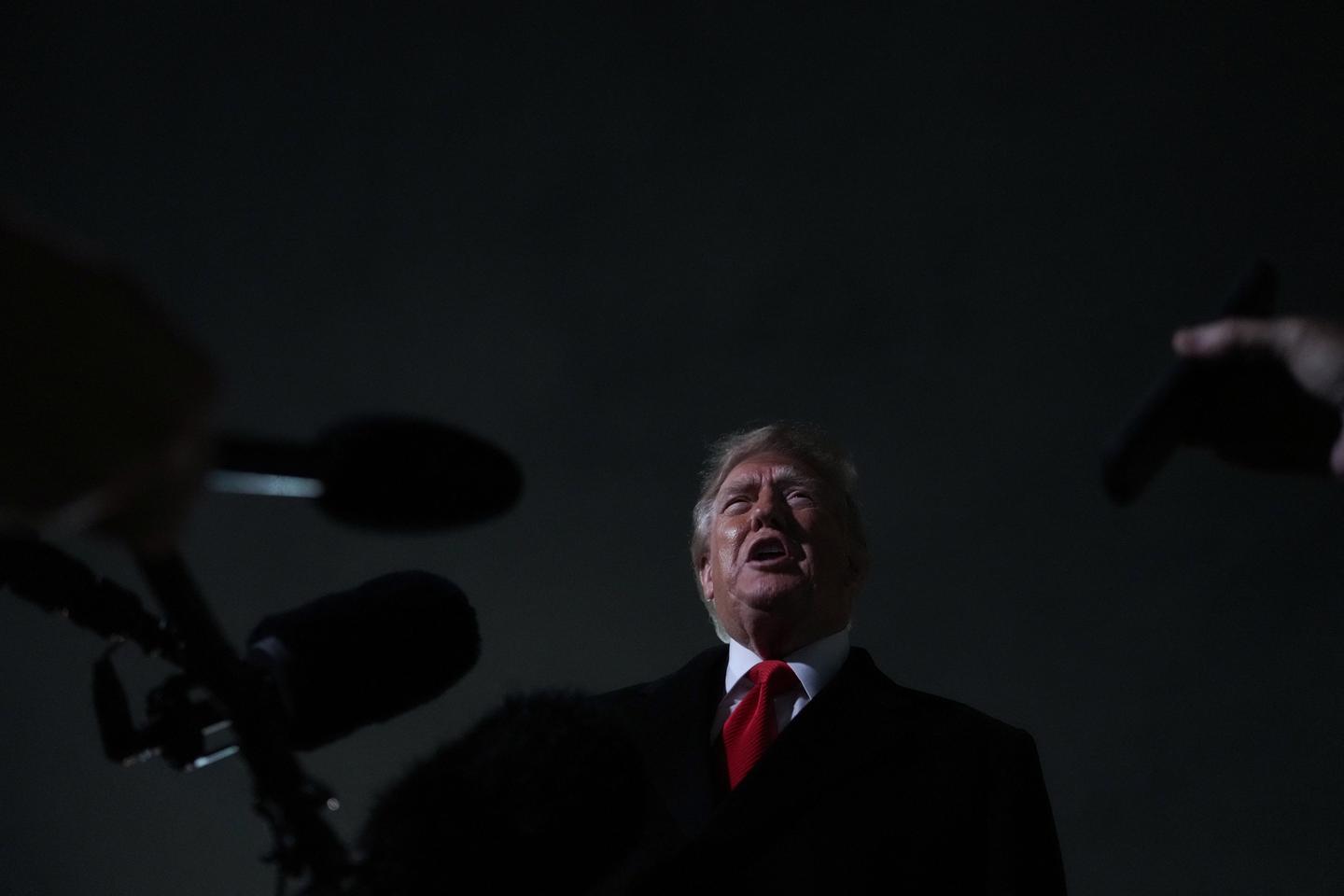
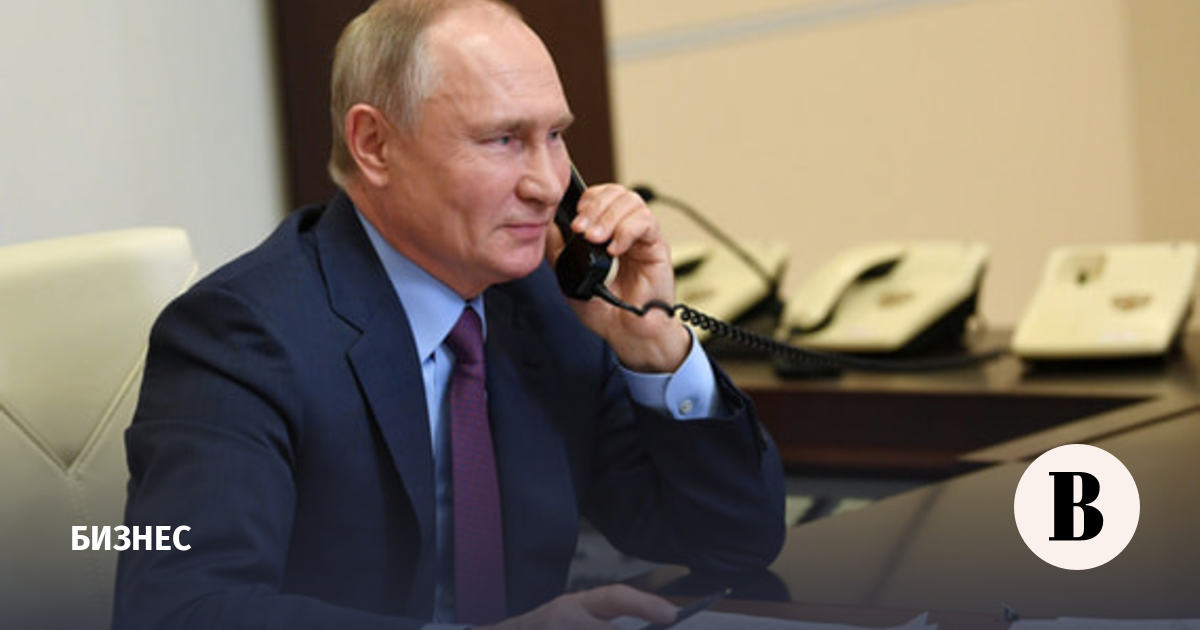
From October 9 to 13, 2026, the main foreign-policy story surrounding the United States was not another declaration of peace, but Donald Trump’s unexpected agreement with Vladimir Putin on supplying Russian diesel fuel to the American and global markets. For France, this is primarily a blow to Europe’s strategy of pressuring the Kremlin and yet another demonstration of the unreliability of American leadership. In Russia, it is seen as a symbol of the return to pragmatic dialogue with Washington and an opportunity to normalize energy trade. In South Africa, the same American style is perceived differently: as Washington’s tendency to bring ideological and domestic political demands directly into bilateral diplomacy. The common thread seen in all three countries is that Trump’s United States is increasingly offering fewer rules and guarantees and increasingly bargaining for an immediate political or economic result. (lemonde.fr)
In the French debate, the diesel deal looks almost like a caricature of this new transactional approach. In Le Monde’s analysis, Trump’s decision is described as a quick “deal” intended to ease the fuel problem in the United States ahead of the November 3 midterm elections, but politically it is viewed as a concession to Moscow amid an ongoing war. What is especially painful for Paris and other European capitals is that the news emerged alongside US-Ukrainian talks in Miami: Kyiv’s allies saw that Ukraine’s military security could be pushed aside in favor of domestic American fuel prices. François Heisbourg, a French expert on European security at the International Institute for Strategic Studies, called the logic of turning the peace process into a commercial deal “low” and potentially conflicting with the interests involved. For the French, the key issue is not the volume of diesel itself, but the precedent: sanctions are becoming not a strategic instrument, but a bargaining chip. (lemonde.fr)
This leads to a second, much deeper issue in France: the acceleration of Europe’s autonomy from the United States. Paris is no longer limiting itself to its familiar calls for “strategic autonomy”; it is now discussing Kyiv’s very practical dependence on American intelligence, satellite communications and air-defense systems. In the same article, Heisbourg warns that Europeans need to develop the IRIS² and Ceres satellite programs more quickly, otherwise Ukraine will remain hostage to decisions made in the White House. This is a characteristically French conclusion: the problem is not that America is negotiating with Russia, but that Europe still lacks the means to offset the consequences of a sudden American reversal. (lemonde.fr)
The tone in Russia’s information space is noticeably different, but it is not simply celebratory. Vedomosti emphasizes the political significance of the agreement: a temporary US license allows supplies of Russian diesel until April 7, 2027, while Deputy Prime Minister Alexander Novak says Russia’s domestic market will be fully supplied with fuel. This account presents the agreement as recognition of the need for “normal energy trade” and as evidence that direct dialogue between Moscow and Washington can circumvent previous sanctions barriers. However, the Russian analytical view is considerably more cautious than the official one. An analysis by Carnegie Politika notes that the announced volumes are themselves too small to have a radical impact on the global market, while a significant share of the fuel would probably have found export channels anyway. In other words, Moscow’s main gain is not so much additional revenue as the political “legalization” of exports that already exist and a demonstration that the sanctions regime can be circumvented through a personal deal between presidents. (vedomosti.ru)
This difference is especially revealing. France sees the deal as creating a risk that Trump is financing Russia’s ability to continue the war; Russian commentators see above all an acknowledgment of the realities of the global energy market. But an independent economic assessment within the Russian-language debate reduces both interpretations to a more prosaic conclusion: the supply volume may be insufficient to significantly lower prices, while its political impact is already enormous. That is why Europe speaks of undermining pressure on the Kremlin, while Russia speaks of a breakthrough in diplomatic isolation. (carnegieendowment.org)
South Africa’s response to the United States is developing on a different terrain—not around Ukraine, but around sovereignty and Washington’s right to publicly pass judgment on the country’s domestic policies. In late September, Pretoria issued a démarche to US Ambassador Leo Brent Bozell III for the third time in nine months. As Business Day writes, the source of irritation was his public comments on the policy of expanding the economic opportunities of the Black population—BEE—farm murders and other domestic issues. For South Africa, a démarche represents an official diplomatic protest, not an automatic step toward expelling the ambassador; the government intends to keep the channel of dialogue open. But the fact that a third warning was issued in such a short period is seen as a sign that American diplomacy is increasingly operating through public pressure. (businessday.co.za)
South Africa’s distinctive perspective is that it is challenging not only specific US criticisms, but also their method. Washington calls BEE an obstacle to business. Yet, as Business Day points out, the United States’ own assessment of the investment climate simultaneously recognizes South Africa’s strong institutions, independent judiciary, free press and developed financial sector. In Pretoria, this is read as a contradiction: the United States wants to benefit from South Africa’s role as Africa’s most industrialized economy, while at the same time attempting to make access to full-fledged relations conditional on revising the country’s social and racial policies. Thus, unlike Paris, which is concerned about America’s retreat from its commitments to allies, South Africa is primarily wary of bilateral relations becoming an ideological test. (businessday.co.za)
An unexpected common picture therefore emerges. France demands greater predictability from America as an ally; Russia has an opportunity to secure pragmatic recognition of its interests, while understanding the limits of the deal’s real economic effect; South Africa is defending its right not to become the target of an American domestic political campaign. Their assessments of the United States are opposite, but their diagnosis converges: under Trump, Washington is perceived as a power willing to rapidly change the language of relations—from sanctions to trade, from partnership to public pressure—whenever doing so promises an immediate benefit at home. For the world, this means that US diplomacy is no less influential, but far less predictable.