In South Korean, Russian and Israeli discussions of the United States in mid-August 2026, one broad question dominates: how far can Washington go simultaneously in the Middle East, Europe and the Indo-Pacific—and what price will allies and adversaries pay for American involvement? The immediate trigger was a new phase in the US-Iranian bargaining over the Strait of Hormuz, where military posturing, sanctions pressure and negotiations are proceeding in parallel. But in Seoul, the crisis is read primarily through the condition of US arsenals and the opportunities it creates for Korean shipbuilders; in Israel, through the risk that Trump will prefer a controlled pause to a decisive campaign against Iran; and in Russia, as proof of the limits of American pressure and Tehran’s ability to impose its own pace on Washington.
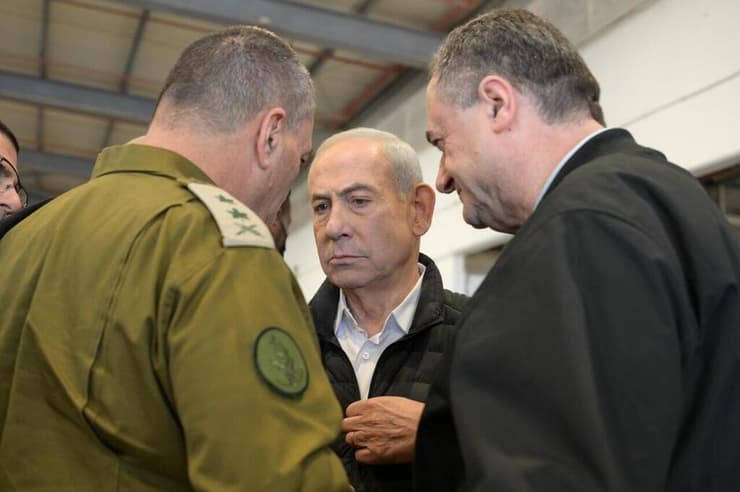
The most prominent common theme is the transformation of strikes and threats into negotiating tools. Israeli commentator Itamar Eichner, in a Ynet commentary, directly described Trump’s approach as “negotiating with Iran through bombs.” In this interpretation, the US president is not seeking a major war: limited strikes should punish Tehran for pressuring shipping in the Strait of Hormuz, demonstrate toughness to American voters and force the Iranians to move more quickly toward a substantive deal. The Israeli logic here is particularly pragmatic: pressure on Iran is useful, but a war that does not eliminate the adversary’s nuclear and missile capabilities could leave Israel facing the same threat—with a less predictable ally.
Another Israeli author, Doron Hadar, in an analysis for the same publication, emphasizes not strength but the disruption of diplomatic momentum. The US-Iran memorandum signed in Versailles on June 17, 2026, was supposed to open a 60-day window for discussions on the nuclear program, oversight and sanctions; on July 8, Trump declared that the agreement was “over” for him. For Israeli observers, this is more than another shift in White House rhetoric. In a region where every attack on a ship, every dispute over inspections and every sanctions concession is seen as a test of the entire arrangement, America’s inconsistency itself becomes a factor in escalation. Hence the restrained, almost anxious conclusion of the Israeli press: a blockade and the economic depletion of Iran may be advantageous, but Washington’s strategy depends not only on military expediency, but also on the logic of the US political calendar—oil prices, the midterm elections and Trump’s personal need to demonstrate results.
In Russia’s expert community, the same story is interpreted almost as a mirror image. Sergei Balmasov, an expert at the Institute of Middle Eastern Studies and the Russian International Affairs Council, called Trump’s Iran policy an ongoing bluff in a commentary for Gazeta.Ru, remarking: “Trump is stamping his feet, the midterm elections are just around the corner, and so far there has been zero result with Iran.” This is a characteristic Russian perspective: Tehran is not so much cornered as using Hormuz as leverage, understanding the limits of America’s willingness to launch a protracted war. In an interview with Orientalist Grigory Lukyanov published by Lenta.ru, the state of “neither war nor peace” is described as advantageous for Iran: it can regulate the passage of ships, keep pressure on markets and bargain without giving up its key instruments of influence.
This Russian interpretation matters not because it is neutral, but because it reveals the local strategic calculation: Moscow sees the American overload in the Middle East not as an isolated crisis, but as a constraint on US global policy. The more resources, ammunition and political attention Washington spends in the Persian Gulf, the less convincing its promises to simultaneously contain Russia in Europe and China in Asia become. Russian commentary therefore readily emphasizes the gap between Trump’s statements and his willingness to carry his threats through. An August 9 RBC report saying that the United States was negotiating with Iran “half-heartedly” only reinforced this image: America wants to maintain pressure but does not want to pay for it with a major war. (kuban.rbc.ru)
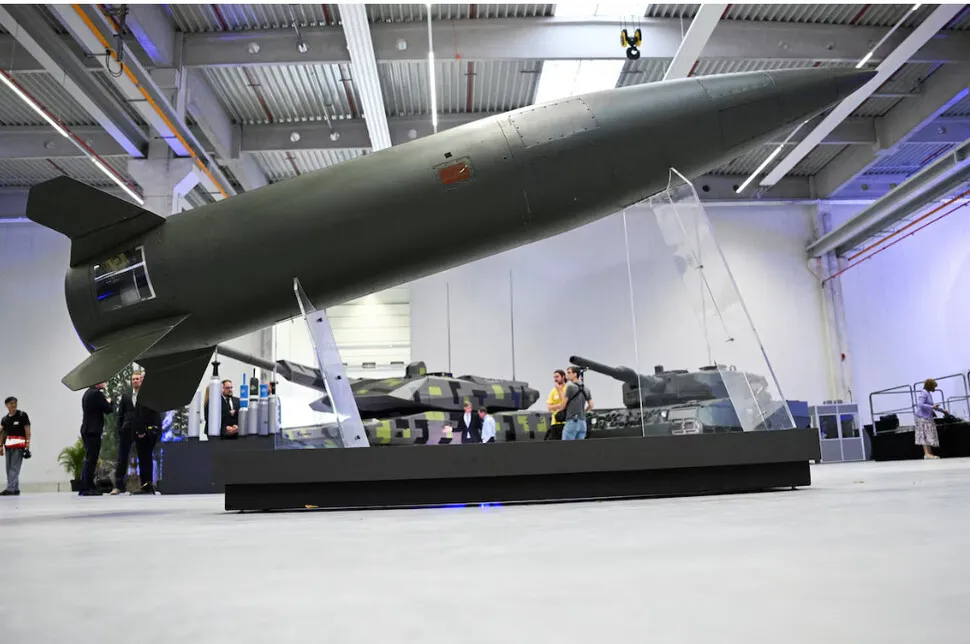
In South Korea, the same shortage of American strength provokes neither schadenfreude nor mere concern, but calculated industrial interest. On August 5, the newspaper Hankyoreh reported that the war with Iran had, according to sources and analysts, sharply depleted US stocks of long-range precision weapons: the country had effectively exhausted its ATACMS reserves, used a significant share of its Tomahawks and substantially reduced the number of THAAD and Patriot interceptors. For Seoul, this is directly linked to the North Korean threat and a Taiwan contingency: the US alliance system in Asia is based not only on treaties, but also on the ability to rapidly deploy missiles, ships and air-defense systems.
The South Korean distinctive feature is that anxiety immediately turns into discussion of production capabilities. On August 14, Hankyoreh wrote about Trump’s intention to allow foreign shipbuilders investing in the United States to build up to two initial ships for the US Navy or auxiliary forces at their own shipyards before subsequent orders are transferred to expanded American facilities. In the newspaper’s report, the measure is directly linked to the Korean-American MASGA initiative—Make American Shipbuilding Great Again. For Korean commentators, this is a rare instance in which weakness in America’s industrial base creates not merely a market for Seoul, but a chance to embed itself in the military infrastructure of its main ally. Yet this also creates a dilemma: South Korea may profit from America’s shortages, while becoming more dependent on a country whose stocks and political attention are already divided among several crises.
This is the most unexpected common conclusion emerging from the three local debates. Israel fears that Washington will stop before the Iranian threat has been eliminated; Russia believes Washington is already being forced to stop; and South Korea is trying to turn that forced pause into orders for its shipyards and investment in American production. Yet all three countries agree on one point: the United States is no longer seen as a power automatically capable of guaranteeing security, imposing terms on adversaries and securing global trade at the same time. American power remains immense, but it is now assessed through bottlenecks—missiles, shipbuilding capacity, oil prices, negotiation timelines and domestic politics. These limits, rather than Trump’s next loud threat, are shaping the responses of Seoul, Moscow and Jerusalem today.