As of September 18, 2026, the United States is prompting not so much the familiar debate over whether people in Brazil, India and Australia like or dislike America, but a more practical and troubling question: how should they deal with an ally, market and military superpower that is increasingly tying cooperation to political concessions? Three storylines converge in the local debate: US tariffs and trade bargaining, Washington’s intervention in sensitive domestic-policy issues in partner countries, and the price of the security offered by the United States. But while in Brazil this has already become a debate about the independence of elections, in India it is about preserving strategic autonomy, and in Australia about whether a defensive alliance is turning into one-sided dependence.
The sharpest Brazilian issue in recent days is not the trade restrictions themselves, but the publication of information that, during negotiations over the first 50% tariff, Donald Trump’s administration demanded that Brazil guarantee the participation of “political dissidents” in the 2026 presidential election. A Folha de S.Paulo report quotes a draft provision under which Brazil was supposed to pledge not to detain or restrict political opponents. In the Brazilian context, this is inevitably read as pressure over the fate of the Bolsonaro camp and as an attempt to recast US foreign policy in the language of another country’s domestic electoral struggle. It is no coincidence that political scientist Peter Birle, in an interview published by Folha, describes tariffs, sanctions and visa measures as forms of pressure more likely to provoke resistance than the result Washington wants. (www1.folha.uol.com.br)
For Brazil, it is particularly painful that US demands are now also linked to security. On September 17, Washington included the country in a report on drug trafficking, claiming that its efforts to combat the PCC and Comando Vermelho—the largest Brazilian criminal groups—were inadequate. Brazilian commentators saw this as more than a dispute over criminal policy: as analyst Clarissa Oliveira noted in a CNN Brasil analysis, such language effectively places Brazil in the same category as countries where drug cartels supplant the state. This heightens fears that security is becoming another lever of political influence. (cnnbrasil.com.br) At the same time, part of Brazil’s business and foreign-policy community is urging the government not to respond to pressure through pure confrontation: José Pimenta, Fiesp’s director of international trade, argues in his column that the US return to Latin America—through agreements on minerals, energy and security with Brazil’s neighbors—is also a signal that Brasília should not drop out of the region’s economic game. (cnnbrasil.com.br)
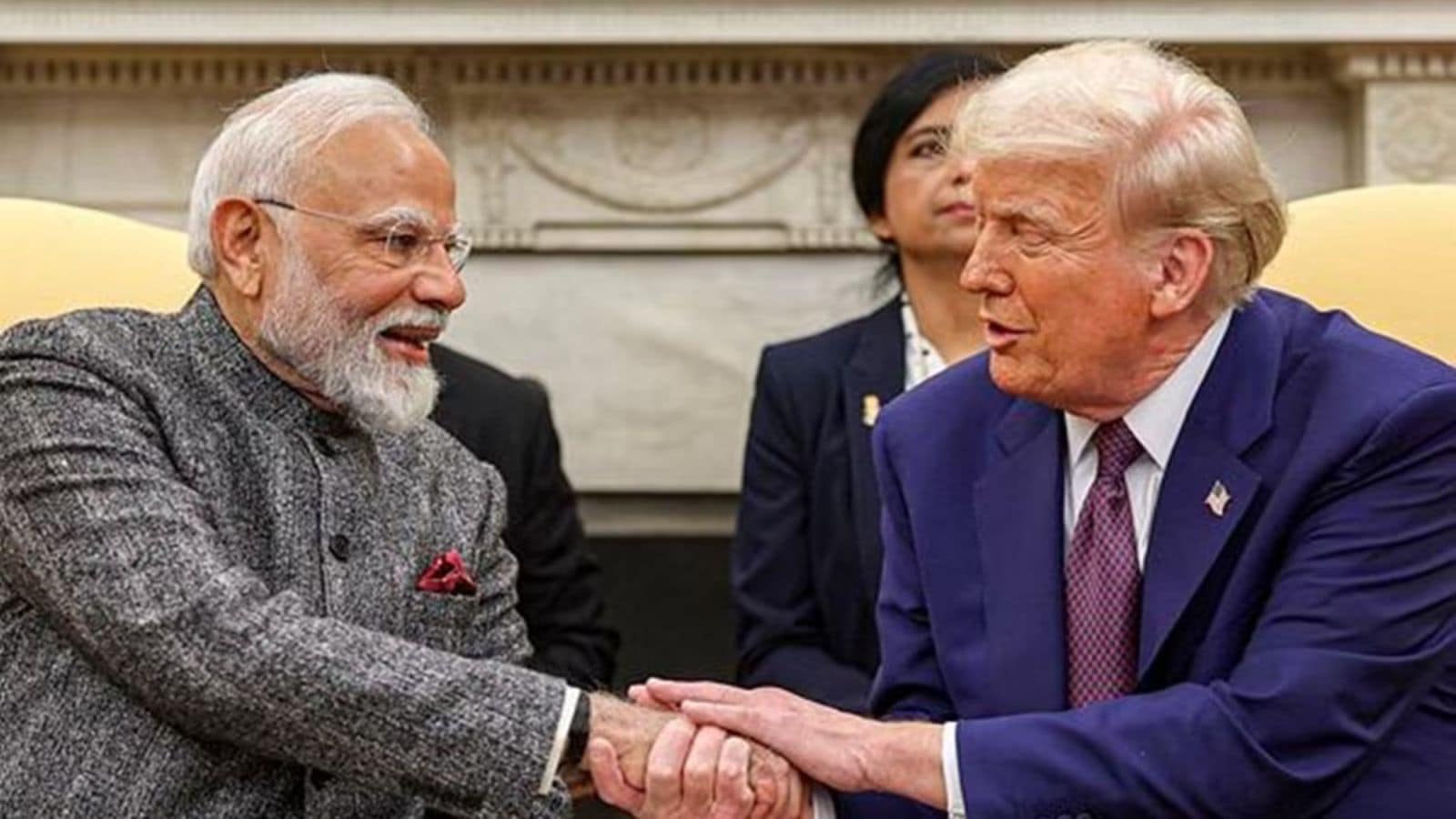
India’s reaction to America is less emotional, but no less wary. New Delhi continues to negotiate a bilateral trade agreement, but its tone is fundamentally different: the US is needed as a market, a source of technology and a counterweight to China, but not as an arbiter of Indian energy or foreign policy. In February, the White House announced a reduction of India’s “reciprocal” tariff to 18% after India committed to cutting purchases of Russian oil and expanding access for US goods to the Indian market. (whitehouse.gov) However, in September, Commerce Minister Piyush Goyal indicated that a final agreement would be made public only if India received a tariff rate more favorable than those offered to its competitors; his position was stated plainly: national interests cannot be compromised, as Aaj Tak reported. (aajtak.in)
Indian analysts draw a broader conclusion from this: the “special relationship” with the US has given way to a cold, transactional exchange of benefits. Professor Kanti Bajpai writes in The Indian Express that Washington now sees India not as a power to be strengthened for the sake of balancing China, but primarily as a market for US goods, investment and weapons. (indianexpress.com) Even where interests coincide—in the Indo-Pacific, technology and containing China—the Indian debate increasingly proceeds from the principle of “multi-alignment”: maintaining ties with the US without severing relations with Russia, the Gulf states and other centers of power. A study by the Indian foundation VIF describes this not as a relic of nonalignment, but as an active foreign-policy instrument: selective rapprochement while preserving room for maneuver. (vifindia.org)
Australia’s debate reveals a third dimension of the same problem. Here, the US is not an external economic partner but the foundation of the defense architecture through AUKUS. That is precisely why concerns about dependence are stronger. ABC chief international affairs editor Laura Tingle notes in her analysis that most countries are reassessing their ties with the US because of Trump’s unpredictability and wars affecting American allies, while Canberra is avoiding a fundamental debate. She is particularly concerned by the new interpretation of AUKUS: Australia is not gaining independent capabilities; rather, the US Navy is gaining more days of presence in the Indian Ocean through Australian infrastructure. (abc.net.au)
In this debate, former Prime Minister Paul Keating has advanced an unusually sharp argument: he compares Trump’s view of the division of spheres of influence among great powers to the logic of mafia “territories.” But his more important warning is that Australia risks becoming embedded in the US strategy of containing China without having a decisive say in how and when that strategy could lead to a crisis. At the same time, the government is facing more immediate US pressure over plans to require digital platforms to protect children from harmful content and allow users to disable recommendation algorithms. When the White House called possible fines on US technology companies a form of “extortion,” Communications Minister Anika Wells responded in The Guardian Australia: “We are a sovereign country” and have the right to protect parents and children. (theguardian.com)
It is precisely in this convergence—from Brazilian elections to Indian tariffs and Australian submarines and digital platforms—that the main international reaction to today’s America can be seen. Brazil fears that trade and security are becoming tools for influencing its democratic process. India accepts deals but refuses to turn them into dependence on American conditions regarding Russia, markets and geopolitics. Australia, the closest military partner of the three to the US, is beginning to argue not about whether it needs the alliance, but about whether it remains an alliance of equals. In these countries, the US is still viewed as an indispensable power, but no longer as an automatically reliable leader. The new formula among local elites sounds almost identical everywhere: cooperation with Washington is necessary—but submission to its political priorities is not.