After the U.S. midterm elections on November 3, the main topic of discussion in Russia, China and Ukraine was not simply the Democrats’ victory in both chambers of Congress, but how Donald Trump’s weakened position might change his foreign-policy behavior right now. Local commentary in all three countries offers surprisingly little hope that U.S. policy will change automatically: Moscow fears a new round of sanctions pressure, Kyiv worries that the White House will rush through an unfavorable deal before the new Congress takes office on January 3, 2027, and Beijing sees yet another sign of U.S. domestic instability and its unpredictability as an international actor.
The common thread running through the debate is the trilateral talks between Russia, Ukraine and the United States scheduled for November 10–11 in Abu Dhabi. China’s The Paper describes them as an attempt to keep the diplomatic process from collapsing, rather than a path to a quick peace. Chinese commentators stress the parties’ “diverging demands”: Moscow ties the agenda to sanctions relief and a broader security framework, Kyiv puts humanitarian issues and guarantees first, while Washington is trying to turn its role as mediator into a political result. Beijing sees particular significance in the fact that, after the Republicans’ defeat, the political cost to Trump of making major concessions to Russia has risen, while Ukraine and Europe may take a harder line. This is less a view of the conflict itself than of the limits on U.S. maneuvering: the United States can still convene talks, but can no longer easily dictate their outcome.
The Russian debate is notably more ambivalent. On the one hand, analysts see the White House as having an incentive to speed up negotiations before the new Congress takes office. An RBC analysis notes that a settlement in Ukraine remains one of Trump’s central foreign-policy initiatives, and that he may therefore try to advance an agreement on a tight timeline. On the other hand, Moscow has no illusions about the new congressional majority. Foreign Ministry spokeswoman Maria Zakharova told Kommersant that Russia does not expect relations with the United States to improve after the elections: in her view, an entrenched anti-Russian consensus has long prevailed in Congress. This is an important nuance: Russia’s view of Trump is not simply based on hopes of a “thaw.” Rather, it assumes that the window for pragmatic engagement with the White House remains open, but is narrowing.
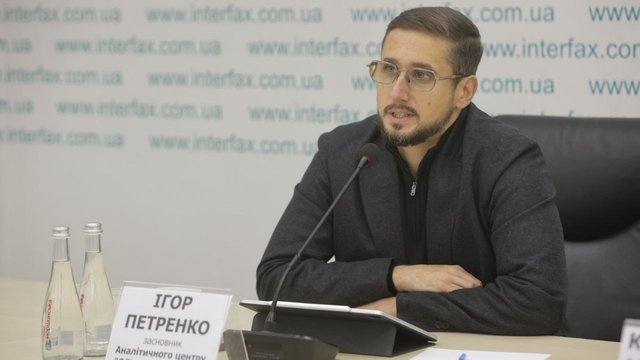
Ukrainian commentators draw an almost opposite conclusion from the same situation. They see the Democrats’ victory as a positive signal morally and politically, but not as a guarantee of new weapons, intelligence or sanctions. Oleg Shamshur, Ukraine’s former ambassador to the United States, writes in an article for ZN.ua that Trump has lost Congress, but not the executive branch. Expert Ihor Petrenko puts the risk even more starkly: in a comment to Interfax-Ukraine, he calls the period leading up to January a “window” in which the president is already politically weakened but remains almost unconstrained. For Kyiv, the concern is not so much the new Congress as the possibility that the U.S. administration will try to present a major European security agreement as Trump’s personal foreign-policy success—even if Ukraine is merely one part of a broader package of deals with Moscow.
That is why Trump’s November 9 statement that Ukraine might have “somewhat different borders” after the war, as reported in Ukraine, is seen in Kyiv not as a diplomatic slip, but as a signal of possible pressure over territory. Ukraine’s Ukrainska Pravda calls the next two months the riskiest period: the Abu Dhabi talks, a possible meeting between Trump, Vladimir Putin and Xi Jinping at the APEC summit in Shenzhen on November 18–19, and then Washington’s December 11 budget deadline combine to create a packed diplomatic calendar. From Ukraine’s perspective, these are not a series of unrelated events, but a potential effort to settle matters of vital importance before Democrats gain control of committees, the ability to hold hearings, and budgetary tools to constrain the White House.
A second shared theme is the connection between the U.S. domestic economy and foreign policy. In Russia and China, the elections are seen less as a referendum on geopolitics than as one on prices, fuel and a sense of administrative chaos. China’s The Paper links the Democrats’ success to Americans’ frustration over the rising cost of living, expensive gasoline, inflation and high mortgage rates. A different angle stands out in a Russian RBC analysis: the Trump administration sought to ease pressure on voters over fuel prices by importing Russian diesel, while also putting some anti-Russian restrictions on hold. For Moscow, this supports the argument that Washington has a material interest in limited economic engagement; for Kyiv, it is a painful reminder of how quickly U.S. domestic political considerations can displace the logic of a sanctions campaign.
Against this backdrop, China’s response is the most detached, but also the most systemic. There, the Republicans’ defeat is interpreted not as a likely shift toward U.S. cooperation, but as further evidence that American policy has become hostage to polarization, electoral cycles and rule by presidential decree. In a Chinese analysis, Shao Yuqun, a researcher at the Shanghai Institutes for International Studies, examined two possible paths for U.S.-China relations after the elections: tighter congressional oversight of the administration, or the president retaining sufficient leverage to pursue foreign policy independently. The very existence of this fork in the road matters: Beijing does not expect a Democratic Congress to end strategic competition with China. It anticipates more oversight, more internal conflict in Washington and perhaps greater tactical flexibility from the White House—but no change in the underlying course.
The most surprising commonality between the Russian, Chinese and Ukrainian debates is that all three see America not as an all-powerful arbiter, but as a country whose international decisions are increasingly driven by crises at home. Moscow hopes to capitalize on Trump’s desire for a deal, but is preparing for resistance from Congress. Kyiv welcomes the Republicans’ defeat, yet fears it may push the president to seek a high-profile diplomatic comeback at Ukraine’s expense. Beijing notes the erosion of predictability in the American system and concludes that any promises from Washington should be judged not by their wording, but by whether they can survive the next domestic political clash.
In this sense, the coming days matter more than the elections themselves. Abu Dhabi will show whether a weakened Trump is less able to pressure the parties to the conflict—or, conversely, more inclined to make a risky diplomatic gamble. For Russia, China and Ukraine, the United States remains a key power, but no longer appears to be a unified, stable center of decision-making. This shift, rather than the arithmetic of seats in Congress, is the main international consequence of the U.S. vote.