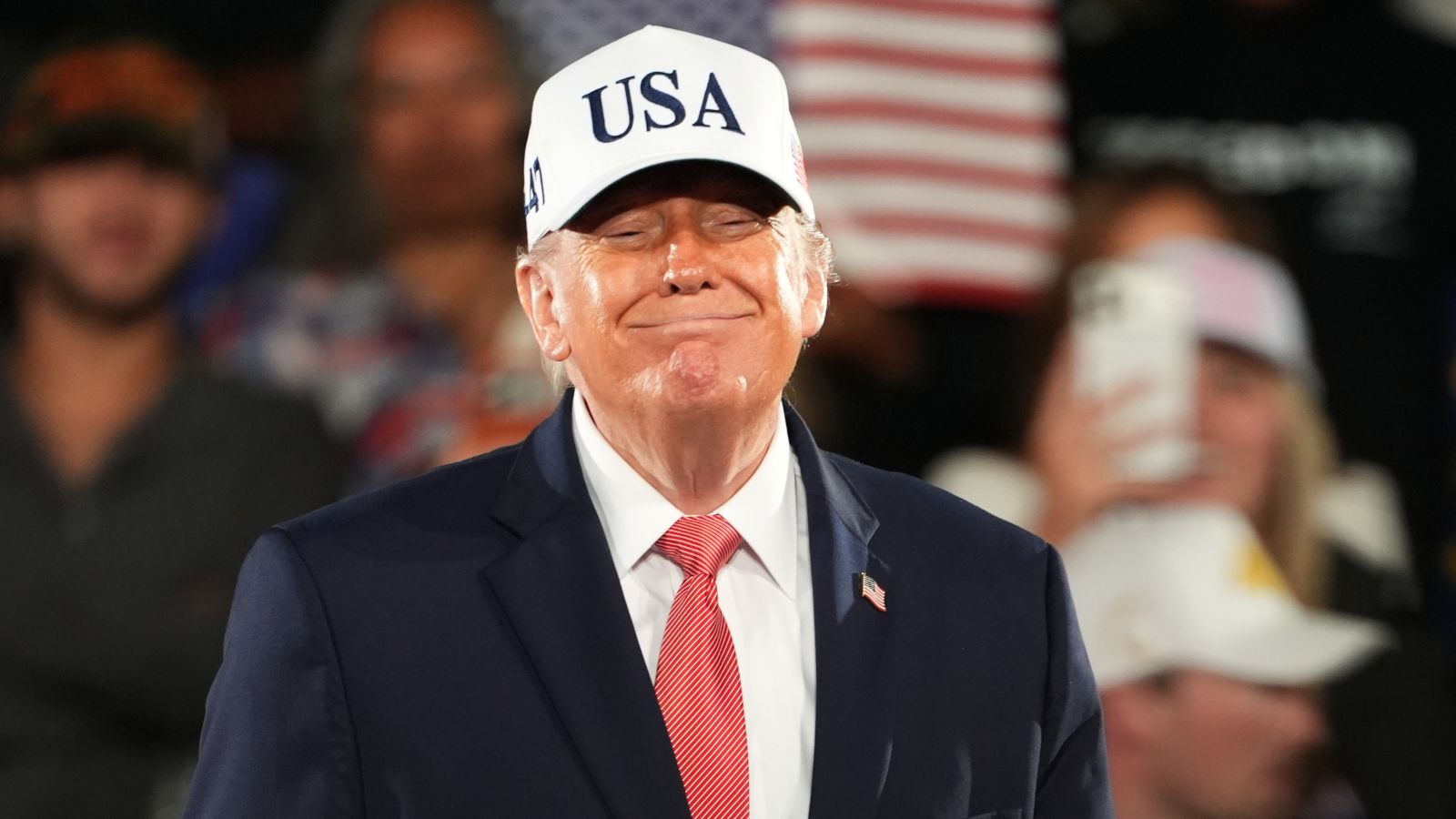
By the end of November 2026, the main American story outside the United States was not so much the midterm elections on November 3, in which Democrats won back both chambers of Congress, as the question of what the Republican defeat would—and would not—change in Donald Trump’s foreign policy. In South Africa, the debate centers on the threat of losing trade benefits and the humiliating rhetoric Washington uses about the plight of white farmers. In India, it is about tariffs, oil, the war with Iran and the fate of H-1B visa holders. In France, it is about anxiety over America’s strategic drift between Beijing, Moscow and its European allies. Local observers share a paradoxical conclusion: Trump’s electoral defeat limits him at home, but could make his foreign policy even more impulsive.
For South Africa, the US elections were almost a referendum on bilateral relations. Fikile Mbalula, secretary-general of the ruling African National Congress, made no secret of his satisfaction at the Republicans’ rout, calling Trump “very nasty” toward his country. His reaction was prompted by more than abstract antipathy: the US administration announced its intention to end South Africa’s participation in the AGOA program on January 1, 2027. The law gives African goods preferential access to the US market. In a Mail & Guardian report, Mbalula openly acknowledges how painful the decision will be: it will hurt businesses and people who trade with the US. At the same time, he links it to Washington’s campaign of pressure on Pretoria.
South Africans are particularly troubled by the way US policy has become an extension of the country’s own racial debate. Mbalula is outraged that Trump continues to speak of killings of white people despite denials by white South Africans themselves. The US president is seen not merely as a foreign critic, but as a figure bolstering local right-wing groups that lobby Washington on the issue of “white farmer genocide.” But views are far from unanimous, even in South Africa. As Daily Maverick notes, some politicians hope a Democratic Congress can ease tariff and humanitarian pressure, while AfriForum and activists close to it believe that the agenda of crime and land reform will remain influential: foreign policy is still largely in the hands of the US president.
South Africa’s view, then, is hardly one of unalloyed jubilation. Yes, a Democratic Congress could serve as a counterweight to the White House. But Democratic Alliance leader John Steenhuisen warns that, as a “lame duck” [a president who has lost political momentum but remains in office], Trump could make up for his domestic weakness by becoming more active in areas where Congress has the least ability to restrain him—in international affairs. This is a highly practical concern: a continuation of the war with Iran and a possible blockade of the Strait of Hormuz would mean higher oil prices, inflation and costs for the South African economy. (dailymaverick.co.za)
In India, US policy provokes less moral outrage than disappointment in a calculation that until recently seemed almost beyond question: Trump’s return was supposed to strengthen the strategic partnership between the world’s two largest democracies against China. Instead, New Delhi has faced US tariffs, pressure over imports of Russian oil, a tougher immigration stance and unexpectedly warm ties between Washington and Pakistan. In a column for The Indian Express, Ram Madhav, an Indian politician and strategist, writes that “there is hardly any support or sympathy for Trump in India.” For a public that was notably well-disposed toward Trump in 2020 and 2024, this marks a significant shift.
Indian criticism is aimed above all at the use of trade as a tool of coercion. From New Delhi’s perspective, Washington demands geopolitical loyalty from India while punishing it for trying to maintain its autonomy—above all by buying Russian oil, which helps keep energy prices in check. The US war with Iran has intensified this sense of grievance: it disrupted energy routes through the Strait of Hormuz, drove up fuel costs and demonstrated how vulnerable the Indian economy is to decisions made without regard for its interests. Madhav describes this as a crisis of trust in a relationship built over a quarter-century. (indianexpress.com)
India, however, does not expect a Democratic victory to automatically restore the partnership as it once was. The analysis in The Indian Express points to a more sober calculation: a Democratic Congress could strengthen oversight of tariffs and the military campaign against Iran, but an administration in need of quick foreign-policy wins could instead increase pressure on New Delhi to secure a favorable trade deal. For India, that means a double risk. An easing of the war could bring oil prices down, but tougher sanctions on Moscow could once again threaten imports of Russian crude. What Paris calls instability in America’s course, New Delhi measures in the price of a barrel and the prospects for Indian exporters, pharmaceutical companies and engineers.
France’s response to the news from America is less focused on bilateral ties and more civilizational in outlook: the debate is not so much about relations with Trump as about whether Europe can coexist with an America that no longer seems a predictable guarantor of the Western order. French commentators saw Trump’s November meeting with Xi Jinping and Vladimir Putin in Shenzhen as a symbol of a shift—not a new division of the world along the lines of Yalta, but a world in which three great powers are trying to reach agreements with little regard for Europe. A Le Monde article stresses that Trump’s closeness to Putin does not yet amount to a durable alliance, but that the two are brought together by a shared illiberal vocabulary: “authority, sovereignty, civilization, national identity, tradition.” For French observers, the danger lies precisely in the normalization of such language in the politics of great powers.
The French are even more concerned by the contradictions in US policy toward China. A recent Le Monde column says that Trump’s step is “increasingly falling into step with Xi Jinping’s.” The French criticism here is not merely the usual anti-Americanism. It points to a specific contradiction: the White House proclaims technological and military rivalry with China, yet acts inconsistently—from tariff maneuvers to the president’s involvement in corporate and technology issues involving Nvidia. In Paris, this is read not as a sign of strength, but of America’s diminished ability to devise a long-term strategy. (lemonde.fr)
Washington’s latest tariff offensive has only reinforced that perception. On November 25, the US announced additional measures against several trading partners, including the European Union, India and China. For France, this is not a separate economic dispute but confirmation that alliance no longer protects countries from American protectionism. Le Monde notes that the new tariff rate for the EU is 15%, the upper limit of the ceiling agreed earlier. For India and South Africa, this is the language of pressure; for France, it is an argument for European “strategic autonomy”—the ability to produce critical technologies, provide for its own defense and pursue trade policy without depending on decisions made in Washington. (lemonde.fr)
The most surprising common thread in the reactions from the three countries is that none sees the Democrats’ success as a return to the America of old. In Pretoria, people know that criticism of South Africa’s foreign policy is bipartisan: Democrats are also uneasy about the country’s ties with Russia and China. In New Delhi, they understand that American concerns over Russian oil and the trade imbalance will not disappear if Trump is weakened. In Paris, the view is that even a change of occupant in the White House will not undo America’s fundamental turn toward rivalry with China or its demand that Europe shoulder more of the cost of its own security.
The United States’ international image today, then, is not that of a country defeated in domestic politics, but of a power whose internal polarization has become an exportable risk. South Africa sees a threat to its jobs and its sovereignty in matters of race; India sees a danger to its strategic autonomy and energy security; France sees an acceleration of the end of the familiar Western hierarchy. The US elections have given these countries hope that presidential power can be constrained, but no confidence in the direction America is taking.