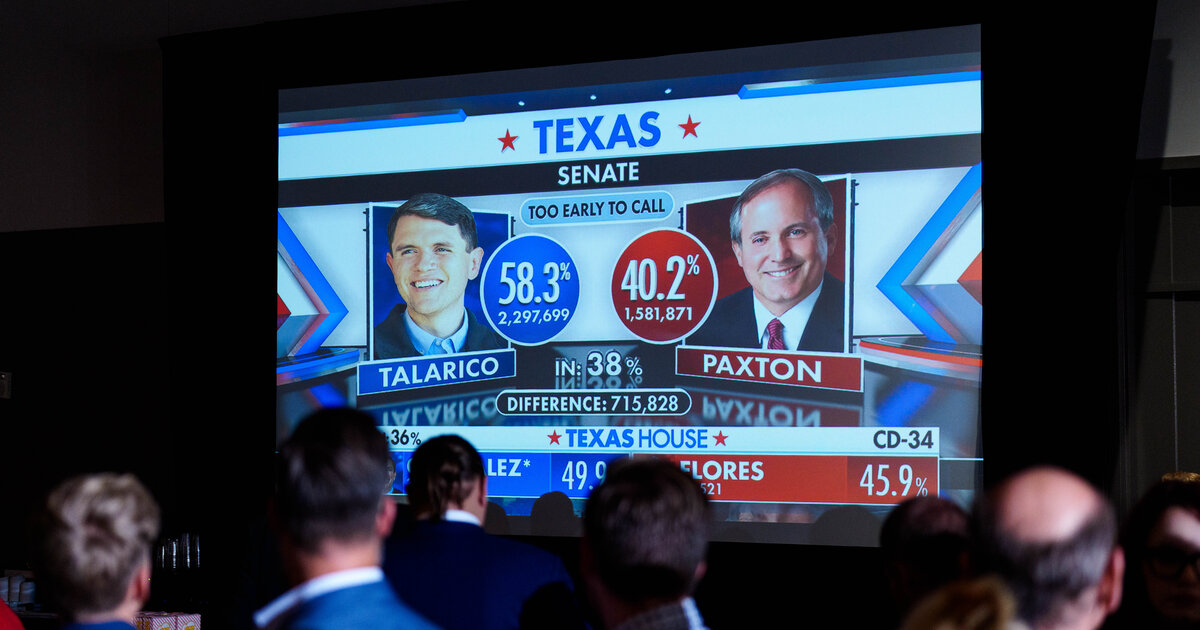
In recent days, the main topic in American news for German, French and South African commentators has been the U.S. midterm elections of November 3, 2026, in which Democrats regained control of both chambers of Congress. But relief at the Republicans’ defeat has not been accompanied by confidence that America as it once was will soon return. The more sober conclusion prevailing in Berlin, Paris and Pretoria is that voters have constrained Donald Trump at home but have not taken away his main tools of foreign pressure: tariffs, unilateral diplomacy and the power to make access to the U.S. market a political condition. (tagesschau.de)
In France, the results were read above all as a warning to the country’s own right wing and as a useful check on the American executive branch. An editorial in Le Monde calls the outcome a “punitive vote” against Trump and stresses that divided government—when the White House and Congress are controlled by different parties—is, in this case, a desirable restraint. But the French newspaper cautions against interpreting the result too optimistically: many Americans voted more against the high cost of living and the effects of economic policy than in defense of institutions and the rule of law. In other words, the French reaction is not simply that “America has come to its senses”; rather, it recognizes that the political cost of Trumpism has risen. (lemonde.fr)
The domestic political implications of the American result are particularly sensitive in France. Ahead of the 2027 presidential election, the defeat of the Trumpist camp has become an awkward talking point for Marine Le Pen’s National Rally, while also providing a moral boost to the left and center. In a Le Monde analysis, National Rally vice president Louis Aliot attributes Trump’s defeat to the “Iranian adventure,” insisting that Americans elected him for domestic reasons. This is a revealing attempt to distinguish French nationalism from the American model: for Europe’s right, Trump remains a useful symbol of anti-elite politics, but becomes a toxic partner when his foreign policy starts to look costly and chaotic. (lemonde.fr)
The mood in Germany is similar, but the emphasis is different: less on lessons for party politics and more on security and the reliability of an ally. Tagesschau describes German politicians’ reactions as a combination of congratulations to the Democrats and deliberately restrained expectations. Berlin hopes Congress will be able to strengthen oversight of the White House, but understands that the U.S. president retains broad powers in foreign policy. For Germany, this is no abstraction: by the end of the year, the U.S. administration is due to determine the scale of any potential reduction in the U.S. military presence, including on German soil. (tagesschau.de)
German analysts therefore do not see the “blue wave” as ending Trumpism. A Deutsche Welle report states plainly that Trump remains a force in foreign policy. And the German Economic Institute, in a comment by its director, Michael Hüther, puts it even more bluntly: the German economy will continue to suffer from U.S. tariffs at least until the 2028 presidential election. In Germany’s view, the problem is not only the specific tariffs, but also the fact that Washington’s decisions have become too dependent on domestic campaigning and the president’s personal will. (amp.dw.com)
This is where the German and French perspectives converge. The editors of Le Monde write that Europeans “have nothing to expect” from Trump’s defeat in the midterms: Congress may obstruct his domestic agenda, but it will not necessarily force him to change course toward allies, Ukraine, defense spending or trade. This marks an important departure from Europe’s earlier hopes that a change in Washington’s party balance would make a difference. Europe increasingly sees American instability as a long-term structural problem, not a temporary deviation that another election will correct. (lemonde.fr)
In South Africa, American policy is discussed in even less abstract terms. The Trump administration’s decision to exclude South Africa from the African Growth and Opportunity Act, a trade program known as AGOA, starting in January 2027, is seen as a practical punishment for the country’s independent foreign policy. A Business Day column urges readers not to expect the Republicans’ defeat to automatically improve relations with Washington: exclusion from AGOA is the culmination of sustained pressure, ranging from steep tariffs to political hostility. (arenaholdings-businessday-prod.web.arc-cdn.net)
South African reactions are not uniform, however. The trade union federation COSATU warns that “ghost towns” could emerge in agricultural areas of the Western Cape that depend on fruit and wine exports to the United States. But some commentators point to a less obvious detail: most South African exports to the U.S. already enter under ordinary World Trade Organization rules, rather than through AGOA; and raw materials and critical minerals that are particularly important to the United States will remain part of bilateral trade. In a taz analysis, this leads to a twofold conclusion: the damage is real, especially for specific export industries and jobs, but the U.S. move also reveals the limits of economic coercion—Washington cannot give up strategic South African supplies without consequences. (taz.de)
The most unexpected point of common ground among the three countries is their refusal to see the United States solely as either a source of political hope or a threat. Germany views America as an indispensable but unreliable guarantor of security; France sees it as a mirror for its own struggle against right-wing populism and as an ally from whom Europe must secure greater strategic autonomy; South Africa sees it as a market that can use trade preferences to bring dissenters into line. In all three cases, the main subject of debate is no longer Trump as an individual, but America’s new ability to abruptly change the rules for its partners.
That is why the Republicans’ defeat is seen in Berlin, Paris and Pretoria not as the end of American pressure, but as a pause that offers an opportunity to prepare for it more effectively. Europeans hope for greater room to maneuver in Congress; South Africans are looking to diversify their markets and pursue a more pragmatic diplomacy. But the overall diagnosis remains stark: even a weakened U.S. president retains enough power to affect Germany’s security, France’s political debate and jobs in South Africa. (tagesschau.de)