The main picture emerging from Chinese, Turkish, and Brazilian discussions on September 22–24, 2026, is not simply a reaction to Washington’s latest statements. The United States is simultaneously seen as an indispensable negotiator, a source of military and economic risk, and a power increasingly willing to assert its right to set the rules in “its” regions. In China, attention is focused on Xi Jinping’s visit to the United States and the attempt to turn rivalry into manageable stability. In Turkey, the debate centers on whether Recep Tayyip Erdoğan’s personal ties with Donald Trump can finally resolve long-standing defense and Syrian disputes. In Brazil, meanwhile, U.S. policy has become part of an almost existential argument over sovereignty and whether Latin America is returning to the status of Washington’s “backyard.”
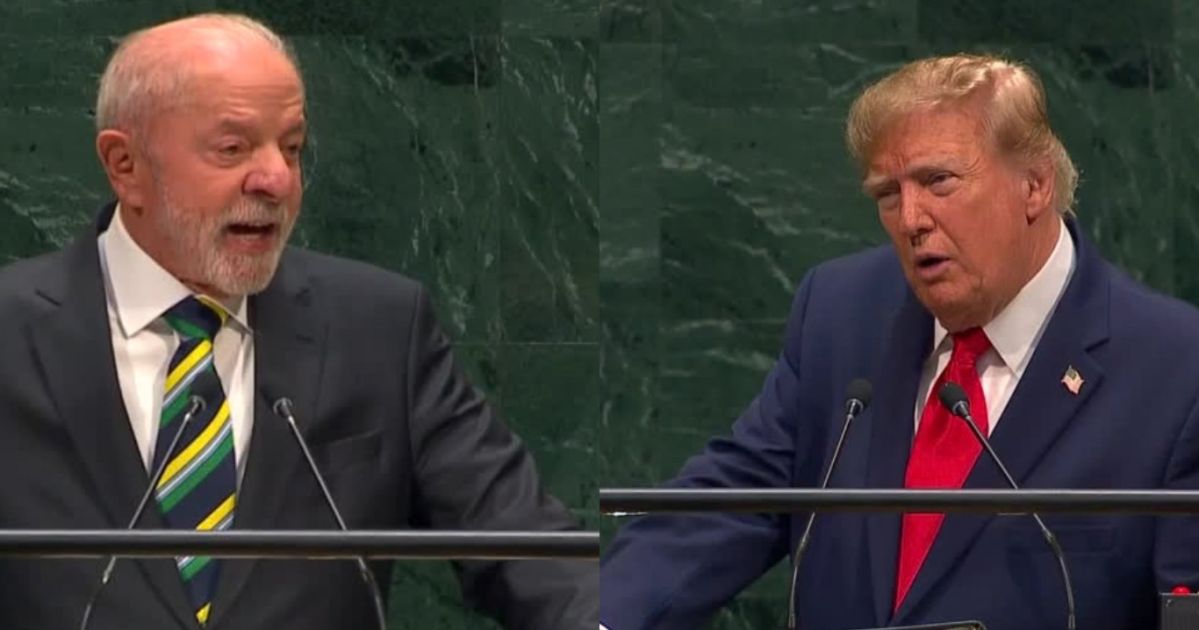
The most prominent common theme is the clash between two visions of the international order. At the UN General Assembly on September 22, Brazilian President Luiz Inácio Lula da Silva put it bluntly: “Brazil does not fit in anyone’s backyard.” In Agência Brasil’s official report, the phrase is presented as a defense of the country’s independence; Brazilian commentators saw it as a response to Trump, who at almost the same time was speaking about the United States’ readiness to use force to defend its interests in the Western Hemisphere. Analyst Fernanda Magnotta, writing in CNN Brasil, notes that for Brazil, sovereignty is not an abstract slogan but protection against an imbalance of power. From this perspective, the issue is not merely a bilateral quarrel with the United States, but also the right of a middle power to trade, choose its partners, and hold elections without external political pressure.
This issue has become especially sensitive because Brazil’s public debate links the American line to a revival of the Monroe Doctrine—the idea of a special U.S. role in the Americas. Folha de S.Paulo writes that fears of outside interference are already becoming a factor in the campaign ahead of the 2026 elections. The domestic reaction, however, is far from uniform: some see Lula’s tough position as necessary consolidation around the flag, while others believe the president is using the UN as an electoral platform. This divide was on display in the televised debate reported by CNN Brasil: former Justice Minister José Eduardo Cardozo defended the emphasis on sovereignty, while former Senator Ana Amélia Lemos viewed Lula’s formulation as a convenient campaign slogan. Yet the dispute itself is revealing: even Lula’s critics are forced to discuss relations with the United States in the language of national autonomy, rather than unconditional alliance.
China’s reaction to America is currently less emotional, but no less principled. Beijing’s official line surrounding Xi’s visit to the United States is built around the formula of “constructive strategic stability.” An article in the People’s Daily, published on the day the visit began, speaks of the need to pursue “the right path of coexistence between major powers” and highlights expanding contacts ranging from trade to artificial intelligence and biomedicine. This is not rhetoric expressing trust in Washington; rather, it is an attempt to establish a principle: competition must not turn into the destruction of communication channels. For Chinese audiences, stability primarily means buying time—for the economy, technological development, and the strengthening of China’s diplomatic network outside the American orbit.
Behind the official restraint, however, lies deep caution. A researcher at Fudan University’s Center for American Studies, in a commentary on the leaders’ meeting, calls Taiwan a “stress test” for the current rapprochement: a warm ceremony and trade agreements can coexist with a fundamental dispute over U.S. arms supplies to Taipei. Chinese analysts also view tariffs, export restrictions, and technology policy not as separate issues but as one system of American pressure. Beijing is therefore interested not in a romantic “reset,” but in a limited deal: reducing the risk of a trade or military breakdown without conceding issues of sovereignty and technological standing.
In Brazil, the Chinese-American summit is viewed from a different angle: as an indication of how inconsistent Trump’s foreign policy can be. CNN Brasil draws attention to the contrast between Xi’s lavish reception and the modest expectations for substantive agreements. For Brazilian observers, this offers an important lesson: Washington can simultaneously pressure countries in the region over trade, digital regulation, or domestic politics while conspicuously seeking compromise with its main systemic rival, China. Brazil’s conclusion is therefore that national strategy cannot be built on the assumption that U.S. policy will be consistent; ties must be diversified, and neither the United States nor China should become the sole center of gravity.
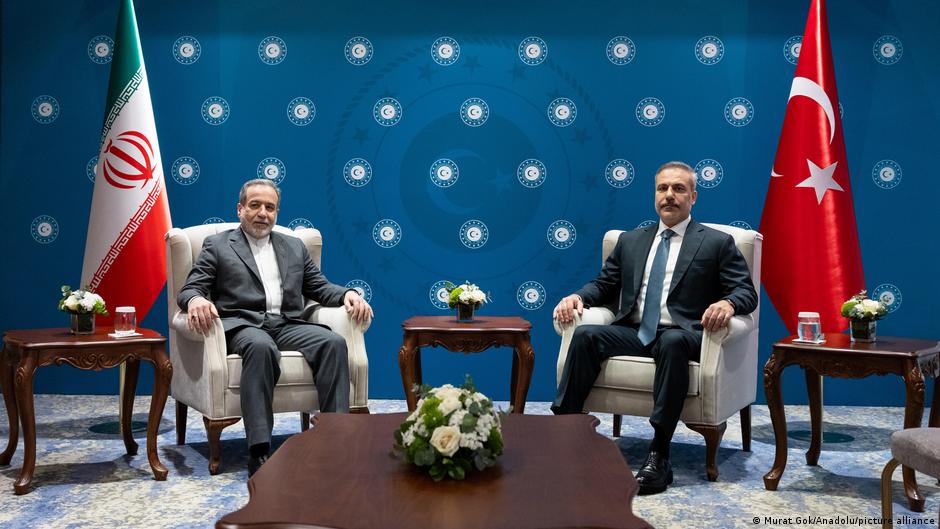
The Turkish debate is even more pragmatic. Ankara does not dispute U.S. global leadership in the same terms as Brazil, nor does it compete with Washington globally as China does. But it is increasingly separating personal diplomacy from structural interests. On September 23, President Erdoğan told a meeting with American business leaders that strategic cooperation with the United States was developing “in all areas,” presenting Turkey as a reliable manufacturing and logistics hub for supply chains undergoing restructuring; Anadolu Ajansı reported his remarks. Turkish commentators, however, are not taking this optimism at face value. A DW Türkçe analysis stresses that even with Trump’s political sympathy for Erdoğan, the CAATSA sanctions, Turkey’s return to the F-35 program, F-16 deliveries, and the consequences of the war surrounding Iran remain unresolved.
Iran is precisely what turns U.S.-Turkish relations from a bilateral bargaining process into a matter of Turkey’s national security. Turkish audiences view American pressure on Tehran not through an abstract debate about democracy or the nuclear program, but through the risk of new chaos along the border: migration, rising energy prices, the strengthening of armed non-state groups, and a new redrawing of Syria and Iraq. In a DW Türkçe report on Ankara’s role in the ceasefire, Turkey’s position is described as “active neutrality”—not a rejection of ties with the United States, but an attempt to act as a mediator and avoid becoming a party to someone else’s war. Turkey’s fear is not so much that Washington will necessarily attack Turkey itself, but that American actions will create a vacuum and a new balance of power whose consequences Iran’s neighbors will have to bear.
This is where an unexpected similarity emerges between Ankara, Brasília, and Beijing. All three capitals want to talk to the United States, benefit from trade, and avoid direct confrontation. But all three also see danger in America’s tendency to change the rules depending on the region and the balance of power. Brazil responds in the language of anti-colonial sovereignty, China with the formula of managed strategic stability, and Turkey through bargaining over security, arms, and its mediating role. The difference matters: China seeks to consolidate a balance between two superpowers, Brazil defends its right not to become an object of American hemispheric policy, and Turkey seeks to turn its geographic indispensability into a diplomatic asset.
Taken together, these reactions offer a more complex image of the United States than either the familiar notion of a simple “decline in influence” or that of unconditional American dominance. Washington remains the center around which other countries make their calculations: Xi travels for talks, Erdoğan seeks a deal, and Lula responds from the UN podium. But the United States is increasingly less often seen as a neutral guarantor of the rules. In Chinese texts, it is a competitor whose risks must be contained; in Turkey, an ally whose promises require verification; and in Brazil, a great power whose return to the language of spheres of influence must be politically restrained. This combination of dependence, pragmatism, and distrust best explains how America is perceived internationally today.