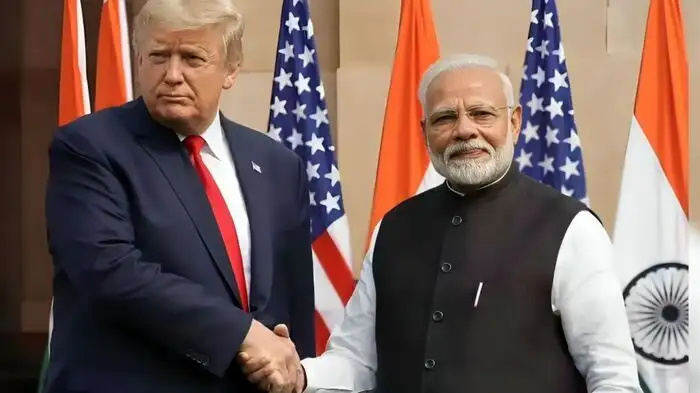
A series of reports about reworking ties with Washington paints an overall picture of cautious concern and pragmatic course corrections. Allies are trying to preserve cooperation while also reviewing the degree of dependence: the unpredictability of American moves forces them to think about new scenarios and more reliable mechanisms for aligning interests. In the European direction, it is clear that views diverge—some are banking on continuing the old line, while others are increasingly looking for ways to insure themselves. India, by contrast, emphasizes a course of friendship and partnership, without turning it into obligations that are hard to back away from. Germany, within this logic, serves as an example of a country reacting to pressure from Donald Trump and at home, and also in NATO discussions, as it tries to strike a balance between Washington’s demands and its own political priorities. Overall, the piece points to a broader international trend: to keep cooperating, but at the same time build “backup” strategies in case of sharp turns in the American course. This article is based on materials from turkglobalmedia.com (Turkey) and navbharattimes.indiatimes.com (India).
Europe between the US and China: a Turkish view of the crisis of trust
Donald Trump’s return to the White House has again put Europe before an uncomfortable choice: who to rely on in the coming years—the United States or China. That is how the Turkish Turk Global Media describes a worrying picture for the EU, in which the old transatlantic order looks less and less solid, and international alliances seem increasingly conditional and transactional.
In the Turkish reading, the article’s main takeaway is not “Europe chooses China,” but rather “Europe is no longer confident in the US.” The author stresses that in Western Europe Washington is increasingly no longer seen as a reliable guarantor, while China is viewed not as an ideal partner, but as an almost inevitable economic reality. This is well captured by a quote from the head of Public First Seb Ride, who says that for Europeans “America is a partner of choice, and China is a necessity,” and that attempts to sharply reduce dependence on Beijing are widely considered unrealistic.
Differences within Europe itself are especially noticeable. Southern countries—primarily Spain and Italy—appear more open to China, while Poland, Lithuania, and Estonia retain a consistently pro-American stance. For a Turkish audience, such a split sounds familiar: Turkey has long lived by the logic of balancing the West, Russia, China, and its own regional interests, where Ankara is expected to make choices but is not offered stability. Against this backdrop, mentions of Greenland, tariffs, and the withdrawal of American troops are perceived as symbols that, under Trump, allied relations are increasingly turning into a set of pressures and concessions.
The article also places particular emphasis on economics. According to Turk Global Media, the EU is already feeling the impact of Chinese imports, which are hitting the chemical industry and the auto sector, while Brussels is trying to build a more “balanced” trade regime with Beijing. For Turkey, this is especially understandable: in the country, such processes are usually read through the lens of protecting domestic production, industrial policy, exports, currency vulnerability, and the need for technological independence. The idea that big economies are forced to rein in China while also being unable to fully do without it looks, in Ankara, less like theory and more like part of everyday geoeconomics.
Notably, this piece contains almost no Turkish voices: it is not news about Turkey, but specifically a Turkish interpretation of European concerns. That is why the text works not as a dry report, but as a broader political statement about the crisis of trust in the West. Polls and quotes here are used as confirmation of a broader thesis: the world is entering an era of multipolarity, where the old centers of power are no longer seen as unconditional pillars, and familiar alliances are losing the reliability they once had.
India and the US: friendship without dependence
In India, an old but still defining idea for foreign policy is being heard more and more loudly: India can and should be friends with the United States, but it must not turn that friendship into dependence. This line was emphasized once again by former Foreign Minister Kanwal Sibal, whose assessments in New Delhi are seen as reflecting an established diplomatic school rather than just his personal view. In the article via this link, the Indian perspective on relations with Washington is presented through the prism of national interest and strategic autonomy.
Sibal essentially reiterates a basic thesis of India’s foreign-policy tradition: to cooperate with the US, but not become someone else’s junior partner. For India, this is not an abstract diplomatic formula, but a practical principle that touches defense procurement, technology, trade, market access, and the balance of power in Asia. At the same time, New Delhi understands very well that closer ties with Washington should not narrow its room for maneuver in relations with Russia, China, and even Pakistan.
The Russia factor is especially sensitive. For India, ties with Moscow remain significant due to defense cooperation, energy, and the historical continuity of foreign-policy stances. Therefore, any discussion of deeper partnership with the US in India’s discourse inevitably comes down to a question: will it weaken the traditional directions that India considers vital?
The China factor matters no less. Against the backdrop of tensions with Beijing, the US is perceived in India as a useful partner that can help contain growing Chinese power. But even here, it is not about choosing a camp—it is about balancing between multiple centers of power. The same applies to Pakistan, which still remains a constant element of India’s security strategy.
That is why, for the Indian audience, the topic of strategic autonomy has not only foreign-policy meaning, but also domestic significance. In the country, it is deeply ingrained that India should act as an independent center of power, not as part of someone else’s bloc. This logic has roots in the era of non-alignment during the Cold War, but today it is reinterpreted as multi-vector policy and strategic autonomy. Hence the particular reaction to any attempts to present relations with Washington as an unconditional choice of side: in India, such an approach raises the question of the price of rapprochement and what exactly would have to be given up in return.
In this sense, the material about Sibal’s position is important not only as a comment by a former diplomat, but also as an accurate reflection of how Indian elites read the current geopolitics around the US. Amid rising anxiety among Washington’s allies and a tougher line in American foreign policy, the Indian viewpoint remains crystal clear: New Delhi is ready to deepen relations with the United States, but only as long as this does not limit its freedom of action.
That is exactly how India formulates its own foreign-policy philosophy: to cooperate with everyone, but to depend on no one.