In early June 2026 the United States simultaneously appears to the world as a military superpower, the nervous center of the global economy, and a political actor capable of escalating or defusing situations across entire continents in a matter of days. With South Korea, Washington is disputing the rules of the game in security and technology. In Brazil, the US has suddenly become a factor in domestic pre‑election struggles and a trigger for debates about sovereignty. In Russia, the image of America has finally fused with the theme of war — both on the Ukrainian front and in the Middle East. At the same time, the three countries view the same Washington moves through completely different prisms: a worried ally fearing “overreach” in the alliance; a regional power irritated by sanctions and stigmatization; and an adversary perceiving an uncontrolled force that must be resisted.
One of the main themes of recent weeks is a change in the style and instruments of American foreign policy. In Russia this is seen primarily through the lens of war with Iran and the escalation in the Middle East, where US and Israeli strikes on Iranian targets are presented as further proof of American “military adventurism” and disregard for international law. Russian media recount Donald Trump’s speeches about a “large and ongoing operation” to neutralize a “radical regime,” reminding readers that Moscow and Beijing publicly supported Tehran. In Russian analytical pieces such a US offensive is described as a logical continuation of a long‑standing line in which coercive pressure prevails over diplomacy; some experts explicitly speak of the low professionalism of the American diplomatic corps and its tendency to rely on military power instead of negotiations, noting a global perception of Washington as a power that pays less and less heed to the interests of others.(ru.wikipedia.org)
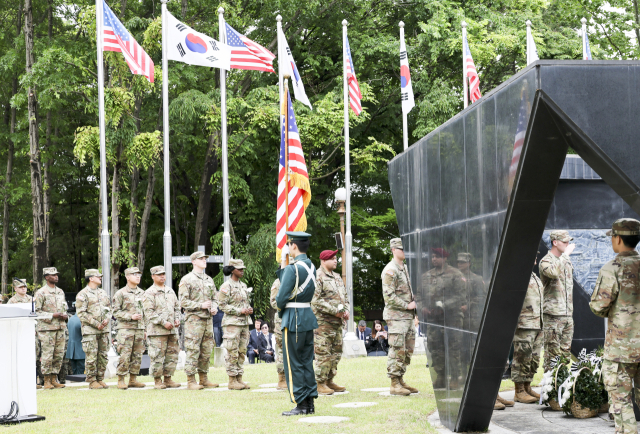
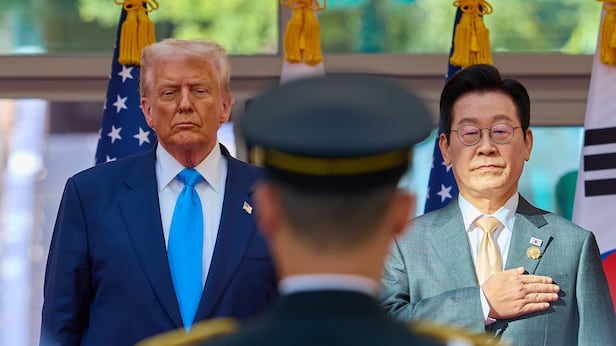
For South Korea the same geopolitical shifts, including the US and its ally Israel’s war with Iran, form only the backdrop to a much more concrete worry: how the Korea‑US alliance itself is changing. For several weeks local press has been debating whether the alliance has begun to “show cracks.” The English‑language Chosun Ilbo runs columns about a growing divide in threat perceptions and priorities between Seoul and Washington; authors warn that without a coordinated message on North Korea, China and economic policy the alliance could “weaken faster than the White House assumes.”(chosun.com)
The situation is inflamed by a high‑profile piece from conservative commentators in The Wall Street Journal, widely recounted by the Korean newspaper Kyunghyang Shinmun. In it, American right‑wing commentators label Lee Jae‑myung’s administration in Seoul “radically leftist” and a threat to the Korea‑US alliance. South Korean progressive outlets see this not only as an ideological attack but as an attempt by part of the American establishment to impose a strongly anti‑China line on Seoul and a more obedient stance on North Korea. Commentators warn that if Washington uses the language of America’s internal “culture war” to describe partners, trust within the alliance will erode.(khan.co.kr)
A particular irritant in Seoul is American criticism of Korean laws and regulations in the high‑technology and network infrastructure sectors. Recent amendments to Korea’s Network Act, which in the US are perceived as a threat to American IT companies, have prompted a series of pieces about how Washington uses trade and technology pressure even on close allies. Despite publicly optimistic statements from senior US diplomats about a willingness to engage in “constructive dialogue” on the law, many Korean economic columnists see a repeating pattern here: security guaranteed by the US, while economic and technological risks are Seoul’s responsibility.(koreajoongangdaily.joins.com)
In Brazil, by contrast, the issue is no longer “cracks” in an alliance but near‑open confrontation. The Trump administration’s decision to officially designate Brazil’s two largest criminal groups — Primeiro Comando da Capital and Comando Vermelho — as terrorist organizations shocked not only Lula da Silva’s ruling coalition but also a significant portion of the political and expert community. In a statement cited by the Spanish outlet El País, the Brazilian government stressed that Brazil “will not accept the use of arbitrary external measures as a pretext for an attack on its sovereignty and economy.” The Brazilian side fears not only political stigmatization but also that it will be followed by severe sanctions on banks and companies with any ties to the shadow economy, as well as an expansion of the legal basis for American interventions under the banner of “combating terrorism.”(elpais.com)
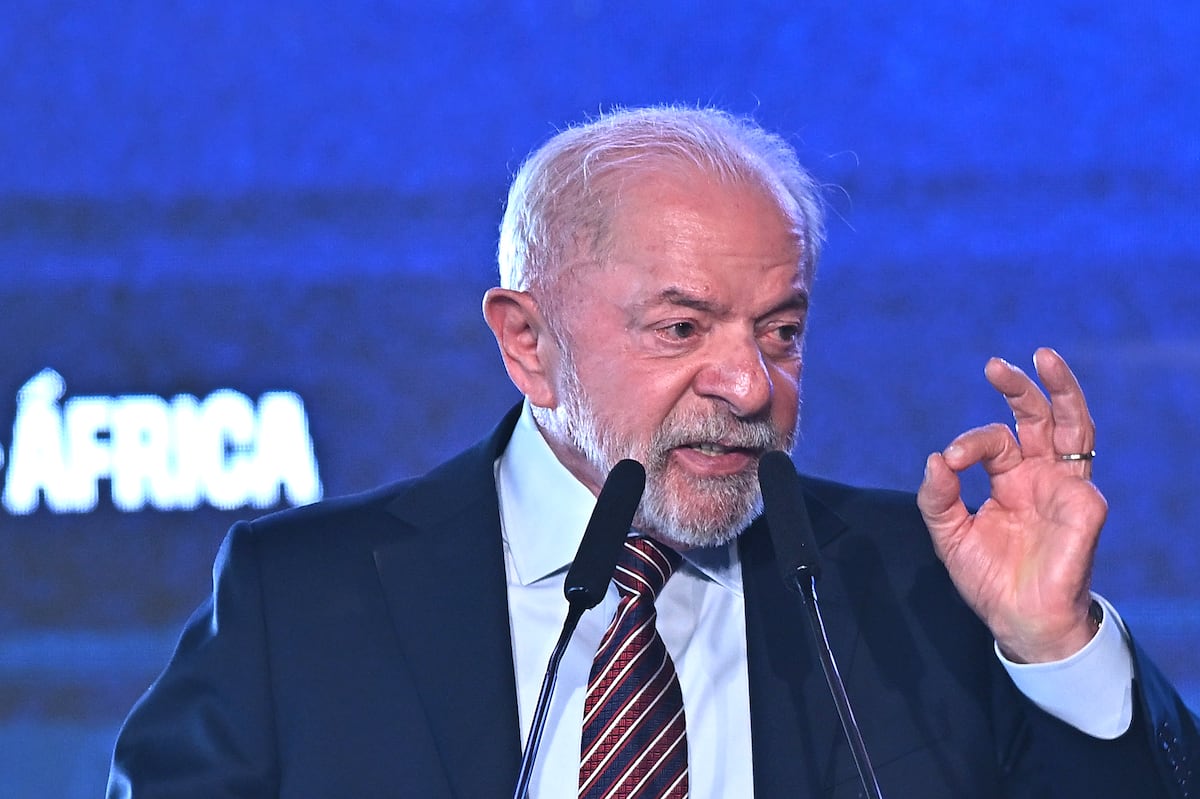
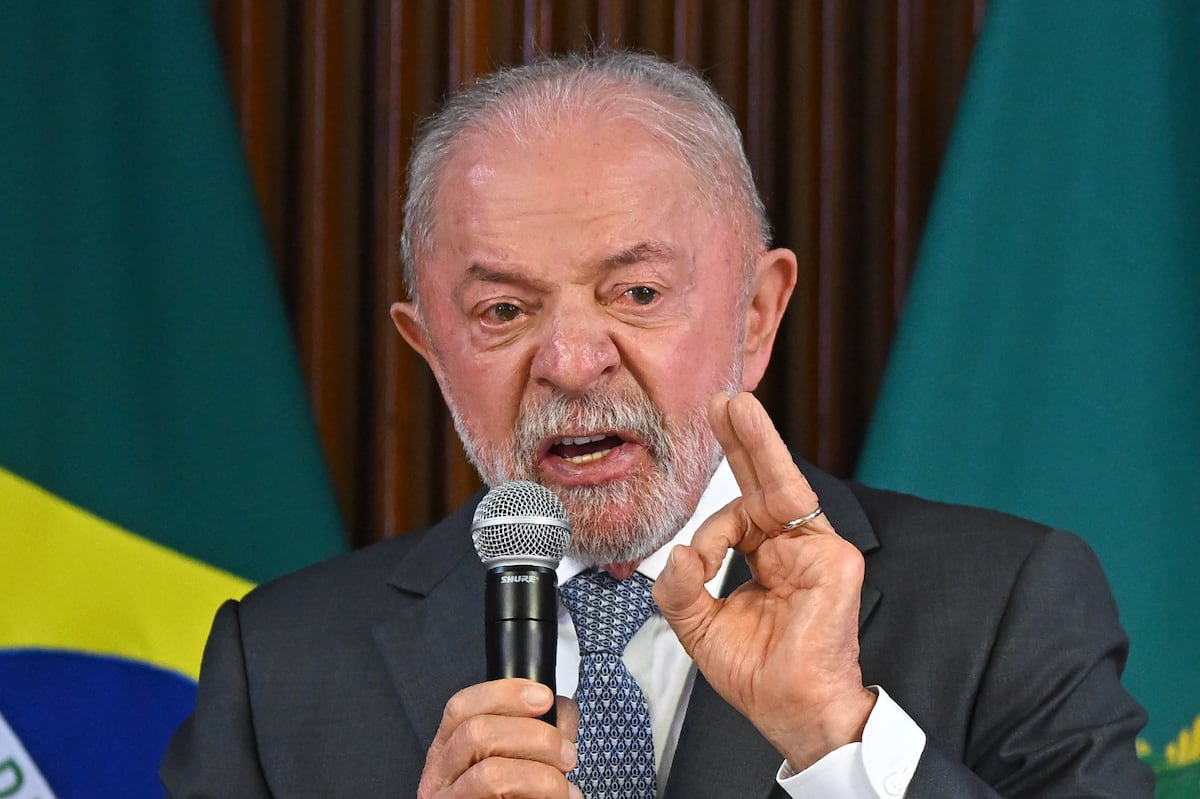
President Lula has chosen to play both diplomatic and domestic political cards. In a recent address to his cabinet he said that “Brazil is a large country with its own history, and we cannot accept the treatment the US gave us this week,” sharply criticizing both the threat of new tariffs and Senator Flavio Bolsonaro’s role, who, he said, “went to the US to ask for intervention against his own homeland.” As El País notes, Lula is explicitly using the conflict with Washington to brand his right‑wing opponents as “traitors,” while portraying the Trump administration as a source of external pressure driven by ideology and calculations to influence Brazil’s upcoming elections.(elpais.com)
Economists and columnists at leading Brazilian portals add a cold numerical calculation to the political drama. UOL’s analytical pieces emphasize that a new wave of American trade measures — investigations and threats of tariffs up to 25% on a significant share of Brazilian exports — heightens financial market nervousness, pressures the real and raises the issue of political risk. In economic roundtables broadcast by business media, experts explain that even if the actual drop in exports to the US is not yet catastrophic, the mere use of trade and “anti‑terrorist” levers in the midst of Brazil’s election campaign is perceived as an attempt by Trump to interfere in domestic politics and to aid the right. As commentator José Paulo Kupfer put it, “Trump uses trade to disguise his objective — interference in the elections,” a view widely quoted in left‑ and center‑leaning outlets.(economia.uol.com.br)
At the same time a more self‑critical note is heard in Brazil. A journalist‑sociologist on Band’s website reminds readers that transnational Brazilian criminal networks operate in dozens of countries, including the United States, and that the true threat to sovereignty is not so much Washington’s “labels” as the loss of control over internal security. From this perspective, harsh US measures become a painful but telling warning about how Brazilian crime is perceived abroad.(band.com.br)
If Brazil disputes with the US over who truly protects its sovereignty, the Russian discourse leaves almost no room for such nuances: America appears both as a strategic adversary and as the chief architect of the “collective West,” allegedly bent on weakening Russia and its allies. Against the backdrop of the protracted war in Ukraine and increasingly severe economic consequences of the conflict, analysts note growing pressure within the Kremlin to find a way out of the deadlock, but in public rhetoric Washington consistently figures as the key source of weapons, money and political cover for Kyiv. Commentators, citing Western and domestic sources, speak of Russia’s inability to reach its stated goals and of resource exhaustion, while emphasizing that the American line amounts to “deliberately prolonging the war” and “using the Ukrainian front as a springboard to pressure Moscow.”(washingtonpost.com)
Russia similarly interprets US deployment in the Middle East. In Russian‑language analytical reviews, some written for investors, Washington’s actions regarding Iran and its attempts to simultaneously coax Tehran into concessions on the nuclear program while weakening its military potential by force are described as a combination of “carrot and stick” in which the “stick” clearly predominates. For many Russian commentators this is yet another example of the US circumventing or reinterpreting international norms, and any coalition involving Washington automatically becomes an instrument of American influence — even if geopolitically it creates space for a Russia‑China rapprochement.(ru.wikipedia.org)
Against this backdrop a more structural critique of the current US foreign policy course is popular in Russia: isolationist tendencies such as withdrawal from numerous international organizations are combined with the retention of the right to unilateral military actions. In Russian debates this is often presented as the “decline of the liberal order,” in which Washington itself dismantles institutions it once created, turning international law into a toolkit used selectively. This rhetoric resonates with audiences tired of sanctions and war reports and serves as ideological justification for Russia’s orientation toward alternative blocs and alliances.(ru.wikipedia.org)
Interestingly, in both Latin America and Asia discussions about the US rarely boil down to simple condemnation or support. In the Latin American debate the conflicts between Brazil and Trump are joined by a broader theme: the idea that the region is trying to build a new “Atlantic” linkage with Europe and the US, taking advantage of a world moving toward a more multipolar and less predictable architecture. As participants at recent economic forums note, Latin America “has never been so much at the center of attention,” and political elites seek to convert US interest into investment and technological cooperation, not merely trade disputes.(elpais.com)
In South Korea, despite sharp debates about “cracks” in the alliance, there is sober understanding that without the American nuclear umbrella and military presence it would be much harder to contain North Korea and to navigate between China and the US. Korean analysts, including those at think tanks, write that Seoul’s task is not to break with Washington but to build a more equal dialogue in which trade, technology and cultural policy issues are not automatically decided in favor of American companies and norms. But the same Wall Street Journal piece that Seoul perceived as ideological pressure illustrates how difficult that is when even domestic Korean politics becomes the object of factional struggle in the US.(tenbizt.com)
In Brazil the strategic aim is also not to sever ties. Analysis in Veja stresses that the US remains a key reference point for assessing global economic risks: American budget deficits, inflation and the debt sustainability debate directly affect borrowing costs for emerging markets, including Brazil. Authors remind readers that Washington can be both a source of pressure and an essential partner, so Brazil’s task is less to “break away” from the US than to secure a more favorable negotiating position without sacrificing sovereignty or exporters’ interests.(veja.abril.com.br)
This produces a paradoxical impression: the United States seems to be everywhere different — ally‑partner in Seoul, principal foreign policy opponent in Moscow, and simultaneously “necessary but dangerous” in Brazil. But the common thread in the reactions of the three countries is the same. First, suspicion is growing toward the instruments Washington uses — from unilateral sanctions and tariffs to legal labels of “terrorists” and sharp assessments of foreign governments in the American press. Second, American domestic politics and particularly the figure of Donald Trump increasingly spill beyond US borders, becoming a direct factor in national debates elsewhere. Third, paradoxically, this unpredictability pushes both allies and adversaries of Washington to seek greater autonomy — whether in developing their own defense strategies in Seoul, striving for more balanced economic ties in Brazil, or Russia’s attempt to build parallel international structures.
For readers used to viewing the world through American media, these local debates offer an important lesson. Outside the US fewer people see America simply as the “leader of the free world” or merely as the “main villain.” Instead it has become a powerful but fickle actor around which other states must cautiously shape their trajectories. South Korean columnists debate how to preserve the alliance without losing dignity. Brazilian analysts try to turn tariffs and terrorist labels into a moment of national mobilization. Russian experts, even while criticizing their own authorities, continue to see Washington as the center of power upon whose decisions the outcome of several wars at once depends. What unites them is not so much love or hatred of the US but the realization that living in a world where America is unstable and increasingly acts alone is a new baseline scenario to which each must adapt in its own way.


![We will remember the dreams and life of 17‑year‑old Lee Chaewon [Flat]](https://img.khan.co.kr/news/2026/06/04/news-p.v1.20260604.1a4e3143eb4d45a8a01e149790881bb5_P1.jpg)
![[This Week's B‑Cut] Sweet sleep with a partner and a dog](https://img.khan.co.kr/news/2026/06/03/l_2026060401000094300010641.jpg)