Israeli and German publications are examining how Washington’s actions and commitments are increasing strategic uncertainty for its partners. According to these assessments, the United States is seeking to prevent the war in Yemen from expanding, redeploying military resources amid the Iranian threat, exposing British bases to the risk of regional attacks, and forcing Japan to reassess the political and military cost of its alliance with America. Particular attention is being paid to the shift toward drone warfare and the need for allies to adapt to new conditions. This material is based on publications by Kikar (Israel) and the Frankfurter Allgemeine Zeitung (Germany).
U.S. Returns B-1Bs from Britain Amid Iran-Related Threat
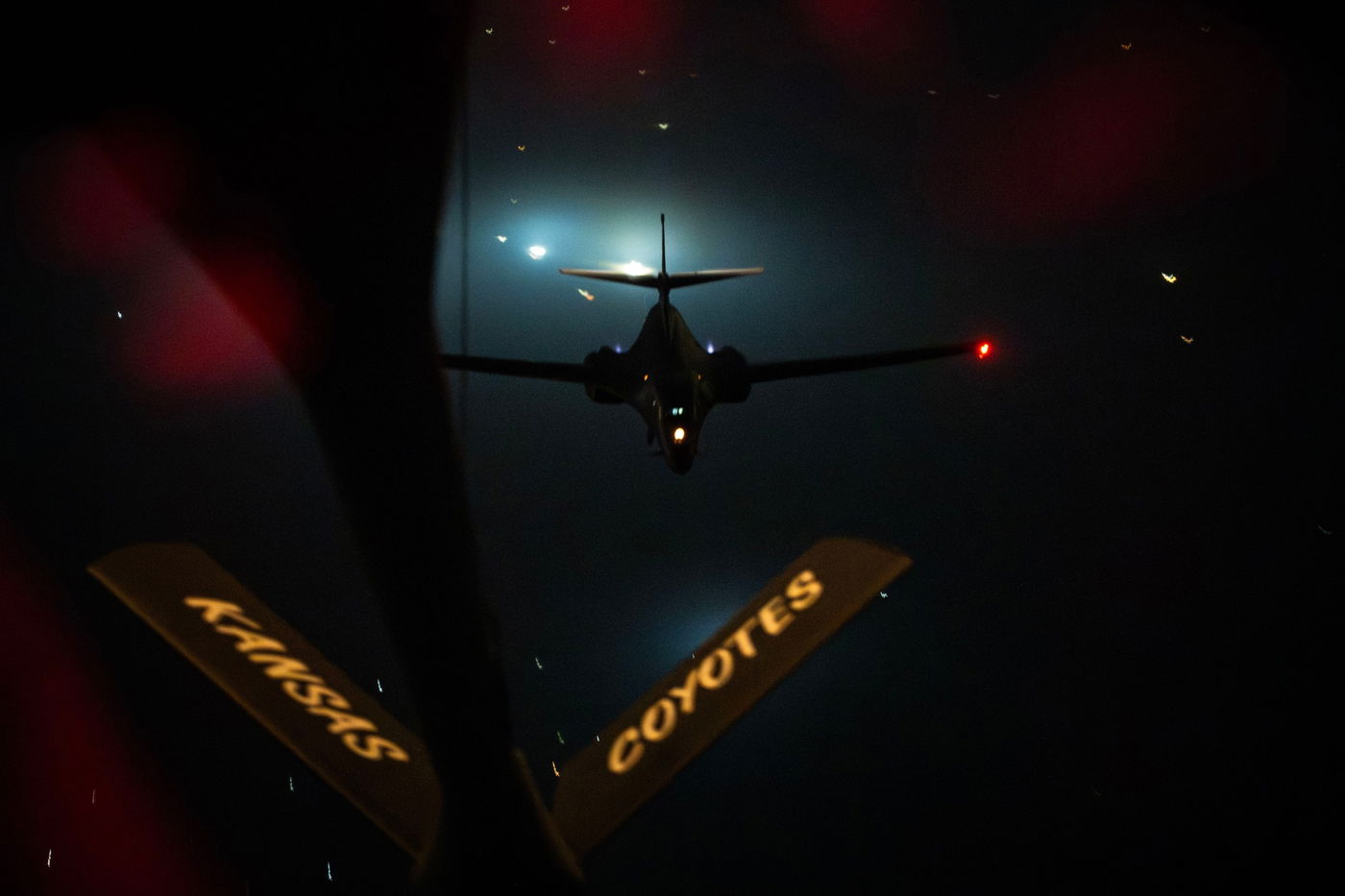
The United States evacuated all B-1B Lancer strategic bombers from the British air base at Fairford and returned them to American territory after receiving intelligence about a possible threat. According to the Israeli publication Kikar HaShabbat, the suspected operation may have been linked to Iran and involved the use of drones against the base, which was used by American long-range aviation.
According to the report, the redeployment was carried out urgently. Some crews took off before preparations for the tanker aircraft needed to support the long-range flights had been fully completed. The U.S. Department of Defense confirmed that all B-1Bs stationed at Fairford had returned to the United States, but declined to disclose details about the move. The Pentagon explained that “operational security considerations” prevented it from reporting force movements in real time.
British Prime Minister Andy Burnham said there were “strong indications” of Iranian involvement in the threat. Tehran, for its part, denied any connection with the events. The report focuses in particular on the possible role of the Islamic Revolutionary Guard Corps, which is regarded in the West and in Israel as a key element of Iran’s network of external operations, missile programs, drone aviation, and support for allied armed groups.
For Israeli readers, the incident in Britain is seen not merely as an episode affecting the security of an American base. It forms part of the broader conflict surrounding Iran and its ability to pressure the United States and its allies far beyond the Middle East. The use of drones, sabotage tactics, clandestine networks, and threats against military infrastructure is consistent with what Israel regards as Iran’s strategy of asymmetric deterrence.
The B-1B Lancer holds a special place in American military aviation. The aircraft can carry the largest conventional payload of any U.S. Air Force bomber and is one of the main components of America’s long-range strike capabilities. Its withdrawal from the British base therefore attracted heightened attention: Fairford has traditionally been viewed as an important staging point for U.S. operations in Europe, the Middle East, and neighboring regions.
At the same time, the evacuation does not mean a reduction in America’s strike capability. The Pentagon emphasizes that the bombers remain fully ready to carry out missions directly from U.S. territory. For Israel, this is an important signal: a change in the force-deployment pattern may indicate the vulnerability of overseas bases to attack, but it does not eliminate Washington’s ability to launch a retaliatory strike.
As Kikar HaShabbat notes, the story took on a dramatic tone in the British media, with talk of “panic” and an “urgent evacuation.” In the Israeli interpretation, however, the incident’s main significance lies elsewhere: it demonstrates how seriously the United States and Britain take intelligence about possible Iranian actions, and how far Tehran’s confrontation with Western states may extend.
The Moses Family Story: A German Perspective on the Tragedy of the Gaza War
The Frankfurter Allgemeine Zeitung’s international liveblog on the war in the Middle East presents the conflict primarily through the human tragedy of hostages and their families. One report focuses on the fate of 83-year-old Gadi Moses, a German-Israeli citizen abducted by Hamas militants on October 7, 2023, from Kibbutz Nir Oz. The full liveblog is available on the FAZ website.
The story of the Moses family shifts the war from the language of military reports, casualty figures, and diplomatic statements to the realm of personal loss, deception, and a long recovery. Gadi Moses’s niece, Machikava, said that his abductors gave him false information about the fate of his wife and daughter. He later learned of his wife’s death by radio. “He was completely broken,” the relative said, describing his reaction.
The story’s particular significance for German readers stems from the fact that Gadi Moses and his former wife, Margalit, were German-Israelis. Their fate is a reminder that the Hamas attack and the ensuing war in Gaza affected not only residents of Israel and the Palestinian territories, but also families connected to Germany. In Germany, Israel’s security is traditionally viewed as part of the country’s state responsibility—Staatsräson—while society is also acutely responsive to the scale of Palestinian deaths and humanitarian suffering.
The Moses family’s story also contains a painful moral paradox. Before the attack, he taught Palestinians agricultural techniques, and he and Margalit supported the idea of peaceful coexistence with the people of Gaza. According to Machikava, the terrorists on October 7 “particularly harmed those who had helped the Palestinians the most.” This episode offers a different perspective on the familiar opposition between solidarity with Israel and compassion for the Palestinian population: support for Israel’s security and a desire for dialogue with Palestinians do not necessarily contradict each other.
The family has also expressed dissatisfaction with the actions of the Israeli authorities. Relatives believe that the country’s leadership has still not begun an official investigation into the circumstances surrounding the failure of October 7 or accepted responsibility toward those affected. In the report, this criticism does not call into question the severity of the Hamas attack; rather, it is presented as a demand for justice, acknowledgment of the state’s mistakes, and the conditions victims need in order to recover.
FAZ places the family’s story within the broader context of the war. Approximately 1,200 people were killed in Israel in the October 7 attack, and more than 250 were abducted. In Gaza, around 74,000 Palestinians have been killed, according to the Hamas-controlled Ministry of Health. The ministry does not distinguish between civilians and members of armed formations in its statistics, however, a limitation the publication notes as important when assessing the figures.
Thus, the German perspective on the war in this report is shaped not only by military strategy or diplomacy. It combines the memory of the Hamas attack, the suffering of Israeli hostages, concern over the humanitarian catastrophe in Gaza, and demands for political accountability. The story of Gadi Moses shows how war destroys families and relationships, but does not necessarily extinguish faith in the possibility of peaceful coexistence.