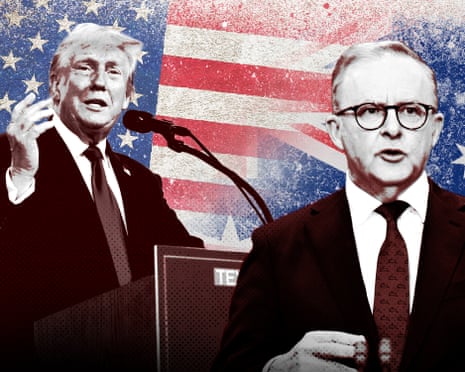
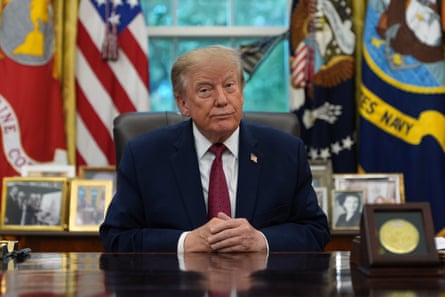
The U.S. midterm elections held on November 3, 2026, in which Democrats regained control of both chambers of Congress, became the leading American story in Australia, South Africa, and Brazil. But local reactions have little of the familiar enthusiasm about the “return of democracy.” In Canberra, Pretoria, and Brasília, the result is seen first and foremost as a signal that American voters are fed up with the high cost of living, tariffs, and the war with Iran—and, at the same time, as a warning: weakened at home, Donald Trump still has almost unlimited room for foreign-policy improvisation. Australian ABC commentator Nick Bryant calls the vote a turning point in Trump’s decade-long dominance of American politics, but stresses that the fight over the United States’ political future is only just beginning. That is the shared conclusion abroad: Washington has become less predictable not only under a powerful Trump, but also under a Trump whom Congress is trying to restrain. ABC’s analysis describes the Democratic victory as a serious personal blow to the president, but not as an automatic end to his political influence. (abc.net.au)
The most prominent shared theme is the cost of American policy for other countries’ everyday economies. Australians are discussing less the partisan arithmetic in Congress than the connection between the U.S. war with Iran, disruptions in energy markets, and the price of fuel at home. According to Bruce Wolpe, a senior fellow at the United States Studies Centre, quoted by Guardian Australia, since the war with Iran began Australians have felt that the government is losing control of the economy: “People are very unsure about how this is all going to end” [translation]. Westpac economist Elliot Clarke, in the same article, believes the Republican rout “has dramatically changed the atmosphere” around the Middle East conflict [translation]. For Australia, this is not abstract geopolitics: the country is linked to the United States through the AUKUS alliance, but pays for American decisions through energy costs and greater uncertainty for investment. (theguardian.com)
In Brazil and South Africa, the war with Iran is also seen as proof that U.S. foreign policy has become a source of global inflation without producing convincing results. Brazilian analyst Igor Gielow, writing in Folha de S.Paulo, describes Washington’s strategy as contradictory: the administration promised to reduce its involvement in the Middle East, but resorted to intervention in an attempt to impose its will on Tehran. He notes that disruption to shipping through the Strait of Hormuz—a route vital to a significant share of global oil and liquefied natural gas trade—has hit the market, while the price of Brent crude has risen by more than 20% since the start of the year. (www1.folha.uol.com.br) South Africa’s Sunday Times put the point even more bluntly: Trump’s electoral setback was partly a reaction to the “unnecessary war with Iran,” which has driven up inflation both in the United States and around the world [translation]. (sundaytimes.timeslive.co.za)
But for the three countries, an even more important question is whether a Democratic Congress can force the White House to change course. Local commentators are united in their skepticism. In South Africa, Elizabeth Sidiropoulos, head of the South African Institute of International Affairs at the University of the Witwatersrand, warned that Trump should not be regarded as a “lame duck”: he could turn into an “angry duck” and devote even more attention to foreign policy, where presidential powers are especially broad [translation]. Eyewitness News reports her conclusion: the elections may create legislative resistance, but they do not guarantee a fundamental change in U.S. policy toward Africa. (ewn.co.za)
Almost the same formula appears in Brazil. Columnist Sylvia Colombo, writing in Folha, points out that Congress will be able to investigate operations in the Caribbean, deals involving Venezuelan oil, deportations, and trade measures—but oversight is not the same as blocking them. Her central point is particularly troubling for Latin America: a president who has lost control of the legislative branch may look even more actively for victories in foreign policy. (www1.folha.uol.com.br) Polity reaches a similar conclusion for South Africa: a weakened president should not be confused with a weakened international agenda; the next two years could be more volatile for all countries caught up in his transactional diplomacy. (polity.org.za)
Trade is the second major flashpoint in this debate, and it is here that the differences between an ally, a regional power, and a country in political conflict with Washington are especially clear. Australia, a traditional U.S. military ally, faces a 12.5% tariff on exports to the United States. Trade Minister Don Farrell called the measure “unjustified” [translation], while an ABC report notes that Canberra disputes the American justification, which is linked to combating forced labor. Former Industry Minister Ed Husic believes the new balance of power in Congress creates an opportunity to reset relations: “A different Congress should require the administration to act differently—including by not harming friends and allies such as Australia with tariffs” [translation]. (abc.net.au)
The stakes are much higher for South Africa. Washington has imposed 30% tariffs on South African goods and decided to exclude Pretoria from AGOA, the U.S. law that provides trade preferences to African countries. In a Daily Maverick analysis, Bob Wekesa, director of the African Centre for the Study of the United States at the University of the Witwatersrand, calls the Democratic victory “excellent news” [translation] and believes skillful diplomacy could help reverse the country’s exclusion from AGOA. But he also acknowledges that the final decision on participation in the program rests with the president. Trade Minister Parks Tau takes a pragmatic view: AGOA matters, but it does not define the entirety of South Africa’s economic relationship with the United States. (dailymaverick.co.za)
What is striking about South Africa’s response is that it does not boil down to a complaint about protectionism. Professor Theo Neethling, a specialist in South African foreign policy, writes in the Sunday Independent that Washington applies a double standard: it criticizes Pretoria for its relations with China and Russia, yet is itself prepared to strike deals with those powers when American economic or strategic interests demand it. “American national interests take precedence over the consistent application of principles” [translation], he says, describing the policy’s internal logic. For South African readers, this is not merely a moral accusation: it is an argument for preserving strategic autonomy within BRICS without severing trade ties with the United States. (iol.co.za)
In Brazil, the trade dispute can no longer be separated from the question of sovereignty. After the elections, local experts do not expect a Democratic Congress to quickly lift tariffs or ease political pressure. In a Folha report, former Inter-American Development Bank Vice President Otaviano Canuto explains that Democrats may improve channels of communication with Brasília, but will have no real tools to revoke tariffs imposed by the White House. Brazil’s concerns go beyond the economy: Washington’s demands that the country distance itself from China are under discussion, as is the U.S. designation of the country’s largest criminal groups—Comando Vermelho and Primeiro Comando da Capital—as terrorist organizations. In Brazil’s view, this sets a dangerous precedent, since counterterrorism rhetoric could be used to justify foreign military intervention. (www1.folha.uol.com.br)
This is where the most unexpected shared theme emerges. Australia, South Africa, and Brazil have different relationships with the United States and occupy very different geopolitical positions. Yet all three now view American domestic politics as a direct national security risk: for Australia, because of alliance reliability, energy prices, and tariffs; for South Africa, because of access to the U.S. market and its freedom to pursue a multi-aligned diplomacy; for Brazil, because of the threat of economic coercion and Washington’s return to a hard-line policy of control over the Western Hemisphere. The Democratic victory has raised hopes for investigations, public pressure, and more predictable dialogue. But local observers do not see it as a guarantee of restraint. Their shared conclusion sounds less like an expectation of an American “return” and more like a call to learn to live in a world where even a weakened United States can act abruptly and unilaterally—with a high cost for everyone else.