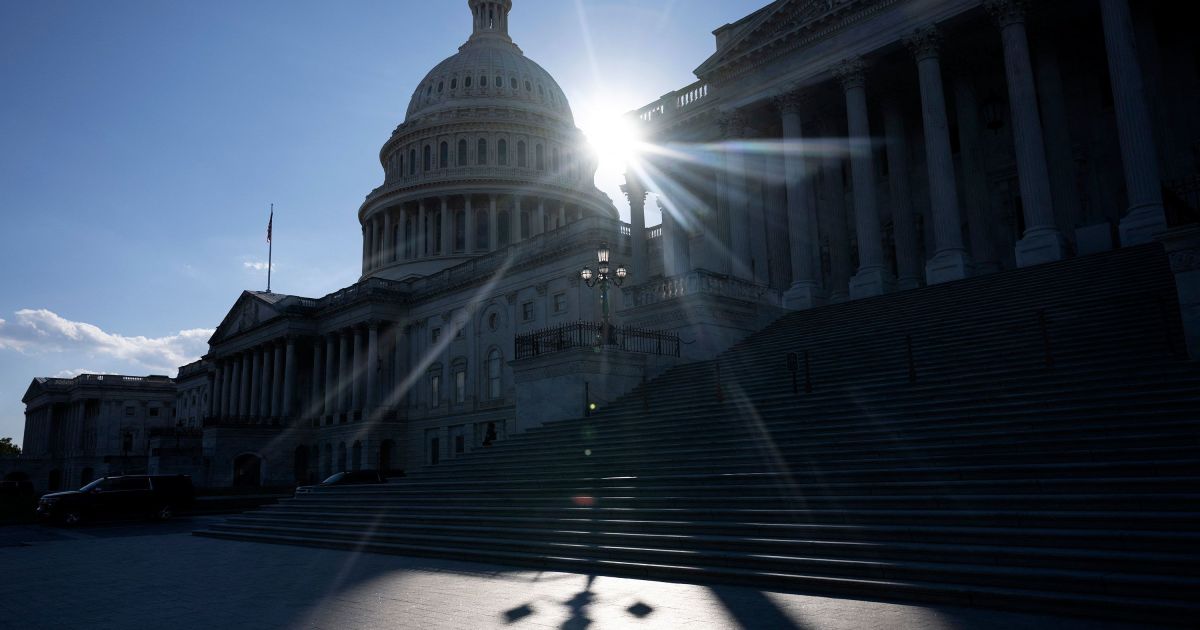
The main American story to draw the most substantive responses in Brazil, Ukraine and South Korea in recent days has been the outcome of the November 3, 2026, midterm elections, in which Democrats won majorities in both chambers of Congress. But outside the United States, the results are seen neither as a simple shift in the domestic political mood nor as an automatic defeat for Donald Trump. In Kyiv, Brasília and Seoul, a far more measured view prevails: the White House is losing room to maneuver on budgets and legislation, but retains tools to exert pressure in foreign policy—from wars and sanctions to tariffs and bilateral deals. For allies and partners, then, this is not an era of relief but a period of difficult negotiations with multiple centers of power in Washington.
Ukraine’s response to the “Blue Wave” is particularly revealing: the results are viewed first and foremost through the lens of the war with Russia, but Ukrainians are careful not to mistake hope for guarantees. In a column for Ukrainska Pravda, Olena Tregub writes that the changes create “opportunities,” but are no reason to expect a new military aid package soon. Her key observation is based not only on the arithmetic in Congress, but also on conversations with American voters, including in Texas: some Trump supporters back his immigration policies while strongly rejecting Washington’s rapprochement with Vladimir Putin. Tregub sums up their view this way: “I didn’t vote for America to become Putin’s friend.” (pravda.com.ua)
Ukrainian experts, however, stress the institutional limits to this hope. The new Congress will not begin work until January 3, 2027, while the president still controls much of diplomacy, sanctions policy and military command. Political scientist Ihor Petrenko, in an assessment for Interfax-Ukraine, calls the Democrats’ victory a “blue tsunami,” but adds that voters gave them primarily a mandate to restrain Trump—not a specific instruction to expand aid to Ukraine. Ukraine’s strategy, then, looks less romantic than it might from across the ocean: the task is to work not with some abstract “America after Trump,” but with congressional committees, budget decisions, sanctions legislation and bipartisan support groups. (interfax.com.ua)
Much the same logic is heard in South Korea, though the concern there is not that arms deliveries to Ukraine will stop, but that Seoul’s own agreements with Washington could get stuck between the White House and the new Congress. Korean analysts see the results as raising the risk of “divided government”: the president can continue to manage tariffs, investment pressure and many security issues through executive orders, but larger deals—from shipbuilding cooperation to nuclear, energy and defense collaboration—will become slower and more legally vulnerable. In a recent report by the East Asia Institute, Seoul National University professor Chung Jae-sung and researcher Oh In-hwan urge Seoul to stop negotiating only with the administration: it needs to work simultaneously with both chambers of Congress, state governments, industry and civil society in the United States. Their central conclusion is characteristic of the Korean perspective: a Democratic majority does not, by itself, mean either softer tariffs or looser U.S. technology restrictions on China. (eai.or.kr)
There is an important, less obvious detail in this Korean analysis. Seoul fears not only pressure from Trump, but also that a Democratic Congress could slow some decisions Korea would welcome on nonproliferation, nuclear power and strategic autonomy. In other words, a shift in the balance of power may make U.S. policy less personalistic, but not necessarily more convenient for an ally. The Korean press therefore describes the situation not as a return to the old, reliable alliance, but as a need to assess each agreement in terms of its legal basis, timeline and the body able to approve or block it. (hani.co.kr)
Brazil views the same American story through the lens of sovereignty and trade. For Brasília, a Democratic Congress could provide a more receptive channel for political dialogue with Lula’s government, particularly on climate and democratic institutions. But local experts are nearly unanimous in warning that this will not undo U.S. tariffs, pressure on Brazil to weaken its economic ties with China or Washington’s hard line in Latin America. Economist Otaviano Canuto, a former vice president of the Inter-American Development Bank, puts it plainly in a Folha de S.Paulo article: a more Democratic Congress will widen opportunities for contact with Brazil’s foreign ministry, but will not be able to easily change Trump’s trade policy—the area where the consequences for Brazil are most painful. (www1.folha.uol.com.br)
Brazil’s response shows that in Latin America, U.S. foreign policy is now seen as more than a matter of tariffs. It is viewed as a combination of economic coercion, political influence and security. One particular concern in Brazil is the U.S. designation of the country’s largest criminal groups—the Red Command and the First Capital Command—as terrorist organizations. This is seen as potentially widening the scope for U.S. intervention under the pretext of combating transnational crime. The Democrats’ victory matters to Brazil, then, not because it promises immediate protection, but because it could strengthen congressional oversight of the State Department and make the administration’s actions more politically costly. But tariffs imposed by the executive branch remain in the president’s hands. (www1.folha.uol.com.br)
A second common concern is the U.S. war with Iran, which connects American domestic politics with the anxieties of the three countries in very different ways. In Brazil, it is seen above all as a source of inflation and rising transportation costs—and as proof that a foreign military adventure quickly turns into a problem for people’s wallets. Pedro Côrtes, a professor at the University of São Paulo, noted in an analysis for CNN Brasil that by election week, diesel in the United States was 67.7% more expensive than a year earlier and gasoline 37.6% more expensive. For a Brazilian commentator, the war was not abstract geopolitics but a cause of inflation and an electoral blow to the administration. (cnnbrasil.com.br)
In Ukraine and South Korea, the war with Iran raises a different fear: that it will draw America’s attention, ammunition, budget resources and diplomatic time away from other crises. For Kyiv, that means competing with its own war for a place on the U.S. agenda. For Seoul, it is a warning that Washington’s alliance commitments could become matters of ad hoc bargaining when the White House is tied up in another conflict. That is why Ukraine’s hope that Congress will oversee military spending and South Korea’s reliance on diplomacy through multiple channels are two sides of the same response: both countries are trying to protect themselves not from U.S. weakness, but from its overstretch and inconsistency.
The common conclusion in local debates sounds paradoxical. Brazil, Ukraine and South Korea do not expect American democracy to automatically fix U.S. foreign policy. They see the midterms as bringing additional checks, investigations and budgetary leverage. At the same time, all three countries conclude that Trump will retain considerable freedom of action where decisions are made through executive orders, tariff mechanisms, sanctions or personal negotiations. For Brazil, this means defending its sovereignty without breaking ties with the U.S. market; for Ukraine, turning congressional support into funding, weapons and sanctions guarantees; for South Korea, reshaping the alliance so it can withstand America’s domestic political swings. America has not become less important to them since November 3. It has become a country they must negotiate with across several Washingtons at once.