The U.S. midterm elections on November 3 have become the main lens through which Australia, Germany and China are discussing the United States. The Democrats’ victory in both chambers of Congress is seen not merely as a major domestic political defeat for Donald Trump, but as a test of a broader question: can the American system constrain a president who still retains almost complete freedom of action in foreign policy? In Berlin and Canberra, the answer is troubling: Congress may slow the White House’s domestic agenda, but it cannot guarantee that the U.S. will act with restraint abroad. In Chinese expert circles, the same dilemma prompts a more pragmatic calculation: a weakened president may be more interested in reaching a predictable deal with Beijing. (amp.dw.com)
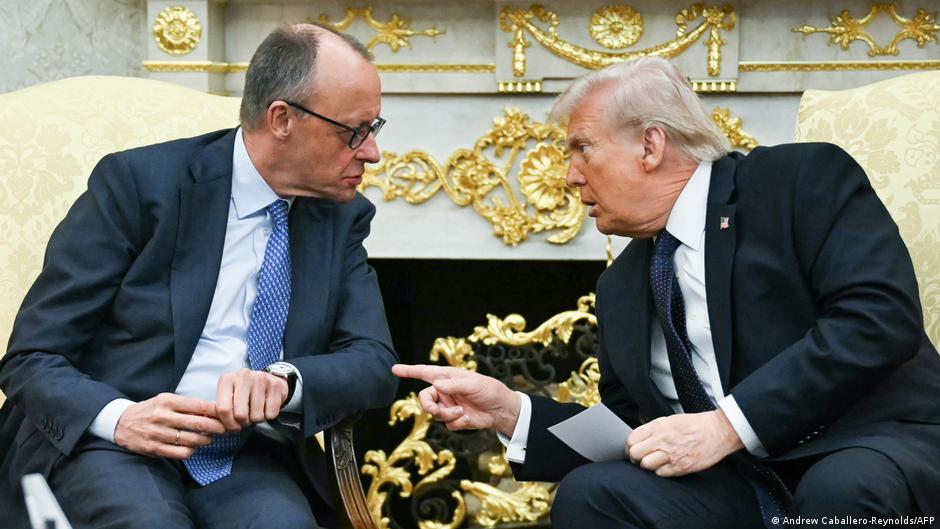
The broadest international reaction is not euphoria over Trump’s defeat, but doubt that it will automatically change U.S. policy. Before the election, Germany’s Tagesschau cited Brandon Borne, a specialist in transatlantic relations, as saying that Europe should not expect a foreign-policy shift, whatever the new makeup of Congress; Trump’s approach could even become more “volatile and confrontational” [translated]. The vote has only reinforced that assessment. Deutsche Welle puts German concerns plainly: the Republicans have lost both chambers, but the president has not lost his weight on the world stage—and for Friedrich Merz’s government, that matters most. (tagesschau.de)
In Australia, this mood is expressed even more starkly. ABC’s U.S. editor John Lyons called the election an “unequivocal defeat” for Trump, but warned that it would be a mistake to consider him a “lame duck.” In his view, the danger lies precisely in the possibility that a humiliated president might compensate for domestic weakness by becoming more active abroad. In his analysis for ABC, he summed it up succinctly: “the real danger … will be in foreign policy” [translated]. For Australia, which relies on its alliance with the United States while being situated in the Indo-Pacific next to China, this is no abstract concern. The question is whether Washington will seek a dramatic success overseas. (abc.net.au)
A second shared concern is the U.S. war with Iran, rising energy prices and the link between military action and the cost of living. The Australian debate is particularly telling: in a column for ABC, David Speers attributes the Republicans’ defeat to Americans’ weariness with expensive fuel and a protracted conflict. But the article’s central question is directed at Canberra: how will the actions of a weakened White House affect an Australian economy that is already on shaky ground? Australian commentators see Iran not only as a distant war, but also as an imported inflationary shock transmitted through oil, shipping routes and financial markets. (abc.net.au)
In Germany and China, the logic is similar, though the political language differs. Jürgen Hardt, a CDU member of parliament and foreign-policy specialist, told Tagesschau that the hope of resolving the conflict by military means had proved to be a “misconception” [translated], and that Trump should therefore be expected to seek a negotiated solution. China’s state-run international outlet CRI emphasizes a different point: even a Congress controlled by Democrats may not be able to stop the war. The president can veto limits on funding, and over the decades the power to wage war has shifted markedly toward the executive branch. This is an important point of convergence between Berlin, Canberra and Beijing: voters punished the president for the consequences of the war, but the election did not create a reliable mechanism to end it. (tagesschau.de)
The economic debate, however, extends far beyond gasoline prices. Germany views U.S. policy through the lens of exports, tariffs and industrial dependence. In a Tagesschau analysis, economists point out that the current, apparent resilience of the U.S. economy rests largely on investment in artificial intelligence, semiconductors, data centers and energy—not necessarily on the administration’s policies. German observers also note the cracks: inflation, weak hiring, huge public debt and the uneven distribution of the effects of Trump’s policies. For Berlin, this means that the U.S. market remains indispensable, but is increasingly ill-suited to serve as a stable anchor for the global economy. (tagesschau.de)
China’s reaction is noticeably less emotional and more instrumental. Song Bingyan, a professor at the University of International Relations, told Guancha that the key word in this election was Trump himself. In his assessment, it was less a contest between Democrats and Republicans than a vote “against Trump” [translated]. But he does not expect a fundamental shift in foreign policy: the president remains its main driver. Hence China’s bet that Trump, having become a “lame duck” [translated] at home, may prefer to leave behind a foreign-policy legacy of more stable relations with China. (m.sohu.com)
That hope does not amount to trust. Wu Xinbo, director of Fudan University’s Center for American Studies, notes in an interview published by the university that the U.S. Congress can make life harder for Beijing on trade and Taiwan. At the same time, he believes that breaking supply chains is easier for the United States to proclaim than to accomplish, and that cooperation in AI is “not a matter of choice, but a necessity” [translated]. This is perhaps the most characteristic Chinese view: Trump’s weakness creates an opening for a deal, but U.S. competition with China will not disappear along with the Republican majority. (fddi.fudan.edu.cn)
This is where the main difference between the reactions becomes clear. Australia and Germany view the American crisis primarily through the lens of risk: the risk of renewed military escalation, another tariff blow, a reduction in the U.S. military presence in Europe or a sharp policy reversal by an ally. China sees a combination of risk and opportunity: Washington remains a rival, but a president who struggles to pass legislation at home may have an interest in managing competition abroad. The international significance of the American election, then, is not that the United States has become less influential. It is that allies and rivals alike are learning to live with an America whose domestic democracy has only partially constrained its president—and precisely in the areas where those constraints have traditionally been weakest: war, trade pressure and grand geopolitics.