
In February 2026, conversations about the United States outside Washington revolve around three topics that almost always appear together: the return of Donald Trump and the sharp change in perceptions of America’s reliability; the impact of the new U.S. line on Europe's security and the course of the war in Ukraine; and a more down‑to‑earth but unexpectedly politicized story — the 2026 FIFA World Cup in the US, Canada and Mexico and the image of America as the host of a major global event. Germany, Brazil and Ukraine look at the same steps by Washington but see different things in them: some see a threat to the established world order, some an unreliable but still necessary partner, and some a source of deep disappointment and at the same time an indispensable support.
The first major layer of discussion is the figure of Trump and the question of whether the United States remains an “anchor” of world stability at all. In Germany the new administration in Washington is literally described as “policy with a sledgehammer.” For example, the Munich Security Conference report cites U.S. policies under Trump as an example of “demolition‑ball politics” — a destructive policy that harms not only American democracy internally but also NATO allies. The same report stresses that in Germany the U.S. under the current president is perceived as an unreliable NATO partner, and it is this distrust that fuels Europeans’ general pessimism about politics’ ability to improve their lives. In polls cited by the report, Germans show one of the lowest shares of people believing political decisions will make things better.(welt.de)
Accordingly, a serious discussion is beginning in Berlin about the transatlantic alliance no longer being something to be taken for granted. The general line of this doubt is voiced not only by experts but also by major parties. In a fresh draft program document the SPD explicitly states that Germany and the EU must “reorder relations with the United States completely anew,” because Trump’s policies call Washington’s reliability as a partner and ally into question. SPD leader Lars Klingbeil emphasizes that the transatlantic relationship is no longer the “natural state” it was under Joe Biden: instead of previous value‑based commonality there are hard disagreements over democracy, international law and climate. From this the social democrats draw the conclusion that Europe needs greater strategic autonomy, up to the slogan “Buy European” in the defense sphere, in order not to depend on the whims of the White House. Klingbeil discusses this in his program being debated by the party leadership and quoted in Die Zeit.(zeit.de)
But despite the criticism of Trump, the German conversation about the U.S. is not reducible to antagonism. At the same time Chancellor Friedrich Merz is trying to build an ambitious foreign agenda in which the United States remains a key reference. One central point of his strategy is to close the “growth gap” with the U.S. and China — that is, to make German and European economies grow faster again and prevent technological lag. Welt, analyzing his course, notes that Merz seeks to turn Germany into a “global heavyweight state” and sees not only defense but also the economy and domestic reforms as part of this. However, the deeper Germany sinks into economic crisis and domestic political disputes, the more shaky Berlin’s position appears ahead of the March meeting with Trump: a weak economy undermines Germany’s ability to argue with the U.S. on equal terms.(welt.de)
The Brazilian lens on Washington is also changing, but in a different register — here the emphasis is not on NATO and European security but on the U.S. status as a global superpower and a climate actor. Official Brazilian rhetoric under Lula da Silva emphasizes a multilateral world and south‑south cooperation. In reports about the “Leaders’ Summit” in Belém in November 2025, which became a central COP‑30 event, it is explicitly noted that the Brazilian side did not expect participation from Trump or even a U.S. representative. Officials in Brasília briefly told journalists: “The U.S. government will not be at the leaders’ meeting.” In his recent personal meetings Lula tried to persuade Trump to come at least to voice his protest views on the climate crisis, but the White House ultimately preferred to keep its distance. This is perceived in Brazil as a sign that the current U.S. administration is not particularly interested in climate diplomacy and the Amazon agenda, and it makes it easier for Lula to build an image of Brazil as an independent global center of “green” policy.(juinanews.com.br)
The popular image of the U.S. in Brazilian society has changed even more noticeably. O Dia, citing a Genial/Quaest poll, reports that the share of Brazilians with a negative view of the United States jumped to 48% in one and a half years, for the first time exceeding those who view America favorably (44%). At the same time China became the country with the best image among Brazilians, while the U.S. dropped down the trust rankings. America’s popularity fell especially sharply among Lula’s electorate: 69% of his voters view the U.S. negatively, whereas 72% of Jair Bolsonaro’s supporters still view the country positively. The article emphasizes that the deterioration of the U.S. image is linked to “tense relations” between the Trump government and Brazil, including U.S. attempts to pressure Brazilian institutions such as the Supreme Court.(odia.ig.com.br) Here one can see how American internal polarization and the White House’s aggressive style are “projected” onto foreign politics: for the left‑liberal part of Brazil the U.S. becomes not a symbol of democracy but a source of pressure and destabilization, while the right‑wing opposition continues to see America as a model and natural ally.
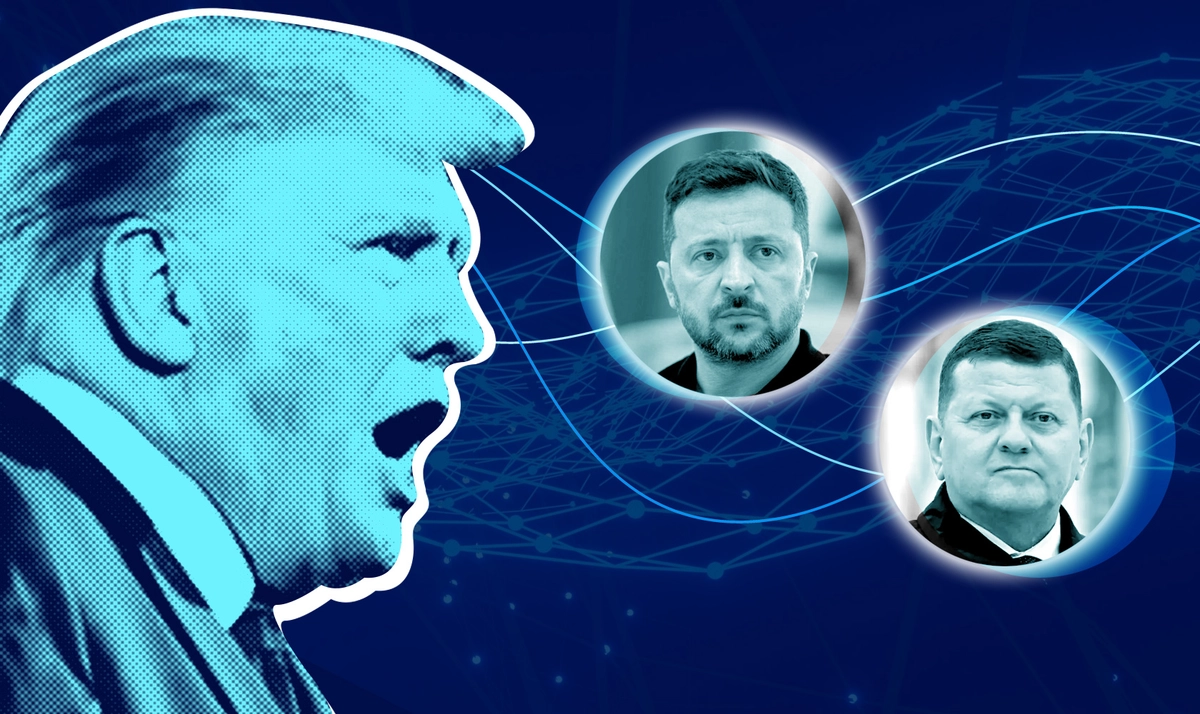
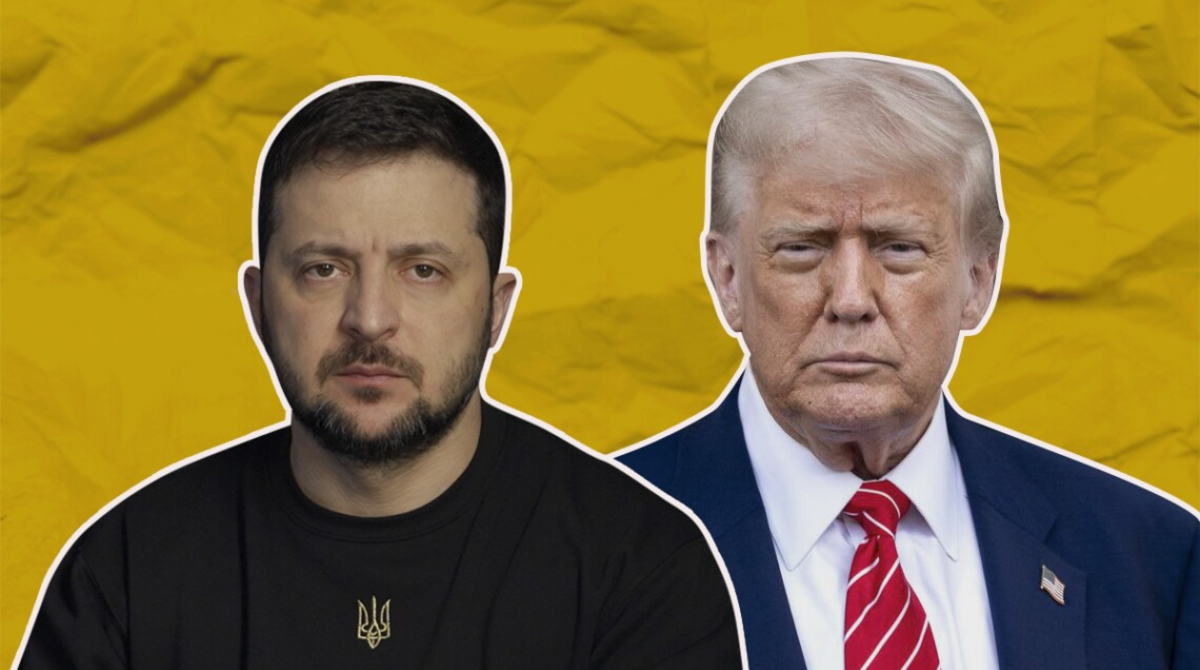
The Ukrainian perspective on Trump, and more broadly on the U.S., is perhaps the most dramatic and contradictory today. If at the end of 2024 a significant portion of Ukrainians associated his election with hope for a “quick end to the war” — Trump’s own formula of “24 hours” was actively discussed in Ukrainian social networks and in conversations with sociologists — then already a year later the dominant feeling became shock and disappointment. Ukrainska Pravda writes about this in detail in a summary of “a year of Trump for Ukrainian sociology”: the editorial notes that in December 2024 more than half of respondents considered Trump’s presidency a positive development, but after sharp moves by the new administration and the famous quarrel in the Oval Office on February 28, 2025, the share of those who see his presidency as “bad for Ukraine” jumped above 70%.(pravda.com.ua)
The figures are confirmed by the Kyiv International Institute of Sociology. In a survey published in January 2026, 74% of respondents said that Trump’s presidency is bad for Ukraine; only 14% considered it good.(eurointegration.com.ua) At the same time, trust in the U.S. and NATO has noticeably fallen compared with 2024, while trust in the EU remains at a higher level. This is an important turn that may be non‑obvious to an American audience: it is not simply dislike of a specific leader, but a “cooling” toward the very image of America as a security guarantor, even though the country still urgently needs military and political support from the West.
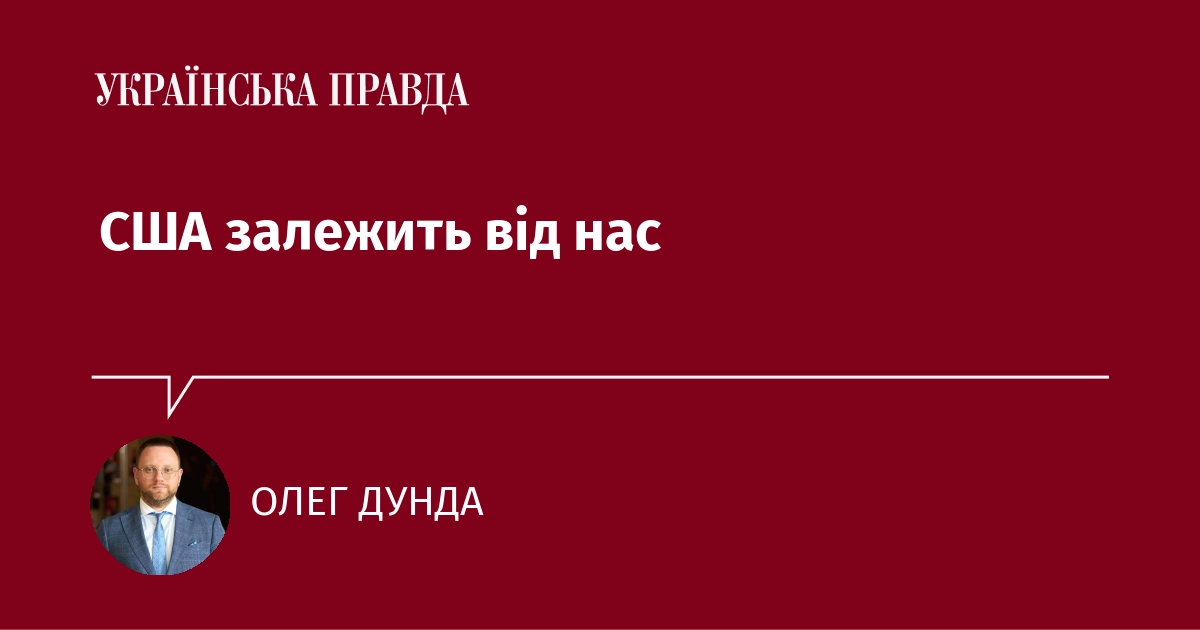
Two layers coexist in the Ukrainian discourse: emotional disappointment and the rational recognition of the U.S.’s indispensability. People’s deputy Oleh Dunda writes in an opinion column for Ukrainska Pravda: “The dependence of the U.S. on us” — the U.S. depends on us. His thesis is paradoxical to an outside observer: he argues that ahead of the 2026 midterm elections Ukraine — despite its fragile situation — manages to keep the status of the only “trump card” for the Trump administration that can improve its standing with some voters. Dunda notes that Trump’s approval ratings on issues important to the average American have fallen below 40%, and one influential Republican senator, Thom Tillis, already harshly criticizes members of his cabinet and demands resignations. In this logic, any talk that Trump will “abandon Ukraine” is, the Ukrainian deputy says, a bluff that would be a political self‑inflicted wound for the White House.(pravda.com.ua) This view is hard to find in the United States itself: there the Ukrainian issue is perceived more as a foreign policy burden, whereas in Kyiv strategists try to “flip the board” and show that the Ukrainian card could save Trump in domestic politics.
The German security debate is structured similarly: it is built on disagreements with Trump, but its starting point remains the recognition that without the United States neither deterrence of Russia nor a long‑term architecture of European defense will work. In the Bundestag at the end of 2025 a whole package of proposals on relations with the U.S. was discussed, submitted by the Alternative for Germany faction. One of the projects, as noted in the official parliamentary report, was called “For a new start in German‑American relations — together for security, stability and peace in Ukraine.” Other texts demanded, conversely, to promote “national sovereignty” together with the U.S. and to push back “woke positions” on the international stage.(bundestag.de) So even within the camp of German populist right‑wingers the U.S. is simultaneously seen as a desirable partner in the fight against liberal globalism and as a source of ideological pressure to be contested.
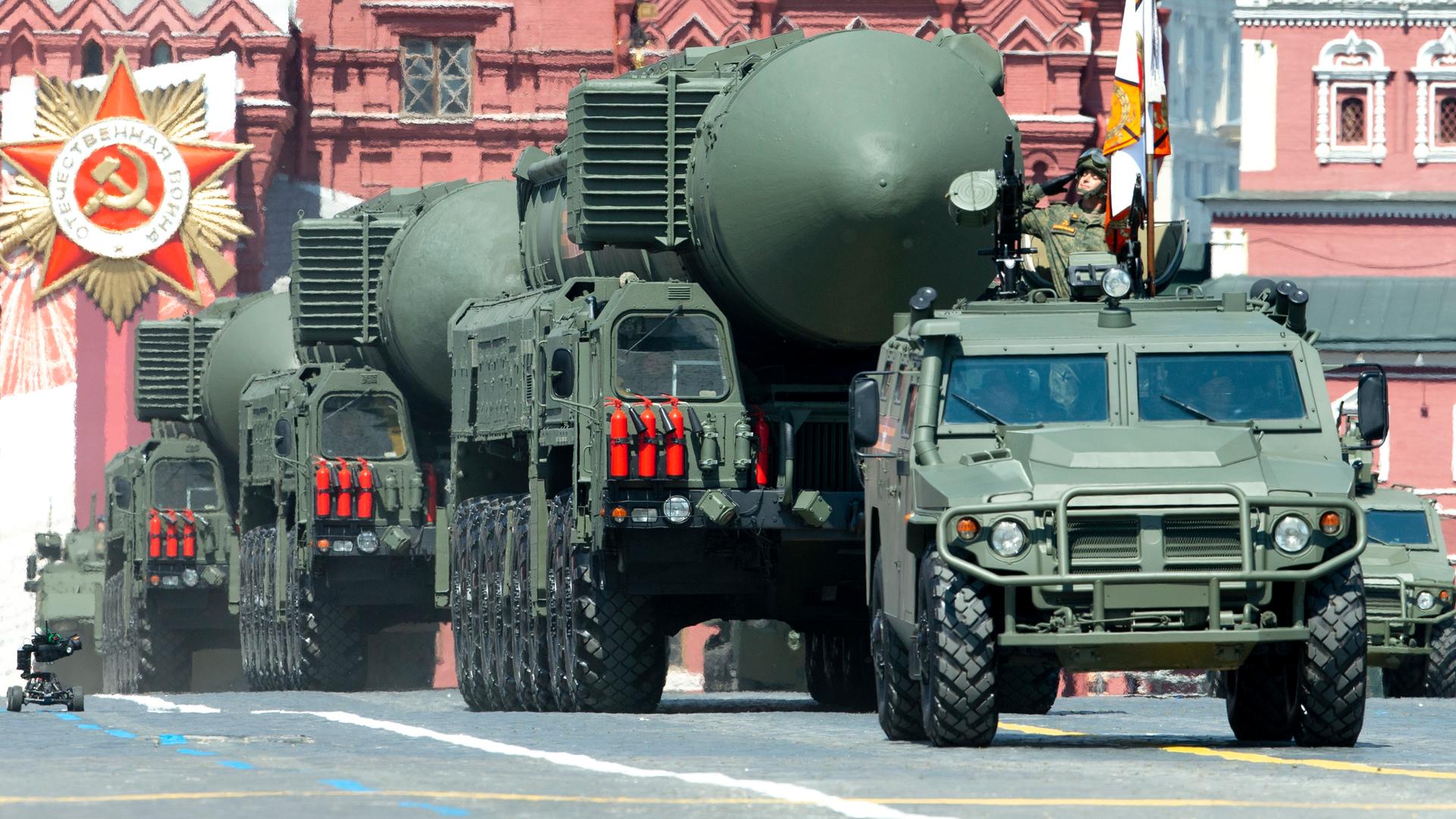
The second major thematic block linking Germany and Ukraine is perceptions after February 5, 2026 of a world without the New START treaty and the future of strategic deterrence. Deutschlandfunk, presenting an international press review, emphasizes that with the expiration of the new Treaty on Further Reduction and Limitation of Strategic Offensive Arms between the U.S. and Russia, for the first time in half a century the nuclear powers have no constraints on expanding their most destructive weapons.(deutschlandfunk.de) Ukrainian commentary on this event has a different emphasis: here the treaty is primarily viewed through the lens of Ukraine’s security. On the portal European Pravda, analytical pieces in 2025 already suggested that weakening controls over nuclear arsenals raises the price of any concessions to Russia and makes security guarantees for Ukraine even more sensitive.(eurointegration.com.ua)
Against this background Ukrainian authors closely watch how domestic American politics will affect support for Kyiv in 2026. Political observer Oleksandr Radchuk, in a column for Slovoi i Dilo, notes that the U.S. has midterm Congressional elections ahead, and these will be the litmus test for whether the Trump administration will keep any course of support for Ukraine or decide to finally “sell” the issue to voters as a refusal of “other people’s wars.” Radchuk points out that in a few days Washington will host the anniversary “Ukrainian Week” and a prayer breakfast on the occasion of the 250th anniversary of U.S. independence, where the Ukrainian delegation will try to convey to American elites that abandoning support for Kyiv will hit not only Ukraine but also America’s reputation as the leader of the free world.(slovoidilo.ua) Here again we see the same motif: Ukrainians criticize the current White House, but convincing the United States — and not someone else — to remain on Ukraine’s side remains their strategic task.
The third, at first glance less dramatic but symbolically important, storyline is the 2026 World Cup, to be held in the U.S., Canada and Mexico. In Germany the tournament has become a political issue at the intersection of sport, migration and human rights. The liberal‑green wing calls for discussing the possibility of boycotting the World Cup in connection with harsh measures by U.S. immigration services and Washington’s general retreat from human‑rights standards. But Interior Minister Alexander Dobrindt (CSU), in an interview with Welt, rejected the idea of a boycott, saying sport should not become a hostage to political conflicts and that repeating the Qatar‑style debates for the U.S. would be wrong. His position is supported by other government members, including Defense Minister Boris Pistorius and State Secretary for Sports Christiane Schnellendler, while representatives of the Greens and part of the SPD, such as MP Bettina Lugk, on the contrary, favor a strong political signal.(welt.de)
In Brazil the conversation around the 2026 World Cup is more traditionally football‑centered, but even here the U.S. is not just a backdrop. A CNN Brasil piece on a global Ipsos poll shows that 71% of Brazilians plan to watch the 2026 tournament, especially Z‑generation men.(cnnbrasil.com.br) For the Brazilian audience the U.S. in this context is a country‑stage where a big sporting celebration takes place and also a field for discussing climate risks: nearly half of respondents in Brazil believe that at least one match could be interrupted by extreme weather conditions, bringing to mind recent precedents in the U.S. where club matches were halted due to storms and heat.(cnnbrasil.com.br)
Specialized football media such as Globo Esporte add a more practical angle: the Brazilian Football Confederation has already sent delegations to the U.S. to study potential team base camps, considering cities like Orlando, Seattle and Portland. Reports describe the American infrastructure — stadiums, training centers, logistics — thus creating in the Brazilian imagination an image of the U.S. as a technologically advanced, athlete‑friendly country.(ge.globo.com) This image clearly contrasts with America’s politically conflicted image in other news and shows how the same state can simultaneously be a “problem” in political columns and a “dream” for football fans.
Putting these fragments together produces a common picture: Germany, Brazil and Ukraine are differently embedded in the U.S. orbit, but in all three countries the same skepticism is growing — the belief that America by itself is no longer a guarantor of stability and value‑based leadership. In Germany this is expressed in SPD calls to reassess the transatlantic alliance and in Merz’s parallel attempt to bet on European autonomy while maintaining ties with Washington. In Brazil it is reflected in a shift of public sympathies toward China and in Lula’s climate diplomacy, where the U.S. often appears as an absent or uninterested player. In Ukraine it shows as a sharp decline in trust in Trump and the painful realization that American support may be variable rather than a constant.
But in the same mosaic there is another motive, less visible to Americans themselves: in all three countries elites are trying hard to find a new, albeit changed, role for the United States. Ukrainian deputies like Oleh Dunda insist that even a “Trumpian America” needs Ukraine’s success for its own image. German politicians discuss how Europe can build its own defense backbone in the absence of arms‑control agreements and amid “sledgehammer politics” in the White House, without tearing up NATO but reducing dependence. Brazilian leaders use Trump’s refusal to come to Belém to emphasize that global climate leadership can and should come from outside Washington. In this sense the world around the U.S. is no longer simply reacting to America but increasingly writing a “new role” for it — often without its participation.

/i.s3.glbimg.com/v1/AUTH_bc8228b6673f488aa253bbcb03c80ec5/internal_photos/bs/2025/4/D/YUgmxAT4qQDklGhpb6YQ/whatsapp-image-2025-06-30-at-10.35.20.jpeg)