The deal between the US and Iran, to which a notable role is attributed to Donald Trump, has produced a wide range of assessments in the international community: from approval by some world leaders — including mentions of support from Putin and statements by ASEAN leaders — to cautious remarks that this is only a "first step" and that new tests may lie ahead. Experts warn of the risk of the conflict spreading to neighboring regions, primarily in relations with Israel and Lebanon, and discussions within the G7 and other multilateral forums have again drawn attention to the unpredictable style of US foreign policy under Trump and its impact on global balances of power and the domestic politics of third countries. In our review — opinions of politicians, analysts and columnists that together give an idea of possible development scenarios and risks to regional stability. The material is prepared on the basis of publications from www.facebook.com, www.bbc.com and www.youtube.com (Venezuela).
Venezuela between Hormuz and Mexico: the US–Iran agreement and Washington's "hidden wars"
Materials from the British and Latin American press, as well as expert commentary on US policy toward Iran and Mexico in Venezuela, form a coherent picture. For Caracas this is not a set of disparate foreign-policy episodes, but confirmation of a central narrative: Washington remains a hegemon that exerts pressure through sanctions, military force and legal extraterritoriality, and the response to this must be multipolarity, a "resistance bloc" and the ability to negotiate with the US only from a position of strength.
Around the recent memorandum between the US and Iran, described in a BBC Mundo piece (bbc.com), and around analysis of possible covert US operations against Mexican politicians in Edgardo Buscaglia’s interview on "Aristegui en Vivo" (video on YouTube), two key lines are emerging in the Venezuelan field: how Washington retreats under pressure (Hormuz, Iran) and how it simultaneously expands the scope of forceful intervention under the banner of "counterterrorism" (Mexico). teleSUR, as the media mouthpiece of the Bolivarian camp, fits the Iranian theme into its habitual narrative about multipolarity and US aggression, as seen in their Facebook post (teleSUR post).
The US–Iran agreement: peace, but from Caracas’s perspective
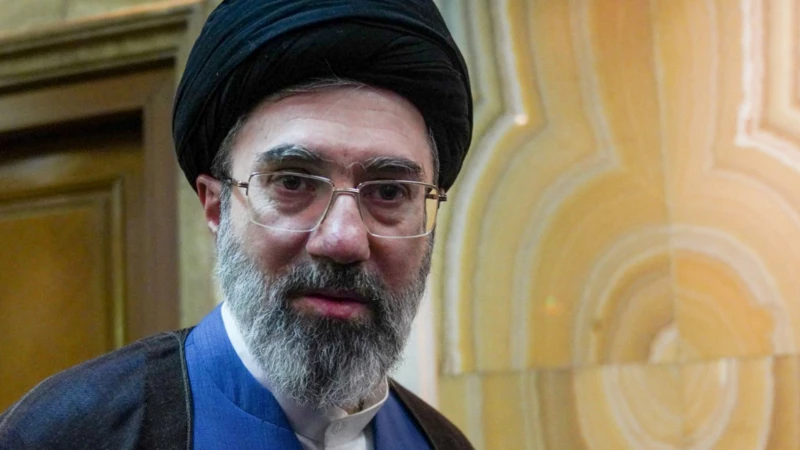
The BBC Mundo piece details statements by Iran’s new supreme leader Mojtaba Khamenei about the memorandum with the US. He emphasizes that the agreement was reached after a period of sharp escalation, including a maritime blockade of the Strait of Hormuz, and that Donald Trump signed the document "out of desperation." The article also quotes US Senator J.D. Vance, who insists that Iran will receive neither money nor sanctions relief until conditions are met, and that any concessions will be strictly "on results" (bbc.com).
The Venezuelan perspective sees this not merely as a diplomatic episode in the Middle East but as a kind of laboratory:
On one hand, Mojtaba Khamenei’s phrase that Trump signed "out of desperation" fits perfectly into the Bolivarian discourse that the US yields only when pressure on it becomes too costly. In Caracas this is read as: Iran, having endured sanctions and the threat of war around Hormuz, forced Washington to the table without capitulating.
On the other hand, Vance’s remark about the strict conditionality of sanctions relief — "only on the basis of results" — reminds Venezuela of its own experience: partial licenses for the oil sector, talks about elections in exchange for possible easing of sanctions, and the threat of rapid rollback of any relief if US-phrased conditions are not met.
A key technical element discussed by the BBC — reopening the Strait of Hormuz as a critical artery of the global energy market — is immediately compared in Venezuela to its own Caribbean basin and Gulf: if the US ultimately abandoned a long maritime strangulation of Iran, how realistic is a complete and prolonged maritime "quarantine" against Venezuela? The Iranian precedent is seen as an argument that a strategy of total energy blockade is unsustainable.
The "resistance bloc," a leader and a deal without capitulation
Caracas pays particular attention to how Khamenei is portrayed in the BBC Mundo piece: the son of an ayatollah killed in an operation attributed to the US and Israel, now supreme leader who, despite personal trauma and ideological rigidity, "held another opinion" but nonetheless "gave permission" for the agreement. In Venezuela this is interpreted as a model:
- it is possible to maintain "resistance" rhetoric and a hard "anti-imperial" identity while pragmatically striking deals with Washington;
- one can speak of protecting the "Resistance Front" (Iran’s allies in the region) without renouncing negotiations that ease the intensity of the conflict.
For Caracas this resonates closely with its own attempts to build dialogue with the US while not formally abandoning anti-American rhetoric and allies like Cuba or Nicaragua. In the figure of Khamenei the Venezuelan ruling elite see confirmation of their line: "peace without capitulation," i.e., agreements that do not require regime change or an official abandonment of strategic partnerships with Moscow or Tehran.
teleSUR and the Russian factor: peace in Hormuz as a triumph of multipolarity
In that context, teleSUR’s piece on the US–Iran agreement posted on Facebook looks perfectly logical. The post emphasizes that it was Vladimir Putin and participants at the Russia–ASEAN summit who "welcome" the memorandum between Washington and Tehran, seeing in it a step toward ending the conflict.
The text is short but full of Bolivarian rhetorical codes:
Russia and ASEAN are presented as a collective subject of the "rising South" and Eurasia, celebrating de-escalation after "the aggression of February." The term "aggression" fits organically into Caracas’s official lexicon, where almost any major military operation, sanctions campaign or blockade by the US and its allies is labeled "aggression." It is not specified who attacked whom, but the framing makes it clear: the West is to blame.
The agreement itself is defined as a "step toward peace," but that peace is not abstract — it is peace achieved thanks to the intervention or at least the approval of powers outside the Western bloc. This aligns entirely with the Bolivarian conception of multipolarity: the US is not shown as the sole arbiter, but as a forced participant in a dialogue where weight is held by Moscow, Tehran and Asian partners.
The fact that teleSUR headlines Putin and emphasizes the Russia–ASEAN summit indicates whose recognition of peace is considered "trustworthy." Legitimacy, in this narrative, comes from non-Western institutions and leaders, not from structures like NATO or even traditional forums under Western influence. Thus, the same memorandum, written about in detail by the BBC (bbc.com), in teleSUR’s telling becomes a story about how the Moscow–Tehran–Asia axis restrains the American impulse to war.
Oil, sanctions and Venezuelan interest
Iran and Russia are key oil-producing countries living under heavy sanctions, largely under a scheme already familiar to Venezuela. Therefore any de-escalatory agreement that reduces the risk of sudden oil price spikes due to a war in the Strait of Hormuz is viewed in Caracas with a dual lens:
- as a factor of potential market stabilization, where Venezuela also wants to return to play;
- as confirmation of the thesis that sanctioned states can negotiate with the US without unilateral capitulation.
If Iran, long portrayed as an "existential threat" to Washington and its allies, reaches a memorandum with the prospect of 60-day talks for a full agreement, then Caracas inevitably asks: why can’t a similar roadmap be the Venezuela–US track? From the perspective of Venezuelan elites, the Iranian case raises Caracas’s bargaining appeal: if the US is willing to talk to Tehran, the logic suggests it could also negotiate with Caracas on phased sanctions relief.
The "Hormuz" compromise and Venezuelan domestic politics
Finally, the image of the Strait of Hormuz partially unblocked as a result of Iran’s pressure and US calculations creates another symbolic layer in Venezuela. For the Bolivarian leadership this is an example of how:
- the threat to close critical energy routes can make a war too costly;
- even in a confrontational mode, a shift toward pragmatism is possible when both sides understand the limits of force.
This lesson is then transferred to the Caribbean basin and Venezuela’s region: the idea of a total maritime blockade or "quarantine," sometimes invoked in US political rhetoric, seems less plausible when compared with the real US turnaround in Hormuz.
Mexico as a mirror: "counterterrorism," cartels and covert operations
Alongside the Iranian theme, the Venezuelan media space actively discusses Edgardo Buscaglia’s analysis presented in his "Aristegui en Vivo" interview and circulated in the region (YouTube). Buscaglia, an Argentine-Mexican security expert, warns that:
- legal and judicial actions by the US against structures linked to Mexican cartels and the political elite are only the beginning of a broader "offensive";
- the administration of Donald Trump (and more broadly, the American political class) relies on international legal frameworks for fighting terrorism to expand its powers for extraterritorial actions;
- this could even include US special-operations activities "under cover," aimed not only at criminal groups but also at specific Mexican politicians and officials.
The Venezuelan reader hears not just a story about Mexico. In Caracas’s view, Buscaglia’s picture looks like part of a single doctrine: Washington codifies crime and terrorism in neighboring countries so that it then has grounds for forceful or covert intervention. What he describes for Mexico, in Venezuela’s perception, is a familiar scenario: accusations of drug trafficking, terrorism, corruption against high-ranking officials, bounty offers for information, arrest warrants — all this has already been applied to figures of the Chavista regime.
The "counterterrorist" umbrella and US extraterritorial power
Buscaglia’s remarks about using the "international counterterrorism legal framework" provoke particular sensitivity in Venezuela. There is long-standing concern in the local agenda that once the US equates a specific regime, party or armed group with "terrorists" or their accomplices, this opens up:
- the possibility of extraterritorial criminal prosecutions and confiscations;
- scope for sanctions both unilaterally and through allies;
- and even a "window of opportunity" for special operations using force under the pretext of preventive or counterterrorism actions.
Buscaglia’s conclusion that "this is only the beginning" and that actions against Mexican politicians will continue and deepen is read in Venezuela not only as a warning to Mexico but also as further confirmation of a regional trend: the legal and force infrastructure built by the US under the banner of the fight against terrorism and international crime easily transforms into an instrument of pressure on governments that Washington considers "uncooperative" or "dangerous."
Mexico and Venezuela: different scales, similar logic
It is important that Caracas does not equate Mexico and Venezuela. Mexico is formally a key US partner, with huge mutual economic and migration interdependence; Venezuela is a country under confrontation and sanctions. However, the logic of Washington that Buscaglia describes seems familiar to Venezuelan observers:
- first, a buildup of legal cases in US courts against politicians and military of another state;
- then those cases become grounds for sanctions, asset freezes, and restricted access to financial markets;
- in parallel, political discourse intensifies the image of the country as a "narco-state" or "sponsor of terrorism," justifying harsh measures.
In Venezuela this path is seen as already implemented: accusations against high-ranking figures, sanction packages, criminal cases in US courts — all of this has long been institutionalized and become part of the "normal" picture. What Buscaglia predicts for Mexico is perceived as the export of a tested scheme.
How realistic are "operations under cover"?
Buscaglia’s idea of potential covert US special-operations directed at Mexican politicians, if they are linked to terrorism or cartels, resonates strongly in the Venezuelan context. In a country where authorities regularly report foiled plots, commando landings and assassination attempts on the president allegedly involving foreign forces, this does not seem fantastical.
However, unlike Venezuela, where official versions often remain unconfirmed by independent sources, Buscaglia’s analysis is taken more seriously in the region because it is based on concrete US legal constructs and the observable dynamics of their application in Mexico. For Venezuelan elites and analysts this is a signal: if such measures are permissible against a large neighbor and trading partner, formal "ally" status does not guarantee immunity. All the less so for countries already designated a "threat to US national security," like Venezuela.
Common denominator: the force of law and the law of force
If one combines the three threads — the US–Iran memorandum as interpreted by BBC Mundo, teleSUR’s "peace" narrative about the same agreement, and Buscaglia’s warnings on Mexico — from the Venezuelan perspective a twofold US strategy emerges.
The first part — coercion into talks through pressure: sanctions, blockades, displays of military power and prosecutions create a point at which, as Khamenei believes, Trump and his administration act "out of desperation" to avoid full-scale war or a major energy crisis. In this logic Iran is an example of how stubborn resistance and readiness to go to the limit in response to pressure can force the US to the negotiating table.
The second part — expansion of legal and force prerogatives: using counterterrorism legislation and the fight against organized crime gives the US tools for extraterritorial influence, including against regional partners like Mexico. In this scheme Buscaglia sees Mexico as "the start of a broader offensive," and Venezuela, by its own assessment, has already passed many of its stages.
Between these poles — negotiations and covert war — the Venezuelan view of contemporary international politics lives: peace is possible, but not as a "Western victory," rather as a forced balance of power; the US must be forced to talk, but one cannot rely on a "neutral" legal order — law, in this logic, remains a continuation of politics.
In this world teleSUR celebrates any steps toward de-escalation if they originate from or are approved by non-Western centers of power, while also listening closely to experts like Buscaglia who reveal the inside story of the American "war on crime and terrorism." For Venezuela the Iranian memorandum and the Mexican case become not two separate stories but parts of a single mosaic: how small and medium powers navigate between the force of the dollar, the force of arms, and the weak but nonetheless possible force of multipolar consensus.