The Venezuelan agenda views Donald Trump’s high-profile statements and public appearances as a reflection of American political culture, while the 25th anniversary of the September 11 attacks is seen as an opportunity to reconsider U.S. leadership, security issues and the global consequences of decisions made in Washington. The coverage is dominated by commentaries and commemorative publications in which American politics appears not only as a domestic event but also as an international spectacle closely watched beyond the country’s borders. This review is based on material from Radio-Canada (Venezuela) and Perfil (Venezuela).
Canada Argues with Trump, Ceuta Seeks an Answer to the Migration Crisis
Two stories from different regions—the trade conflict between Canada and the United States and the migration crisis in the Spanish city of Ceuta—show how economic, diplomatic and humanitarian pressure is increasingly becoming part of international politics. For a Venezuelan audience, both cases may be particularly instructive: they demonstrate that the decisions of major powers, sanctions mechanisms, trade barriers and migration flows can affect sovereignty, domestic stability and people’s everyday lives.
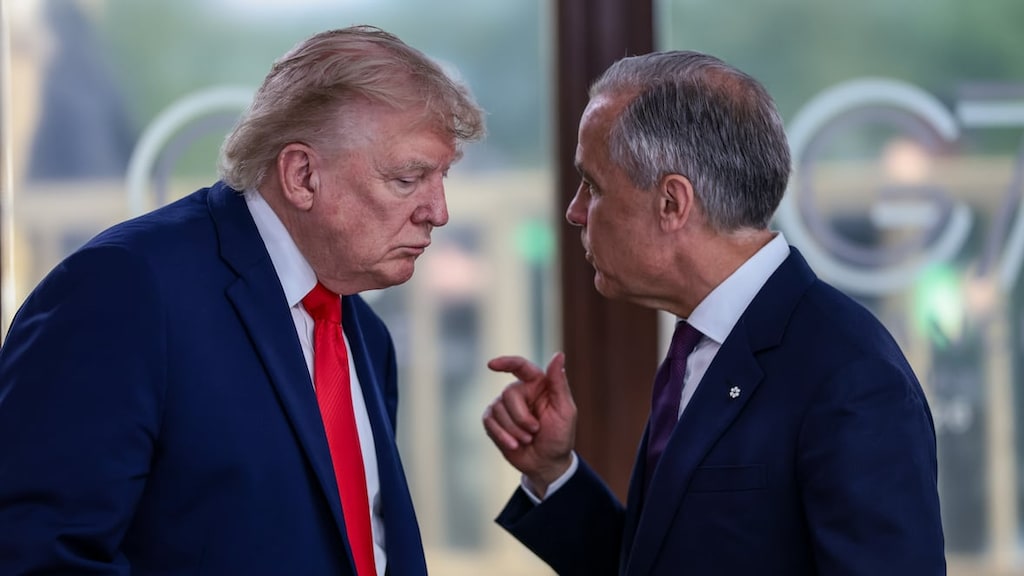
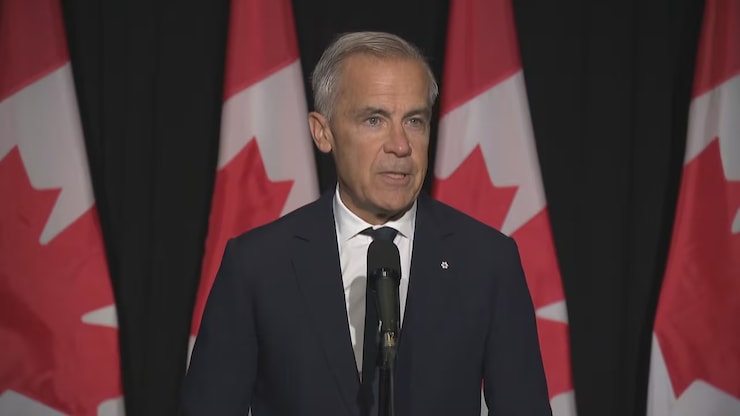
According to Radio Canada International in Spanish, Canadian Prime Minister Mark Carney is trying to maintain political dialogue with U.S. President Donald Trump despite an acute tariff dispute. Carney said he speaks regularly with Trump about Ukraine, Iran and the consequences of wars for oil and grain markets. “We can separate these things,” the Canadian prime minister stressed, referring to the possibility of pursuing international cooperation alongside a trade confrontation.
This approach reflects Ottawa’s pragmatism. Canadian authorities do not want to abandon contacts with the White House on security, energy and global economic stability, even as they respond to U.S. measures with their own tariffs on imports of comparable value. Carney insists that Canada is seeking a “fair deal” and believes an agreement “mutually beneficial to Canada and the United States” is possible.
The question of sovereignty lies at the heart of Canada’s position. According to the report, negotiations have reached an impasse because U.S. demands could threaten Canada’s independence in decision-making. Carney rejected suggestions that his response to harsh statements by representatives of the Trump administration was personal. “This is not about emotions; it is about Canada’s sovereignty,” he said.
For Venezuela, this wording may sound familiar. For years, Caracas has viewed U.S. sanctions, restrictions on the oil sector and limits on financial operations as pressure on national sovereignty. The Canadian case, however, differs in the scale of its relations with the United States and in the instruments available for retaliation. Canada remains one of the United States’ most closely integrated trading partners, has stable institutions and can impose reciprocal measures. Venezuela, by contrast, has primarily faced financial and oil sanctions, political isolation and restrictions on access to international markets.
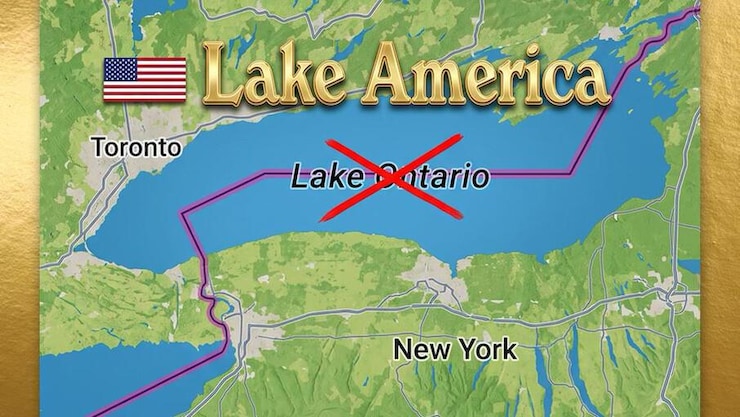
The trade dispute is also accompanied by symbolic pressure. The article mentions that Trump allegedly renamed Lake Ontario “Lake America,” while members of his cabinet publicly criticized Canada. Against this backdrop, the conflict takes on not only an economic but also a demonstrative character: it reflects an attempt to emphasize political superiority and intensify pressure on an ally.
The practical consequences of the tariffs may affect the most ordinary goods. U.S. duties have hit hundreds of Canadian products, although a number of goods—including toilet paper, cement and salt—were exempted from the restrictions. Canada is the largest foreign supplier of toilet paper to the United States, and this example clearly illustrates the depth of bilateral interdependence. For countries that have experienced shortages, difficulties with imports or sharp price fluctuations—including Venezuela—such a situation shows how quickly geopolitical decisions can spill over into consumption and supply.
Carney also links global trade to Russia’s war against Ukraine, the situation surrounding Iran and fluctuations in energy and food markets. In his view, an end to the fighting between Russia and Ukraine could ease global problems with access to energy and food. This is particularly relevant for Venezuela, whose export revenues depend heavily on oil: international conflicts, sanctions, supply disruptions and shifting alliances directly affect commodity prices, foreign-currency revenues, inflation and the availability of goods.
While Canada is trying to combine retaliatory economic measures with the preservation of diplomatic channels, another article—a report by the Argentine publication Perfil—examines the crisis in the Spanish city of Ceuta through the lens of the possible use of migration as a political instrument.
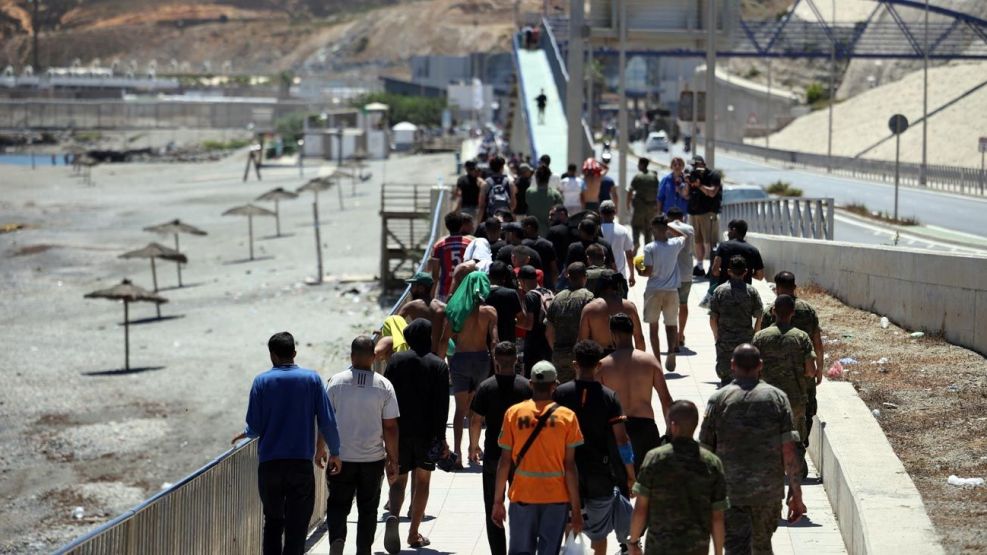
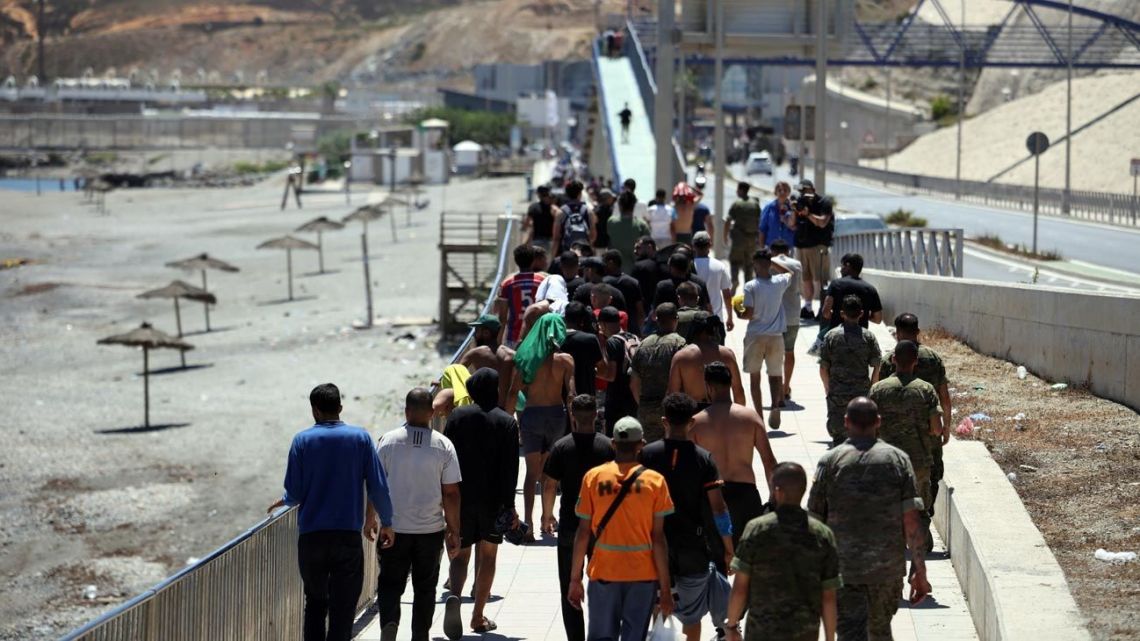
During a discussion on the program Ronda de Corresponsales, the mass crossing into Ceuta was presented not only as a humanitarian or border crisis but also as a possible element of “hybrid warfare.” In this framework, migration flows, social-media campaigns, cyberattacks and pressure on critical infrastructure can be used to destabilize an opponent without a direct military operation.
Spanish correspondent Marcelo Molina said that documents and testimony have strengthened suspicions that the authorities may have known in advance about the risk of a mass border crossing. “There were warnings,” he said. In his account, Madrid had information but failed to take sufficient measures to prevent the crisis.
Much of the criticism was directed at the Spanish government. Molina recalled the resignation of the chief of staff to the government delegate in Ceuta and drew attention to contradictory information about who received warnings and when. He also conveyed the words of Ceuta’s president, who allegedly asked Madrid to send reinforcements—military personnel, police and the Civil Guard. In response, according to this account, he was told that the situation was under control and amounted only to a “summer storm.”
As noted on the program, the crisis was not limited to the issue of border crossings. Fires, crime, doctors’ complaints about a lack of resources and identified cases of tuberculosis were also mentioned. The city’s demographic structure adds another layer of complexity: around 45% of Ceuta’s residents are of Arab origin, predominantly Moroccan. The events therefore concern not only arriving migrants and Spanish state institutions but also Spanish citizens of Moroccan origin who have long lived in the enclave.
Host Jorge Elías urged viewers not to label all those arriving as “invaders.” He said that some people may have headed toward the border because of rumors that the crossing was open and that housing, food and work were available. This qualification is important because behind political theories about external provocation lie real causes of migration: poverty, a lack of prospects, fear and the search for safety.
Correspondent Juan Luis Francia linked young Moroccans’ desire to leave the country not only to economic problems. Drawing on his personal experience traveling in Morocco, he spoke of citizens’ fear of openly discussing the authorities and the king, mentioned “informers” and described the political atmosphere as one of “dictatorship and great fear.” These assessments represent the opinion of a participant in the discussion, but the article uses them to explain why the migration movement may have deep social and political causes.
At the same time, Perfil emphasizes that Spain cannot directly accuse Morocco of organizing the pressure without risking a serious diplomatic conflict. Molina described what was happening as “another provocation.” Thus, the publication offers not a neutral account of events but an analytical interpretation in which the crisis is explained by a combination of miscalculations by Pedro Sánchez’s government, the weakness of Spanish services and Morocco’s possible political role.
Neither the Canadian nor the Argentine article conveys Venezuela’s position or includes comments from Venezuelan officials or experts. Nevertheless, both stories may be viewed in a Venezuelan context. The Canadian example shows how a U.S. ally responds to tariff pressure through reciprocal measures and diplomatic negotiations. The story of Ceuta, in turn, illustrates how migration can become the subject of international accusations, domestic political disputes and struggles for influence. In both cases, sovereignty is not an abstract principle but a matter of concrete decisions—from tariffs and the supply of goods to border protection, social support and foreign-policy dialogue.