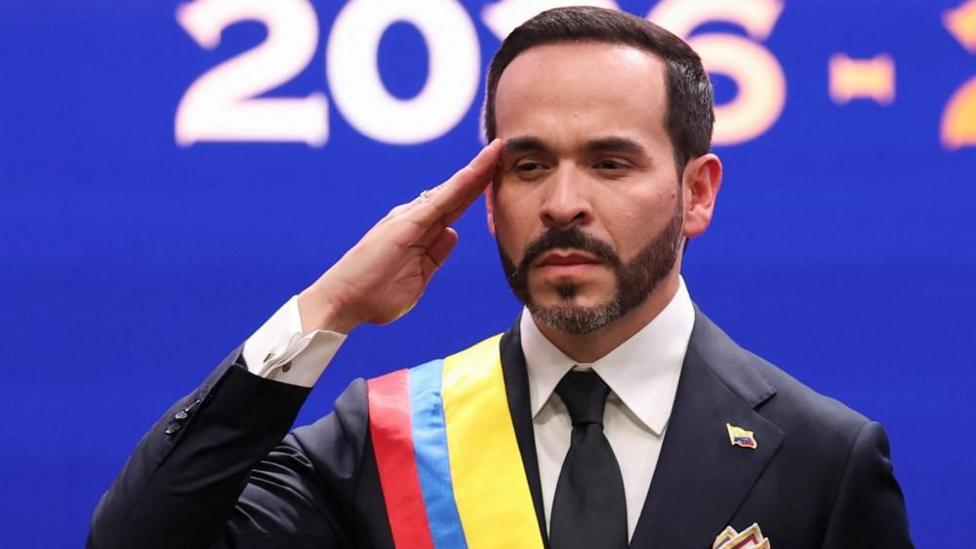
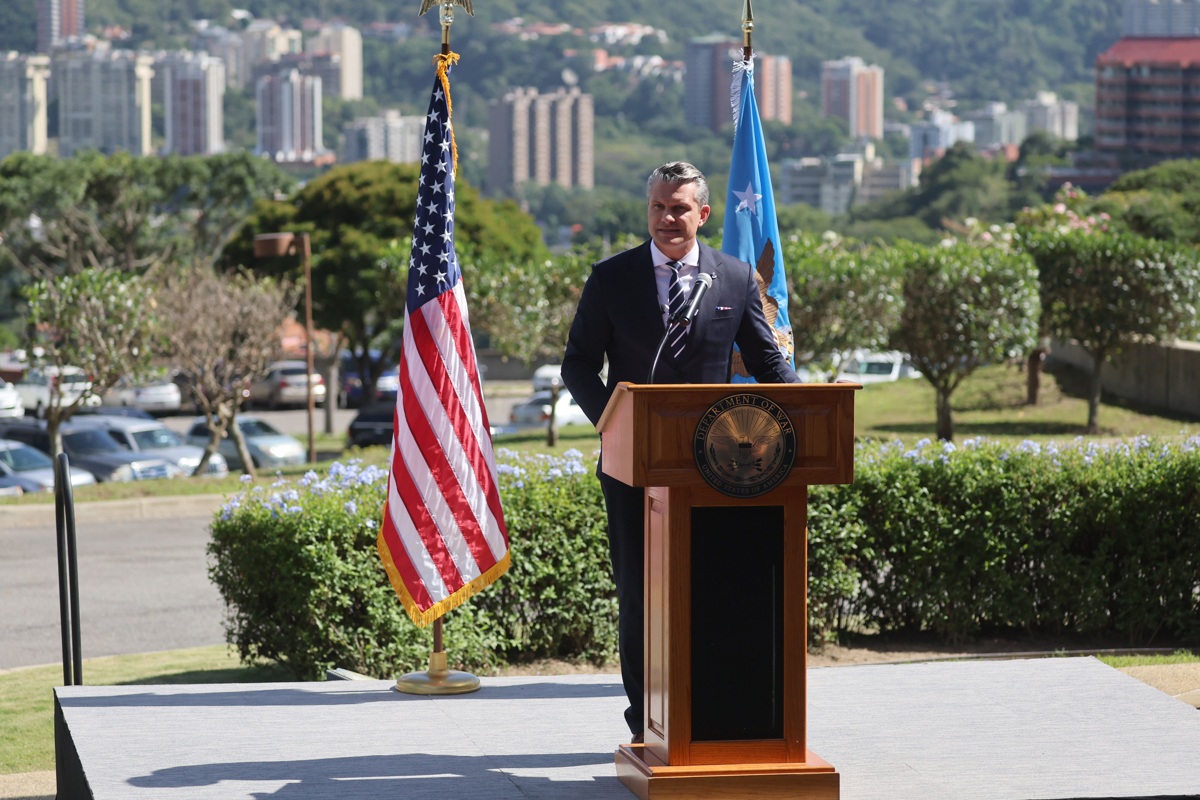
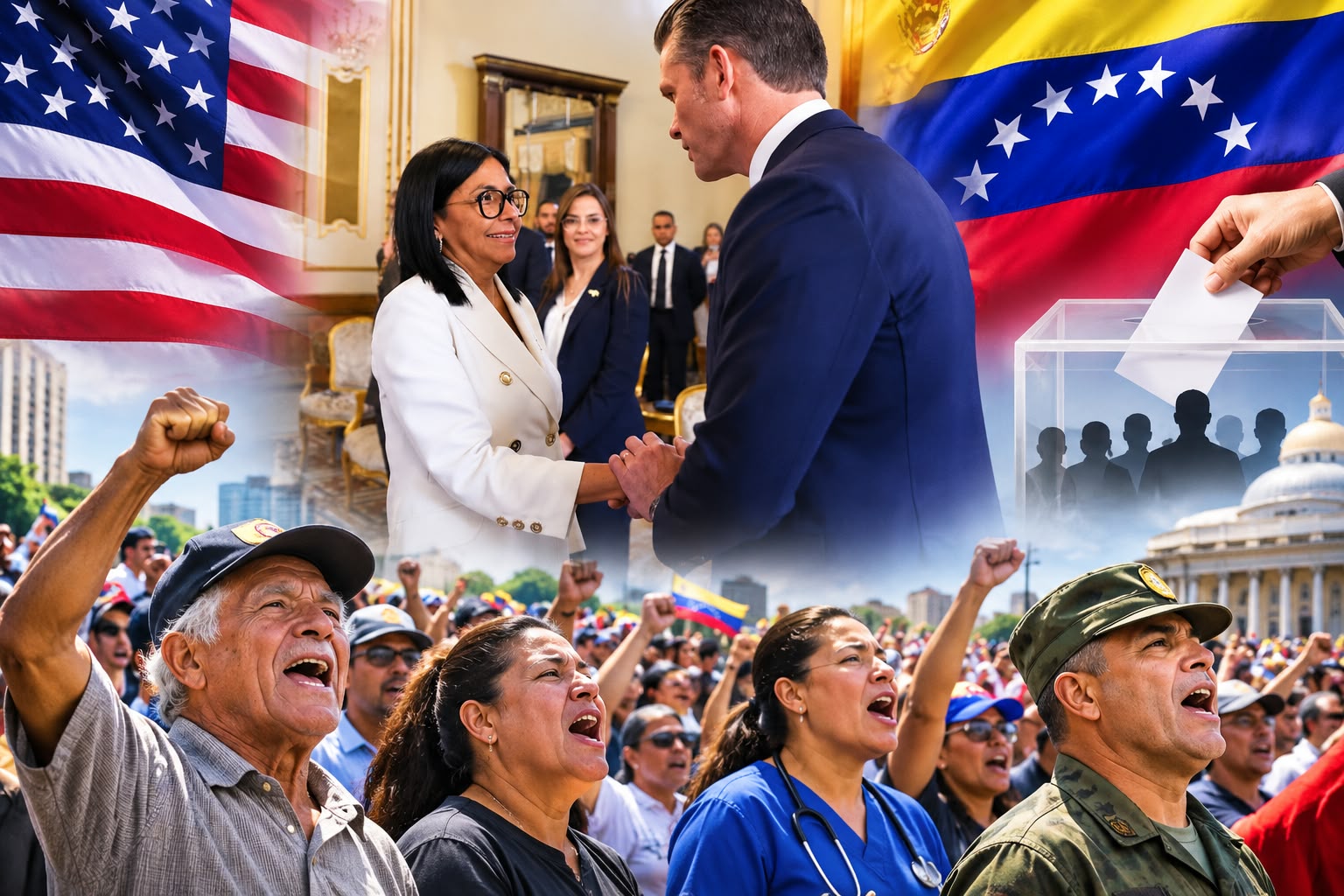
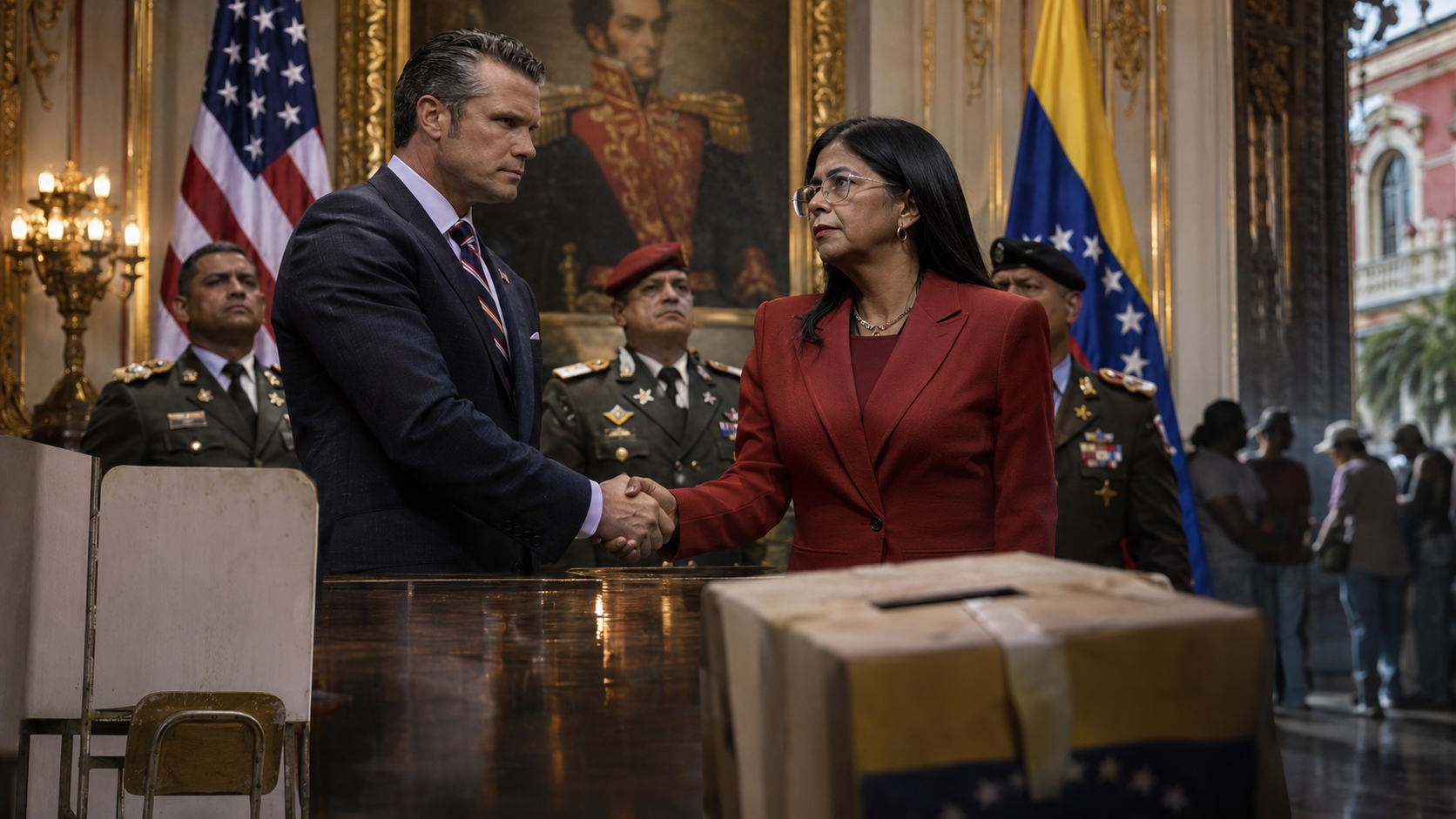
Venezuela is still debating the strangest week in its recent history: on November 18, US Secretary of Defense Pete Hegseth flew to Caracas in secret and signed a military and technical cooperation agreement with Delcy Rodríguez’s interim government—ten months after US special forces removed Nicolás Maduro from the country. For some, this is a chance for normalization and investment; for others, a surrender; and for still others, a deal that will rebuild the military faster than it rebuilds democracy.
Pentagon deal branded a “surrender”
Formally, the agreement covers joint military training, intelligence sharing, equipment supplies and border security. Hegseth called it the “restoration of a defense alliance” and said Venezuela had gone in a year from being “the most aggressive regional threat” to a “compliant security partner” (BBC). Rodríguez spoke of “geopolitical maturity” and “shared threats,” while her defense minister, Gustavo González López, signed the document beside her (Efecto Cocuyo). The main scandal at home is not the deal itself, but the split within Chavismo. Former oil minister and ex-PDVSA chief Rafael Ramírez wrote on X that “the government under Delcy Rodríguez’s tutelage is receiving with honors the very Hegseth who bombed our country on January 3,” and called the agreement “a knife in the heart” of sovereignty (El Nacional). TV host Mario Silva, who ran the propaganda program La Hojilla for decades, denounced the “complete surrender of sovereignty” and a “sweep of the legacy of Chávez and Bolívar.” Significantly, there are also defenders of the policy: party official Jorge Arreaza justifies it as “peace diplomacy” that turns aggression into cooperation. Ramírez publicly cut him off: “Stop sugarcoating this filth.”
Dispute over the legality of Rodríguez’s signature
The sharpest legal criticism has come not from the opposition but from former vice president Elías Jaua. In his reading of the constitution, a vice president temporarily serving as head of state has no authority over military policy, finances or international relations—those powers belong exclusively to the president, making the signature on the agreement illegitimate (La Patilla). It is a rare case in which Chavista lawyers and the democratic opposition agree on one point: a document Washington presents as a step toward stability looks in Caracas like a deal without a mandate. Political scientist Joaquín Ortega of UCV sees the visit differently—as the “consolidation of a new order”: Washington is recognizing the interim government as a “useful and cooperative partner,” formalizing a dependency in which “military cooperation is exchanged for stability and sanctions relief” (Efecto Cocuyo).
The military’s humiliation and Maduro abandoned
Experts debate what matters more: the text of the agreement or Hegseth’s speech at the US Embassy, where he recalled Maduro shouting “Come and get me!” a year ago and declared January 3 “Venezuela’s liberation day,” boasting that the operation took 48 minutes and resulted in no American casualties (El Deber). International relations scholar Víctor Mijares calls this proof of the armed forces’ “complete deinstitutionalization and poor combat readiness”: “Allowing Venezuela to become a US military protectorate is bad news for Chavismo and an interesting opportunity for a democratic transition” (Efecto Cocuyo). Commentator Omar González Moreno speaks of the “humiliation of Chavista military leaders,” who spent years promising an “invincible defense” and are now welcoming the victor (La Patilla). From a Brooklyn detention center, Maduro responded not with politics but with a sermon: a post about “faith, love and rivers of living water” and the “O.R.A.R. method”—prayer, reflection, action, results (La Patilla). Commentators read it as an abandonment of his role as a resistance leader.
Elections postponed in favor of oil
The common thread in almost all local assessments is that military and economic normalization is moving faster than political normalization. Political scientist Ortega and lawyer Mariano de Alba note that “security and oil” were at the heart of the visit, and that Washington now wants not regime change but “continuity, provided cooperation is maintained” (Efecto Cocuyo). Columnist Antonio de la Cruz puts the risk plainly: “military rapprochement is moving faster than democratization.” The real problem, he says, is not who occupies Miraflores but the concentration of power in a system where party, military and state are fused (El Nacional). Critics point to the oil deal with North American Blue Energy Partners, headed by Alejandro Betancourt, a businessman under investigation in Spain and Switzerland. According to a Meganálisis poll, around 80% of Venezuelans oppose the deal, including María Corina Machado, who calls it “obscene corruption.” Nationalists see neo-imperialism, the left sees plunder, and democrats see the rescue of a dictatorship (Foreign Affairs). In an interview with Canada’s Le Devoir, PROVEA activist Óscar Murillo warns that agreements are being made outside institutions “that have collapsed and disappeared,” and that the transition may serve foreign commercial interests (Le Devoir). PSUV lawmaker Iris Varela and other Chavista voices are demanding an explanation of what commitments have been made and whether a US base might be established. This has not been officially confirmed, but rumors of one are being discussed in Caracas more seriously than the text of the agreement (El Nacional).