Over the past two days, Venezuelan public opinion has focused not so much on the return of US Marines to the embassy in Caracas itself as on the broader context: the country is living under tight American oversight, oil agreements with Washington are expanding, while former President Nicolás Maduro is sitting in a New York prison and has nearly disappeared from official rhetoric. It is at the intersection of these developments—the sell-off of oil rights, Maduro’s disappearance, the lifting of sanctions on government relatives, and the marginalization of the opposition—that the dispute over what is happening to Venezuelan sovereignty is unfolding.
Marines at the Embassy and the “Three-Phase Plan”
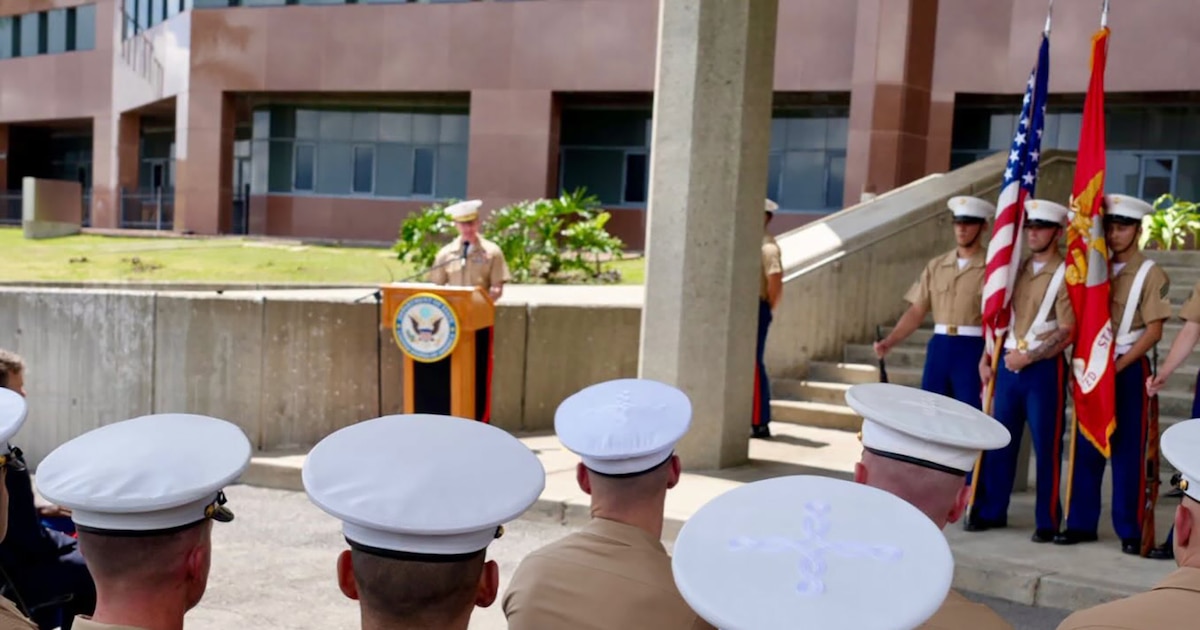
The US diplomatic mission announced the reinstatement of a Marine Security Guard detachment after a seven-year hiatus. Marine Corps Commandant General Eric Smith attended the ceremony, while Chargé d’Affaires John Barrett called it “another step toward strengthening relations between the United States and Venezuela and advancing the three-phase plan of President Donald Trump and Secretary of State Marco Rubio,” AFP/Infobae reports. Officially, Caracas regards this as routine protocol, but local critics interpret the symbol differently. In a report from Caracas, Mexico’s La Jornada recalls that the detachment is returning “just nine months after the American military aggression” and calls it “the relocation of the American security apparatus to the heart of the country with the world’s largest oil reserves” (La Jornada). This framing—“protocol” versus “occupation”—sets the tone for the entire discussion.
“Guardianship” over Oil and $76 Billion
The most high-profile economic story is the investment package announced on October 17 for the oil sector, worth nearly $76 billion over five years. It includes agreements with the United States covering 17 fields and 250 drilling rigs; 61 agreements have already been signed. The leading public critic is former Oil Minister and ex-head of PDVSA Rafael Ramírez, who called the US-Venezuelan oil agreements “a new colonialism.” His colleague Manuel Quevedo asks why the agreements are not being announced by the government itself, while left-wing groups have taken to the streets chanting, “Yankees, get out” (The Paper). Alirio Rangel Díaz, a columnist for Diario de Los Andes, goes further: he writes of “guardianship” (tutelaje) under which budget spending is coordinated with the State Department and OFAC, while oil revenues are distributed opaquely—“for the first time in the history of the Republic, we are facing a loss of sovereignty.” Tellingly, government voices are barely heard in this dispute: officials prefer to talk about production in Zulia rising from 70,000 to 370,000 barrels per day rather than about the political cost of the deal.
The Maduro Case: “Prisoner of War” versus Judicial Procedure
While Rodríguez signs oil contracts, the trial of her predecessor continues in New York. On October 15, Maduro and Cilia Flores rejected new charges of complicity in torture, and the trial was postponed until June 2027. That same day, rallies were held in Caracas demanding the release of four “hostages.” Caracas Mayor Meléndez called them “prisoners of war” (prisioneros de guerra), a formulation that, according to commentators, shifts the dispute from criminal law to international humanitarian law (overview). At the same time, BBC Mundo notes that from January to April, references to Maduro in Rodríguez’s speeches fell from 86 to eight, while she has recently been officially referred to simply as “president,” without the qualifier “acting” (BBC Mundo). International Crisis Group analyst Phil Gunson told the BBC: “There is no sense of an intention to preserve the memory of Maduro and Flores,” adding that relations with the United States are discussed in Venezuela “always in positive terms.” Venezuelan political scientist Ángel Lombardi records the same ambiguity in TalCual: most people supported Maduro’s removal because of election fraud, but “a bitter disappointment remains” that the country is now led by someone appointed by Maduro himself.
Sanctions as a Bargaining Chip
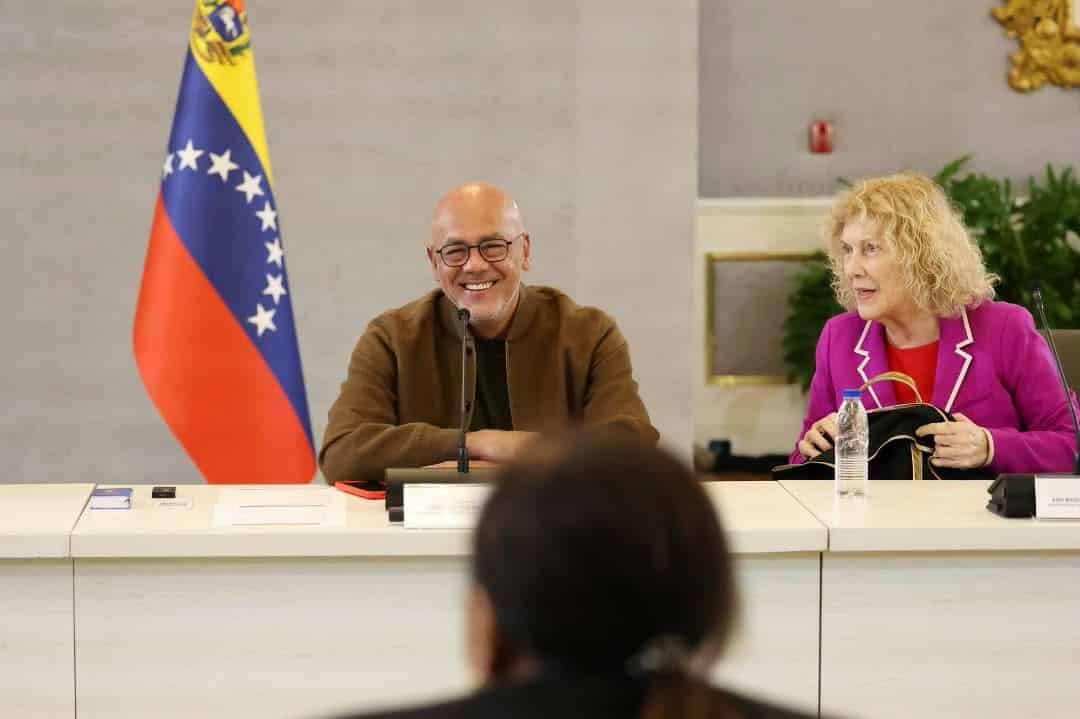
Venezuelan analysts link the lifting of financial sanctions on Jorge Rodríguez, the acting president’s brother and head of the National Assembly, to the United States’ extradition of Colombian businessman Álvaro Pulido, an associate of Alex Saab. In Efecto Cocuyo, political scientist Juan Manuel Trak calls it a “win-win” arrangement (ganar-ganar) between Miraflores and the White House: Washington signals its satisfaction with the dialogue, while “Rodrigato” demonstrates its ability to bargain. His colleague Eric Obermaier sees “strategic logic” in the move: Chavism retains room to exercise power and set the agenda for negotiations. At the same time, Trak emphasizes, only personal restrictions have been lifted. Sanctions against the country as a whole remain in place; only general and sectoral licenses are active, while Diosdado Cabello and General Padrino López remain on the OFAC list. A column on Venezuelausa.org develops the same idea: Washington appears to have abandoned “the idealism of institutional reconstruction” in favor of “the realpolitik of corporate peace,” in which stability and oil quotas carry more weight than the voters’ mandate.
Machado, Elections and the Question of Who Is “Interesting”
Against this backdrop, Trump’s comment at the White House sounded particularly pointed. Asked whether he would like to see Delcy Rodríguez run against María Corina Machado in an election, he replied, “Well, that would be interesting” (EFE). The answer does not, in itself, decide anything, but Venezuelan commentators interpret it as an acknowledgment that Machado—the 2025 Nobel Peace Prize laureate—remains outside the US-backed dialogue led by Chavism and part of the opposition under Dinorah Figuera. In an interview with The New York Times, Machado herself said that the United States had “excluded” her from the negotiations and called Washington’s new oil partner Alejandro Betancourt “corrupt”—a scandal that, according to Venezuelausa.org, “caused a political earthquake.” In the end, local voices agree on one point: Venezuela has gained investment and the lifting of some sanctions, but is paying for it with opaque deals, the absence of an election date, and the quiet erasure of both Maduro and Machado from the future political equation.