Over the course of a week, Caracas and Washington exchanged signals that many in Venezuela see as contradictory: the State Department praised local dialogue and called for the release of political prisoners; a renewed military agreement with the United States has been under discussion in the country for a month; and there is talk in financial circles of Citigroup’s return. For Venezuelan politicians and analysts, the central question is the same: where is the line between economic recovery and losing control of one’s own country?
Military Agreement and Disputes Over Sovereignty
On November 18 in Caracas, U.S. Secretary of Defense Pete Hegseth and interim President Delcy Rodríguez announced the resumption of technical and military cooperation, which Hugo Chávez had suspended in 2005. The agreement covers officer training, exchanges of expertise and equipment modernization. Rodríguez called it a “highly beneficial” alliance, while Defense Minister Gustavo González López assured the public that everything would be done “with full respect for sovereignty, independence and territorial integrity” and “in strict accordance with the Constitution,” according to El Cooperante. But the full text of the agreement has not been published, prompting concern.
The Communist Party of Venezuela (PCV), whose leadership was stripped of its registration by a Supreme Court ruling in 2023, reacted sharply. Its general secretary, Oscar Figuera, called the agreement “a new episode of political subordination and surrender of national sovereignty” and “a new chapter in the blatant servility of those who today illegally and illegitimately claim the right to govern,” Monitoreamos reports. The position of lawmaker Gilberto Jiménez (MEP party, parliamentary foreign affairs committee) is also telling. In an interview with Sputnik, summarized by qdnd.vn, he said that lifting sanctions—not signing new military and energy agreements—should be the priority, and recalled Article 13 of the Constitution, which prohibits the deployment of foreign military bases. Critics across the political spectrum agree on one point: there is a gap between official assurances of “full respect for sovereignty” and the absence of a published agreement.
Parliamentary Dialogue, Political Prisoners and Washington’s Conditions
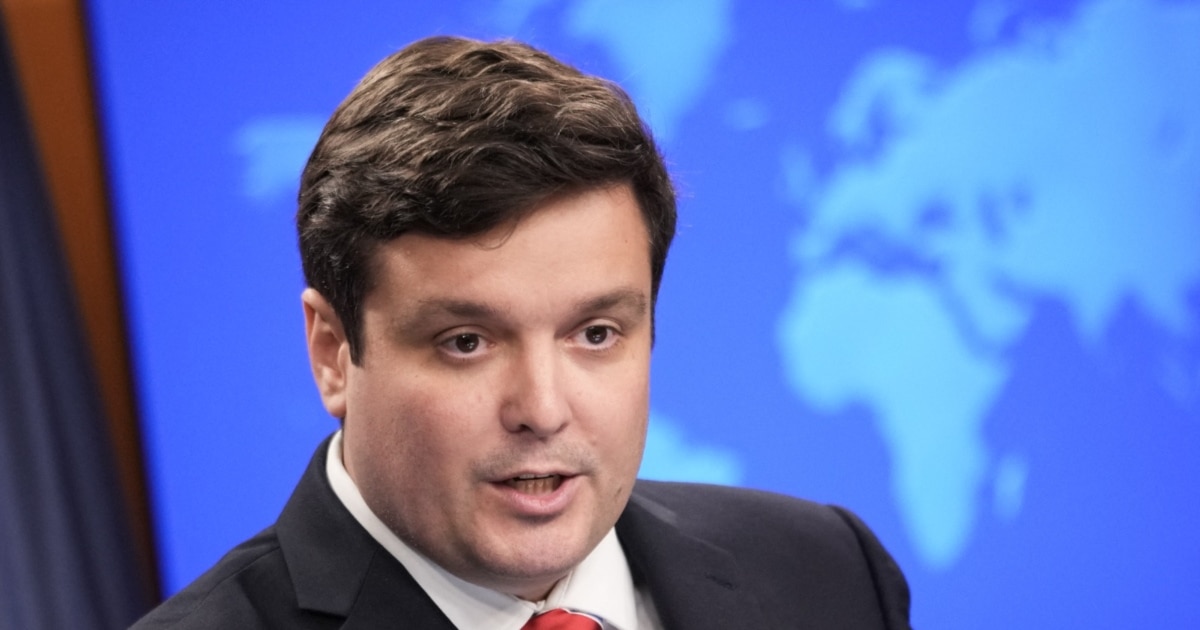
The fourth round of talks between the delegations of Jorge Rodríguez (the government) and Dinorah Figuera (the 2015 National Assembly) concluded this week. They signed an eight-point document covering reform of the Supreme Court and the laws on political parties and “against hate,” a review of broadcast licenses held by Globovisión, Venevisión, Televen, VTV and other channels, as well as a “road map” for the return of Venezuelan gold from the United Kingdom. The State Department, through spokesperson Thomas Pigott, welcomed the agreement but insisted on the “immediate release of all political prisoners” and elections that are “free, fair and credible,” according to Infobae and Martí Noticias.
Washington points to its three-stage plan—stabilization, economic recovery and political reconciliation—and to “Operation Absolute Resolve,” the name given to the January capture of Nicolás Maduro and Cilia Flores. This is what makes the compromise so fragile: negotiations are taking place in a country where the elected president is in a New York prison and the government is led by the former vice president. A report by the U.S. Congressional Research Service, examined by El Cooperante, adds an important detail: Washington has not set an election date, but says elections could take place “between late 2027 and early 2028,” while María Corina Machado, who returned on October 25 after ten months in exile, is pushing for the process to be accelerated. The negotiators therefore disagree on timing, while the external power whose recognition matters reserves the right to use sanctions as leverage.
Sanctions: “Managed Easing” Instead of Lifting
The key interpretation within Venezuela is that sanctions are being rationed, not lifted. Lawyer and human rights advocate Juan Martorano, writing for RTVI, describes the talks as taking place “on unequal terms,” comparing the country’s position to that of a hostage’s family: to prevent something worse, they have to agree. According to his figures, oil production recovered from its early-year slump to 1.13 million barrels per day in April and more than 1.22 million by October–November, but access to the proceeds is governed by special procedures. Analysts at Baker McKenzie, speaking at a webinar summarized by Export Compliance Daily, put it more bluntly: this is “managed sanctions easing, not their removal,” and OFAC general licenses can be narrowed or revoked more quickly than the broader program can be wound down. Caracas-based lawyer Carlos Felse, meanwhile, insists that support for Venezuelan reforms in the United States is “bipartisan”—but that is more a hope than a guarantee.
Oil, Money and a “Managed” Economy
The most sensitive issue is who controls oil revenues. Martorano argues that oil is now sold at market prices, without the discounts imposed previously, but the proceeds are subject to special procedures, and spending decisions are coordinated with Washington. Materials prepared for Congress described a system in which revenues are held in accounts in the United States. Venezuelan critics see this as “sovereignty in name only”: the gains from higher production are real, but control over how the money is used has been removed from national hands. Against this backdrop, Bloomberg’s report that Citigroup is discussing a return to the country with the State and Treasury Departments five years after leaving is seen in Caracas as another step toward access to the dollar system—subject to Washington’s permission. The bank initially plans to limit its operations to correspondent banking rather than opening branches, El Economista notes. Significantly, Citi CEO Jane Fraser struck a cautious tone at a Bloomberg conference in September: “It’s the same government that’s been there for a long time, and in my experience, it often takes a change of people and of agenda.” Venezuelan commentators took the remark as a sign of doubt about the durability of the current arrangement.
The Essequibo and Regional Bargaining
Another front is the dispute with Guyana over the Essequibo. According to Martorano, the United States officially supports the 1899 arbitration award and the proceedings at the International Court of Justice. Reports also emerged in September of unofficial contacts between State Department official Jeremy Levin and Guyana’s foreign minister, Robert Persaud. Guyana confirmed that it was awaiting the court’s decision and ruled out bilateral talks on sovereignty. For Venezuelan nationalists, this is a painful signal: a country that has ceded control over its oil risks receiving no support in its territorial dispute either. Polls and editorials in local publications reflect a divided public: some, exhausted by a decade of crisis, are willing to accept “external administration” in exchange for wages and stocked store shelves; others—including not only communists—believe the price is too high. It is this divide, rather than Washington’s formal statements, that will determine the outcome of the current bargain.