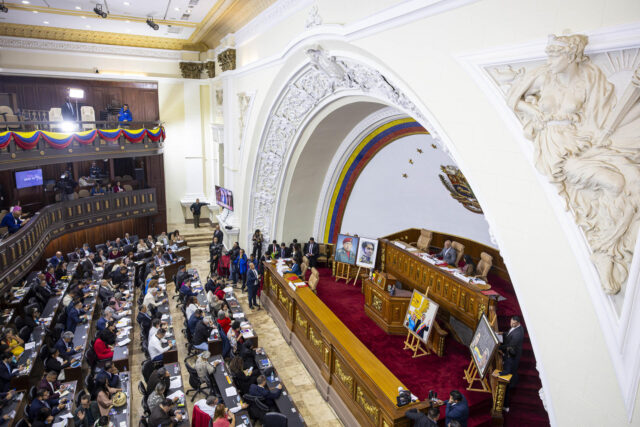
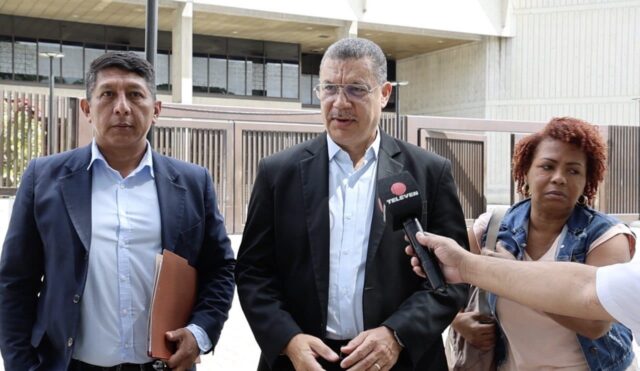
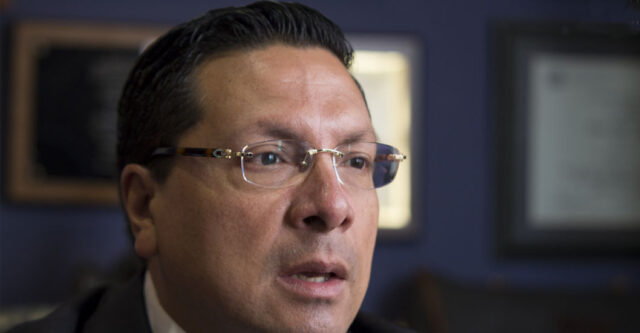
Venezuelan society is debating an unexpected turn of events: a country that just a year ago called Washington its main threat is now accepting U.S. investment in the oil industry, while acting President Delcy Rodriguez is publicly thanking Donald Trump. Against this backdrop, three disputes are unfolding—over the price of the oil deal, whom Washington is removing from its sanctions lists, and what to do with the memory of Nicolás Maduro.
The Oil Deal and Accusations of “Neo-Colonialism”
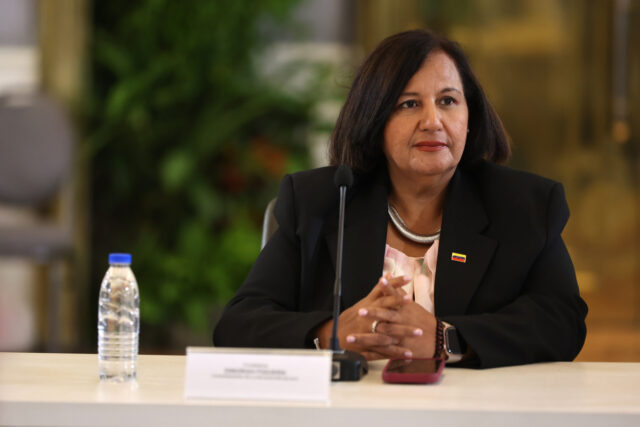
On October 17, Rodriguez announced at a forum in Maracaibo that nearly $76 billion would flow into the oil and gas sector over five years. Sixty-one agreements have already been signed and another 44 are under discussion, while production in Zulia has risen from 70,000 to 370,000 barrels per day. As Guancha columnist Jiang Wenzhi writes, this sparked the loudest dispute: the deal touches the sacred Chavista slogan of “oil sovereignty.” Former PDVSA chief Rafael Ramírez called the U.S.-Venezuelan agreement “neo-colonialism,” while former Oil Minister Manuel Quevedo quipped: if everything is going so well, “why isn’t our government announcing it?” In August, left-wing groups took to the streets of Caracas with placards reading “We are neither a colony nor a backyard” and “Yankees, go home.” It is telling that Diosdado Cabello himself—who as recently as late 2025 promised that the United States would not receive “a single drop of oil”—is now reposting government statements in support of the agreement. In the author’s assessment, this is not a split within the government but an ideological rupture between the older generation of Chavistas and those who remain at the helm.
The opposition has also criticized the deal. María Corina Machado said that only a “serious democratic government” could provide investors with stability. Through Venezuelausa, her supporters have warned of the risk of Washington reaching a “corporate peace” with Chavism instead of establishing institutional democracy. Machado also called Alejandro Betancourt, the United States’ new oil partner, “corrupt.” The tone on social media is even more bitter: “When will ordinary people feel it?” and “$76 billion? No, $50”—an allusion to corruption. The deal’s structure also supports the skeptics’ position, as Il Caffè Geopolitico reports: the United States receives a stake in North American Blue Energy Partners, a 100-year concession for 17 fields, the right to purchase 20% of production at market prices, and a preferential right to the remainder, while the state-owned PDVSA is effectively excluded from the arrangement.
Sanctions as a Tool of Political Selection
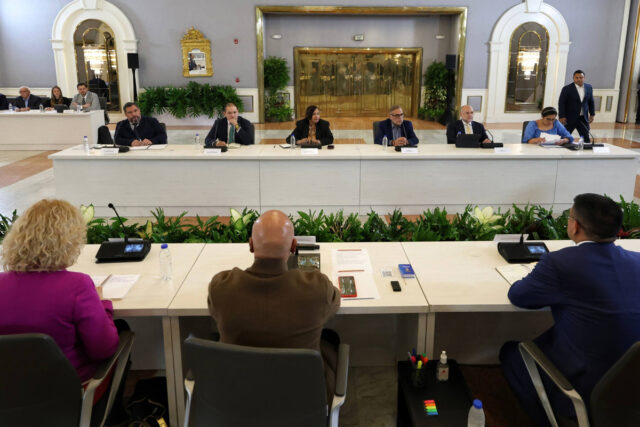
The second development concerns the targeted lifting of restrictions. On October 14, OFAC removed Jorge Rodriguez—Delcy’s brother and speaker of the National Assembly, who had been under sanctions since 2018—from the SDN list. Earlier, in April, Delcy Rodriguez herself was removed from the list, while measures against the Central Bank and Conviasa were also eased, reports LRT. The Venezuelan publication El Nacional emphasizes that Jorge Rodriguez’s removal does not lift restrictions on Cabello, Tarek William Saab, Vladimir Padrino López, the Maduro family, or entities including PDVSA, Minerven and the Central Bank. In effect, rewards are being given to those who conduct negotiations and change oil legislation, rather than to those who remain on the sidelines.
The “Disappearing” Maduro and Thanks to Trump
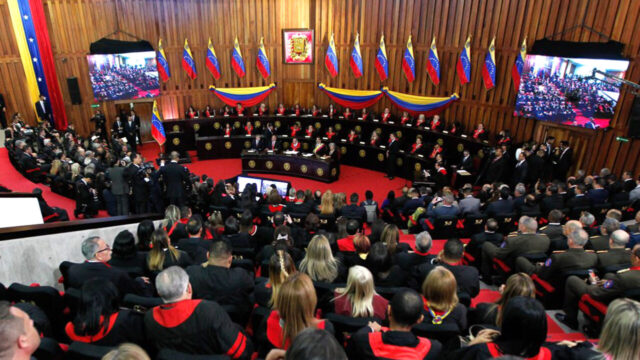
The third—and perhaps most unexpected—dispute for outside observers concerns historical memory. As journalist Valentina Gil found for TalCual, in research summarized by BBC Mundo, Rodriguez mentioned Maduro up to 86 times in speeches in January, but only eight times in April—and then only in connection with “his administrative actions.” At the UN General Assembly, she did not mention either Maduro or Chávez even once. Instead, she said: “I want to thank President Trump for his willingness to pursue a path of diplomatic relations and cooperation.” A giant image of Maduro with Cilia Flores is being removed from Caracas, while the slogan “Venezuela renace” (“Venezuela is reborn”) has appeared on the Palace of Justice. Phil Gunson, an analyst with the International Crisis Group, told the BBC: “There is no sense of an intention to actively preserve the memory of Maduro and Cilia Flores… while relations with the United States are always described in positive terms.” Cornell University professor Irina Troconis explains this through the logic of the propaganda machine: the June 24 earthquake became a “highly legible opportunity” to reinvent the image of those in power. At the same time, the Venezuelan government has made no public comment on the new U.S. accusations against Maduro and Flores, including torture allegations—a silence that has itself become a political gesture.
The main dividing line in Venezuela’s debate does not run between those who are “for” or “against” the United States, but between pragmatists in power, for whom American money and the lifting of sanctions are conditions for survival, and old Chavistas and the opposition, for whom the same deal represents a loss of sovereignty and a postponement of elections. For now, it appears, the first side is winning.