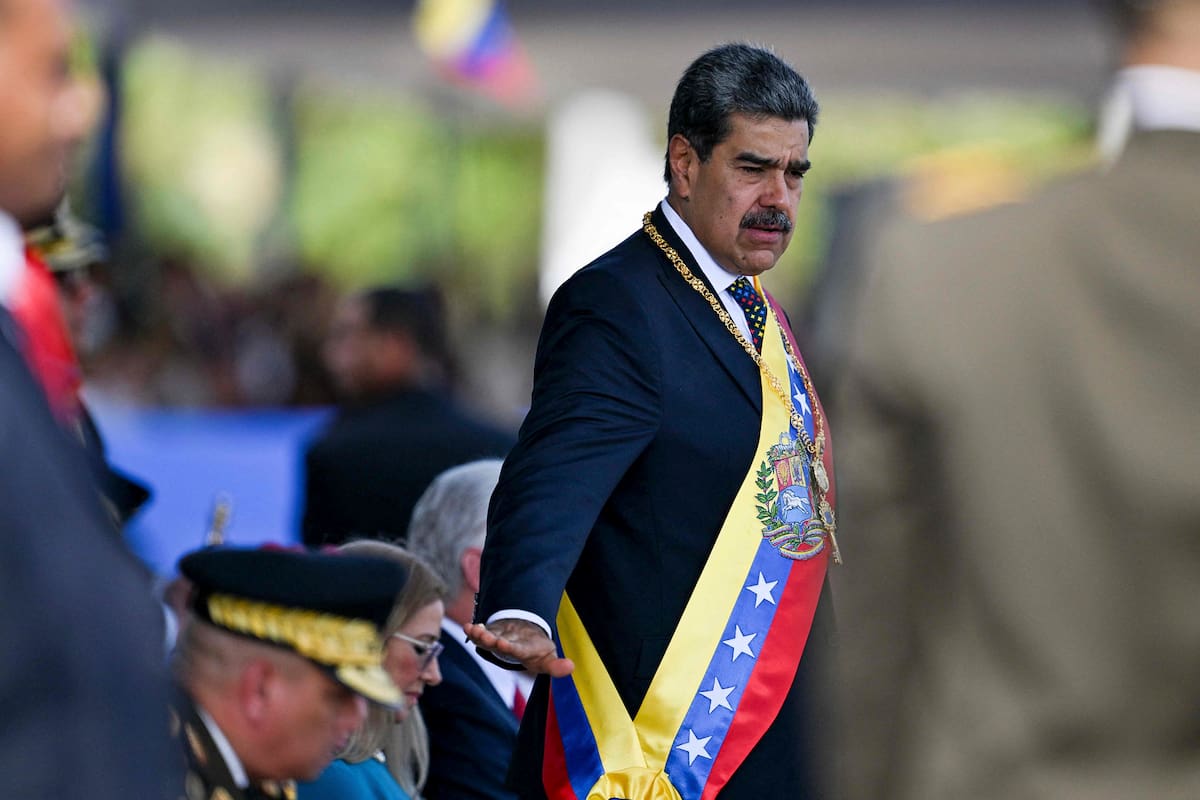
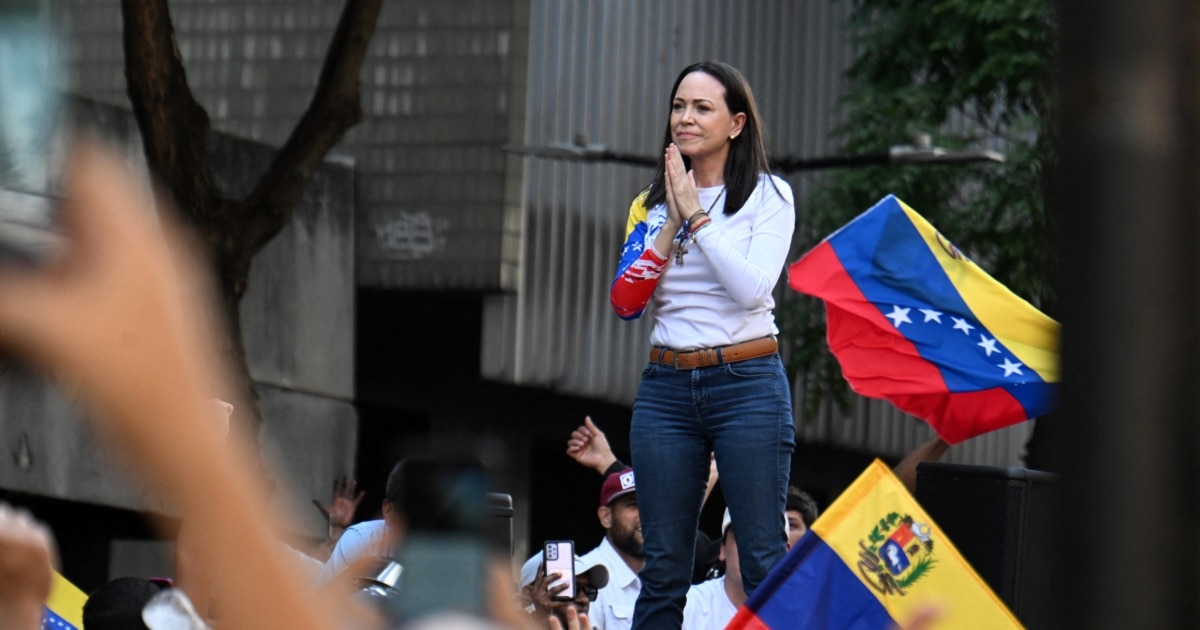
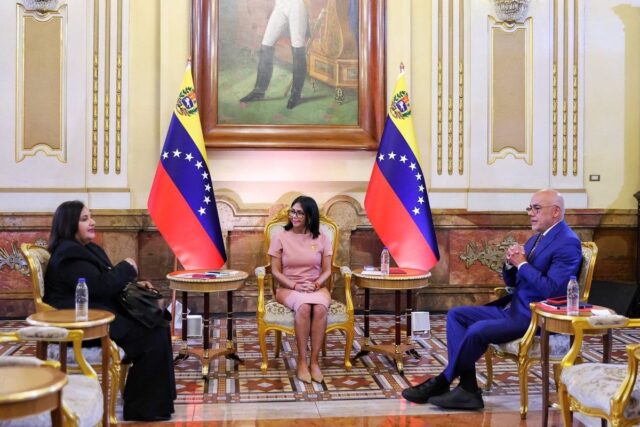
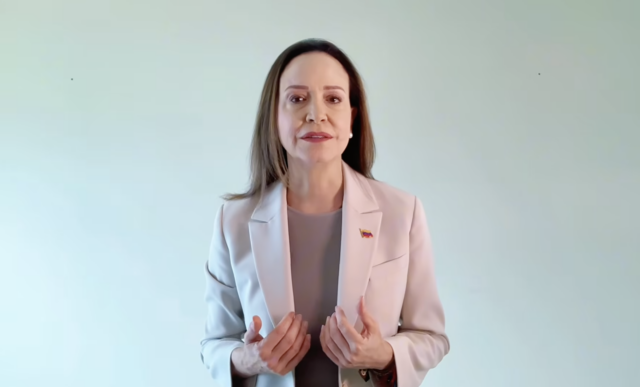
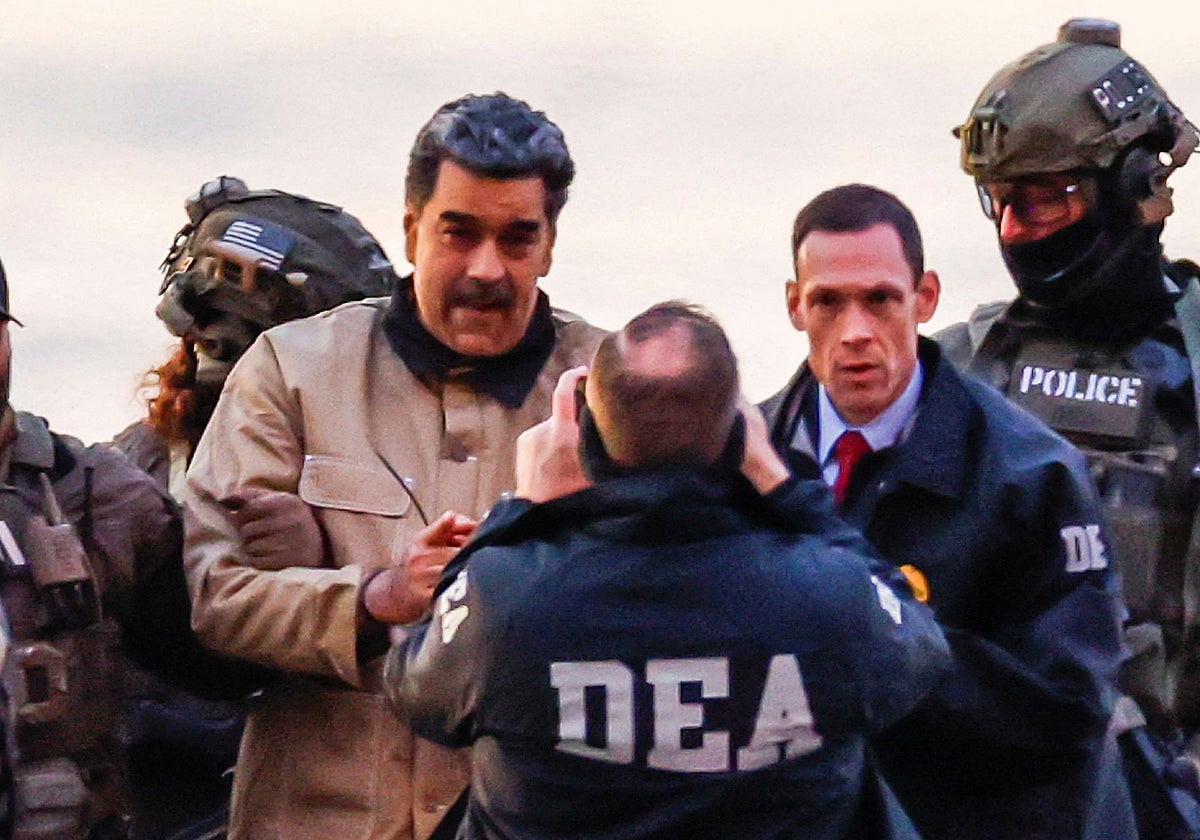
After U.S. special forces seized Nicolás Maduro in January, Caracas and Washington went in a matter of months from sanctions confrontation to an oil partnership that Venezuelan and Latin American commentators are already calling a “protectorate.” Over the past two days, local media have focused on three flashpoints: an oil deal with a controversial business partner, the lifting of sanctions on the Rodríguez siblings, and the question of who will allow the country to hold elections, and when—María Corina Machado or the interim administration of Delcy Rodríguez.
The Oil Deal and the Question of Sovereignty
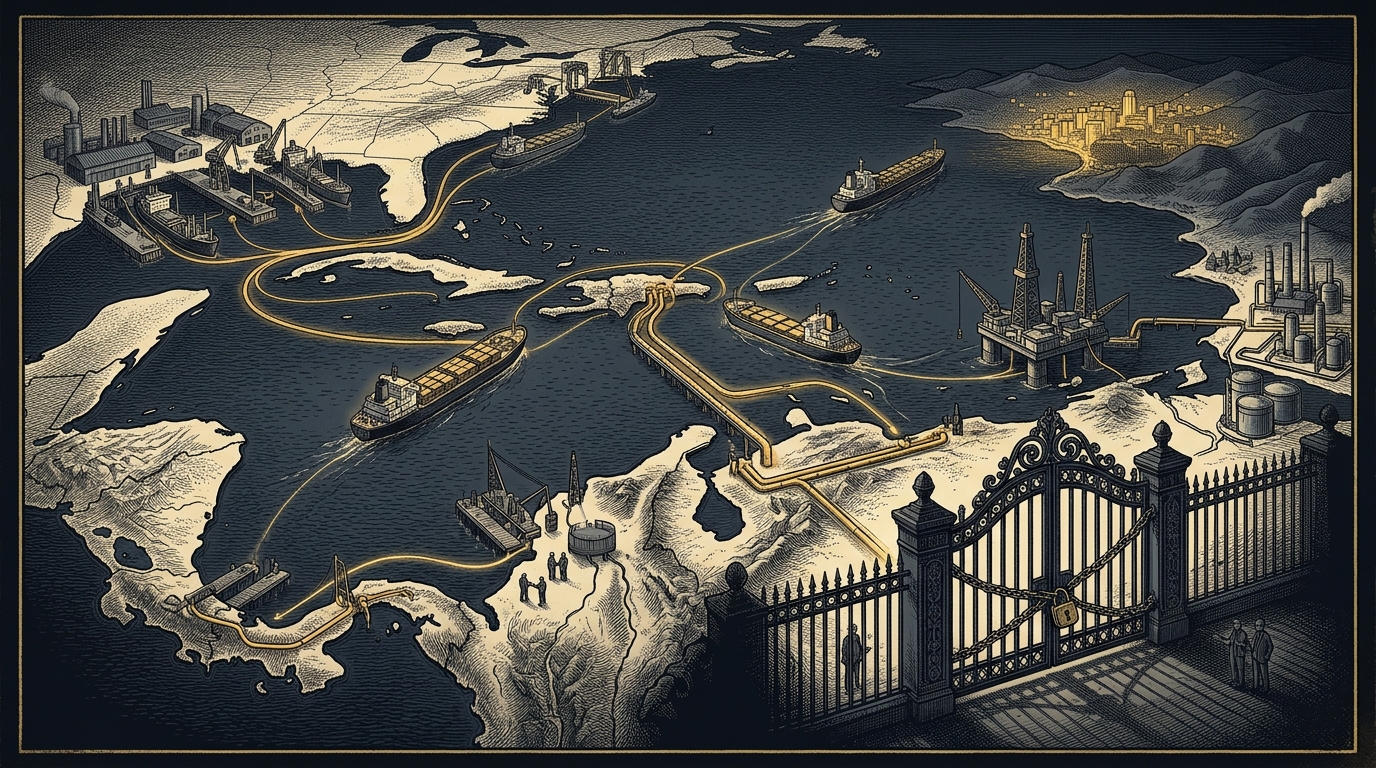
The main source of friction is an 18-page oil contract which, according to an investigation by ProPublica, gives the U.S. side the right to buy 20% of the output of North American Blue Energy Partners (NABEP, a company owned by Venezuelan businessman Alejandro Betancourt) at $30 a barrel, with priority access to the remaining output for 50 years—and, in the event of a “declared national emergency,” to the company’s entire production. As El Universal notes, the document contains no binding provision requiring payment to the Venezuelan state of the promised $200 billion in taxes and royalties, and disputes are to be settled under U.S. law in a federal court in Texas. The parent company is registered in Barbados, where the law protects owners’ anonymity, and the Venezuelan government has no representation at all on its board.
The Italian Institute of International Affairs (IAI) goes further in its analysis, “The Hidden Costs of the Oil Deal”: since 1829, when Simón Bolívar issued a decree, Venezuela’s subsoil resources have been considered a national asset, and the country is now, the authors argue, returning “to the neocolonial situation of the early 20th century.” Their calculations suggest that control over 65 billion barrels would bring the United States’ accessible reserves to more than 100 billion barrels—a 140% increase. Tellingly, IAI observes, the deal has not been backed by a single political faction—either within Chavismo or in the opposition—apart from government spokespeople. Francisco Monaldi, an oil market analyst at Rice University, puts the practical implications this way in The Atlantic: the new hydrocarbons law lets the oil ministry “give you the best deal in Latin America—or the worst,” and then revise the terms. “Oil companies aren’t charities; they’re not nuns. But they understand when they’re doing something that will cause them problems later,” the magazine quotes him as saying.
Dispute Over Sanctions and the “Whitewashing” of the Rodríguez Family
The second story is the effective lifting of sanctions on the Rodríguez siblings. On October 14, Washington removed restrictions on National Assembly President Jorge Rodríguez, who had been placed on the list in 2018 as part of Maduro’s “inner circle.” The Turkish think tank ANKASAM interprets this in its analysis as a shift in policy tools—from pressure to engagement. At the same time, the U.S. Treasury removed Venezuela from the list of countries subject to investment restrictions, explaining that “the Nicolás Maduro regime no longer exists,” and that Delcy Rodríguez, recognized on March 5, 2026, as the country’s interim head of state, does not fall under that legal definition (El Cooperante, Finanzas Digital). The department nevertheless warned that some transactions involving Venezuelan entities may still be subject to controls.
In an editorial titled “Trumpism Whitewashes the Rodríguez Siblings”, Nicaragua’s La Prensa calls this a “reward” for people whose heads were being demanded just recently: “There is little point in demanding justice against her and her brother if the world’s leading power not only recognizes them, but rewards them.” The editorial also makes a key point in the local debate: Machado, the Nobel Peace Prize laureate, has become “persona non grata” to the Trump administration, while Delcy is preparing to attend the Ibero-American Summit in Madrid on November 3–4.
Debate Over Elections and Maduro’s Role
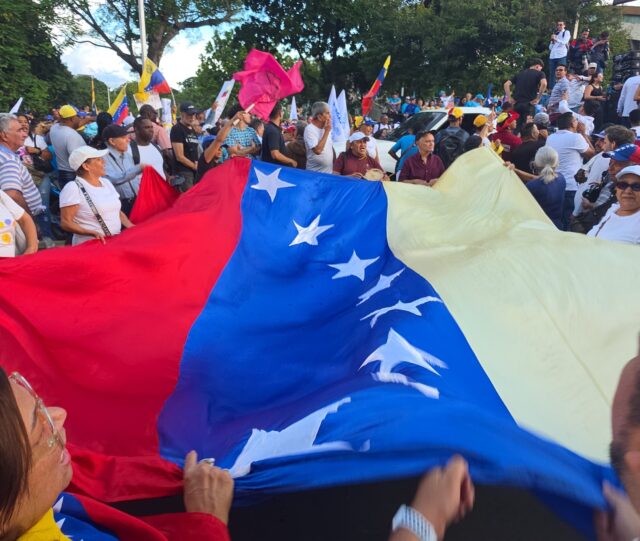
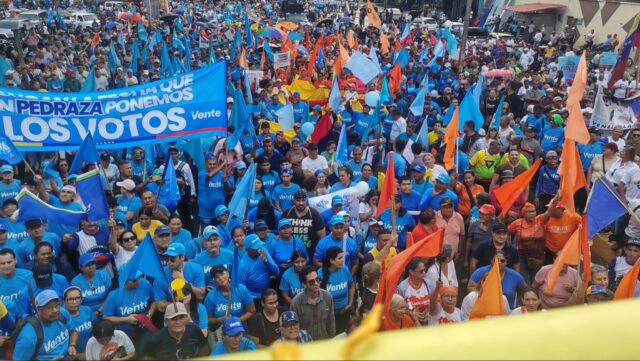
The third flashpoint is the pace of the “transition.” The State Department announced that the third round of talks between the interim government and part of the opposition—delegations led by Jorge Rodríguez and former lawmaker Dinorah Figuera—had produced “concrete results,” including an agreement to review “several repressive laws” (La Nación). But when CNN asked a senior U.S. official in Caracas about Machado’s proposed date of July 24, 2027, he said: “The timetable needs to be measured; we are not setting hard dates… all of this is possible thanks to January 3” (CNN en Español). Against this backdrop, Machado urged Venezuelans to take to the streets on October 22 to demand an election date and the release of political prisoners. Rodrigo Diamanti, an activist with Un Mundo Sin Mordaza, notes that according to human rights groups, more than 324 people remain in prison for political reasons (Martí Noticias).
In a column for El Nacional, Venezuelan journalist Benjamín Tripier puts forward a thought that may surprise outside observers: “The problem isn’t that the United States intervened… the problem is that after removing the symbol, Washington seems to have allied itself with the functional rabble of the Bolivarian Revolution.” “Chavismo 3.0 has already turned the page on Maduro” and, through Delcy, is bargaining not over democracy but over “what it is willing to give up and in exchange for what.” Phil Gunson, an analyst at the International Crisis Group, observes in a BBC report that Maduro’s presence is being deliberately “erased”: in January, Delcy mentioned him in speeches up to 86 times; by April, that figure had fallen to eight. And the government has made no public response to new U.S. allegations that Maduro and Cilia Flores were involved in torture. Meanwhile, Spain’s El Correo reports that Washington has gained access to the archives of Venezuela’s intelligence service, Sebin, which are being used to vet visa applications. The newspaper links this to efforts by Diosdado Cabello, who is wanted with a $25 million reward on his head, to improve his standing with U.S. justice authorities.
The common thread in Venezuelan commentary is concern not so much about U.S. intervention itself as about its cost: oil, intelligence archives and the absence of an election date have all ended up in the same deal. Local experts and the opposition see it as an exchange of sovereignty for the interim government’s survival; Washington calls it “stability.”