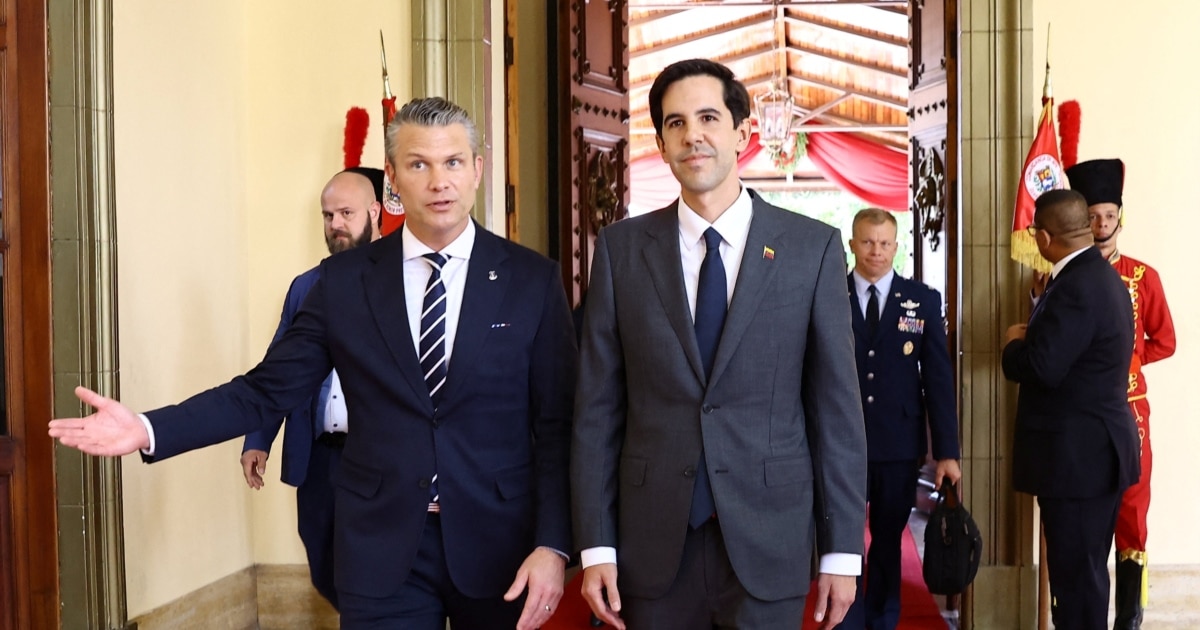
Two events involving the United States have dominated Venezuelan media coverage this week: the visit to Caracas by Defense Secretary Pete Hegseth—known in Venezuelan and U.S. terminology as the head of the “Department of War” (Departamento de Guerra)—who signed an agreement to resume military-technical cooperation, and the State Department’s official response to the outcome of the fourth round of talks between the government and the opposition. Washington praises “reforms” and calls for political prisoners to be released; Caracas calls the agreement with the United States “highly beneficial,” while critics speak of “external tutelage” and a loss of sovereignty. The dispute is less about the facts than about how to characterize what is happening: a transition to democracy or a deal under patronage.
Dialogue without an Election Date
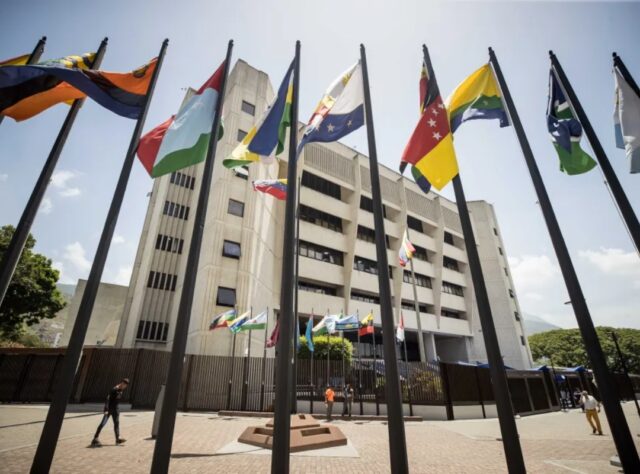
On November 24, the State Department congratulated both sides on completing the fourth round of talks, held at the Gran Meliá hotel in Caracas from November 13 to 23. According to El Nacional, department spokesperson Tommy Pigott welcomed “institutional reforms and political freedoms” as necessary for “free, fair and credible elections” and reiterated the call for “the immediate release of all political prisoners.” The stated achievements include a competition for 32 Supreme Court judgeships, which drew more than 1,300 applications; a pledge to review “repressive laws” by the end of the year—above all, the Organic Law Against Organized Crime and the Financing of Terrorism, reforms to the law on political parties, and the “regularization of licenses” for a number of television channels. This is part of the three-phase plan by Trump and Rubio: stabilization, economic recovery and political reconciliation.
However, Venezuelan outlets have noted what the document leaves out. Alertas 24 puts it plainly: “Again, no concrete agreements.” There is no election date, no start to the renewal of the National Electoral Council (CNE), and no measures on political prisoners, of whom the human rights organization Foro Penal counted 321 as of November 9 (181 civilians and 140 military personnel). The report also mentions a “road map” for talks with British officials on returning Venezuelan gold frozen at the Bank of England—funds needed to address the aftermath of the double earthquake.
Guarantees Instead of Elections?
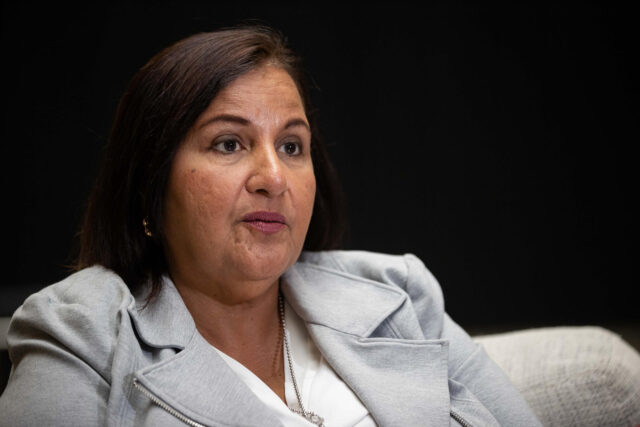
The head of the opposition delegation, Dinorah Figuera, president of the 2015 National Assembly, has defended the pace of the talks against criticism. In an interview with Diario Las Américas, she said: “The process is moving forward in steady steps… People want dates more than they want a system, but we need to create a system that provides political and civil guarantees.” She said that the Law on Oversight, which was used to bar opposition figures—including María Corina Machado—from running in elections, could be reformed. Figuera also called the Supreme Court selection process “impeccable” and vowed that “people without honor” would not become judges—even though, as Alertas 24 notes, the 1,343 applicants include sitting judges, among them the court’s president.
Another point of contention is Machado’s return. She has been back in the country since October 25 but is not taking part in the talks. Speaking on Román Lozinski’s show, Figuera dismissed suggestions that Machado’s arrival had caused “turbulence” in the negotiations: “I personally celebrated her return… it is the result of the transition-to-democracy process,” El Cooperante reported her as saying. Critics, however, argue that without the most popular opposition leader’s participation and without an election timetable, “guarantees” remain mere promises.
The Pentagon Agreement and the Price of Sovereignty
The main topic for commentators is the agreement signed by Hegseth and Defense Minister Gustavo González López to resume military-technical cooperation, suspended by Hugo Chávez in 2005. El Cooperante recalls that Chávez said at the time that U.S. officers were “brainwashing our guys” and halted the exchange. Now acting president Delcy Rodríguez calls the alliance “highly beneficial,” while González López insists that the document is based on “full respect for sovereignty, independence and territorial integrity” and “strict compliance with the Constitution.” The outlet immediately points to an awkward complication: Article 13 of the Constitution prohibits ceding territory and establishing foreign military bases, while Article 187 requires parliamentary approval for foreign military missions to enter the country. The agreement’s details have not been disclosed.
In the same article, analyst Ricardo Sucre calls it a mistake that the armed forces (FANB) have barely been discussed: they appear neither among the 14 points the Unitaria platform submitted to Machado on October 27 nor at the negotiating table. A El País columnist puts it more bluntly: Hegseth’s visit “confirms the subordination of Venezuela’s military and political authorities to Washington,” and the country is living in “post-Madurismo,” without the right to choose its government. In the columnist’s view, all three measures of lost sovereignty are present: a foreign power’s control over resources, its oversight of institutions, and rulers’ accountability to a patron rather than to society. Curiously, the article also acknowledges that some Venezuelans approve of what is happening and even dream of becoming the “51st state,” arguing that Cuba, Russia, China and Iran had previously plundered the country.
Oil, Gold and “Acquired Territory”
Resources are the economic backdrop to the dispute. In Caracas, Hegseth said that the oil deal with Venezuela made the Strait of Hormuz “irrelevant to the Western Hemisphere,” and described the country as having gone “from the most aggressive regional threat to a rule-abiding security partner.” His “This is war” T-shirt and victory lap around Fuerte Tiuna—the base stormed by U.S. forces during Maduro’s detention on January 3—became symbols of the debate. The official U.S. account is set out in a VOA editorial, which recalls the three-phase plan and the “America’s Counter Cartel Coalition.” Venezuelan critics respond that the question is not whether Chavismo was bad, but why the remedy was to place the world’s largest oil and gas reserves under external control.
The overall picture is this: the government and pro-government media talk of a “beneficial partnership” and “sovereignty”; the opposition inside the negotiating process speaks of a “system of guarantees” instead of early elections; and independent analysts describe “external tutelage” with no end in sight. Everyone agrees on just one thing: a fifth round of talks is scheduled for December, and that is when it will become clear whether the “guarantees” will have dates—and whether “sovereignty” will have substance.