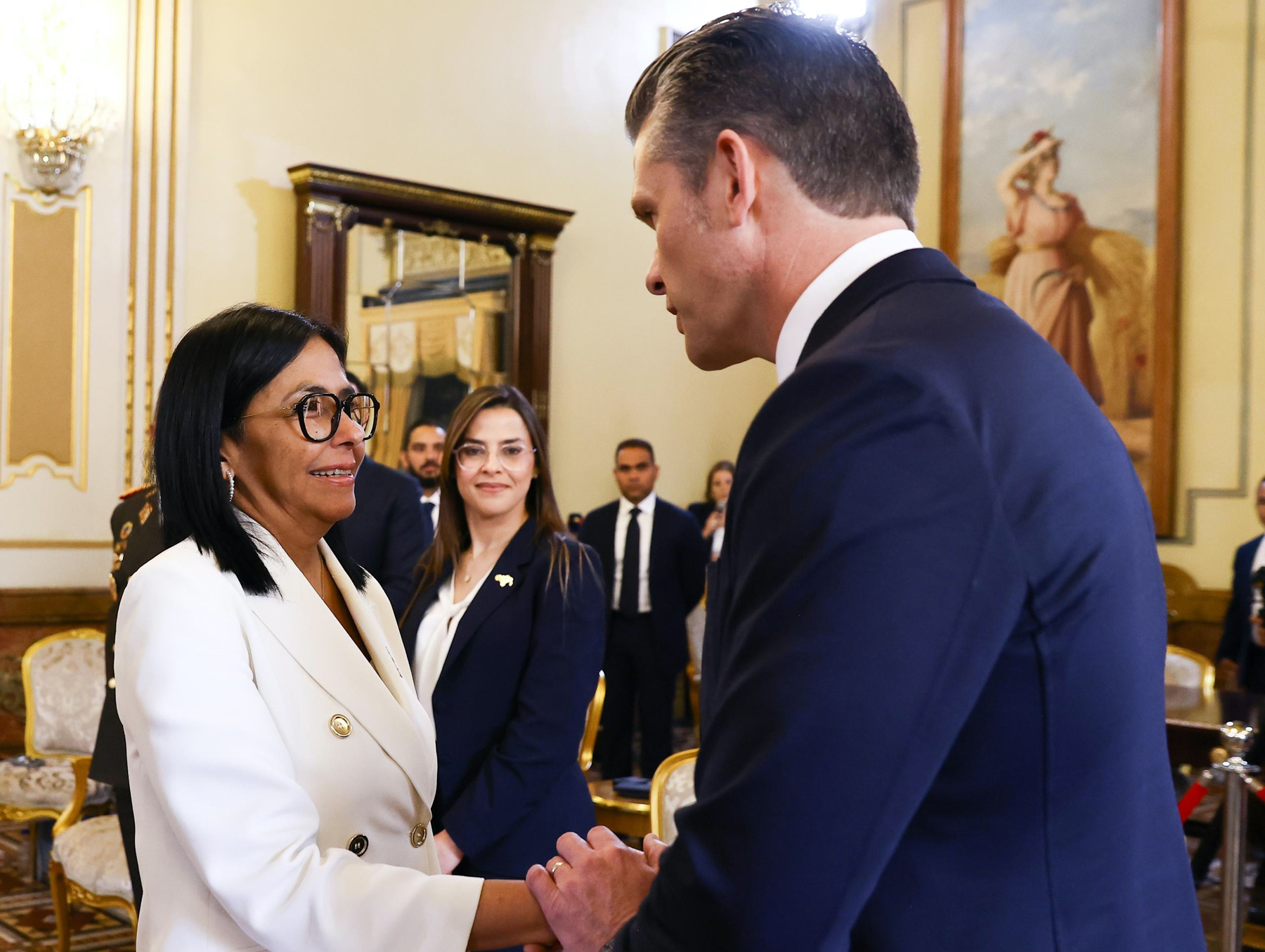
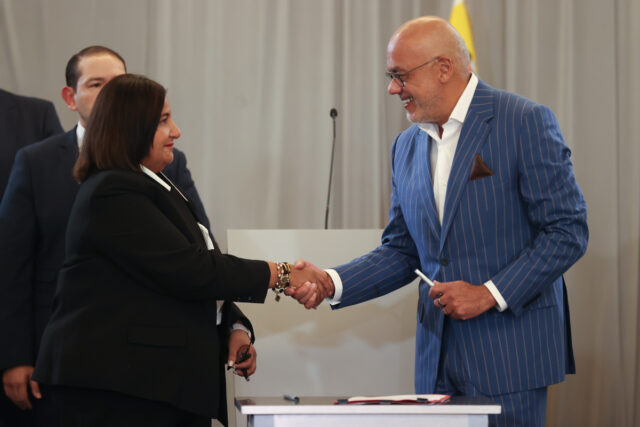
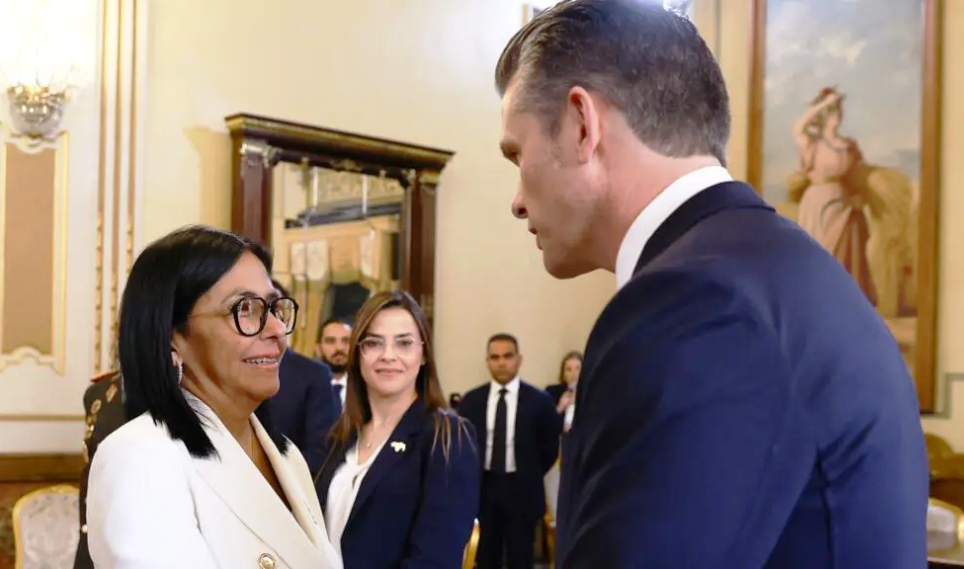
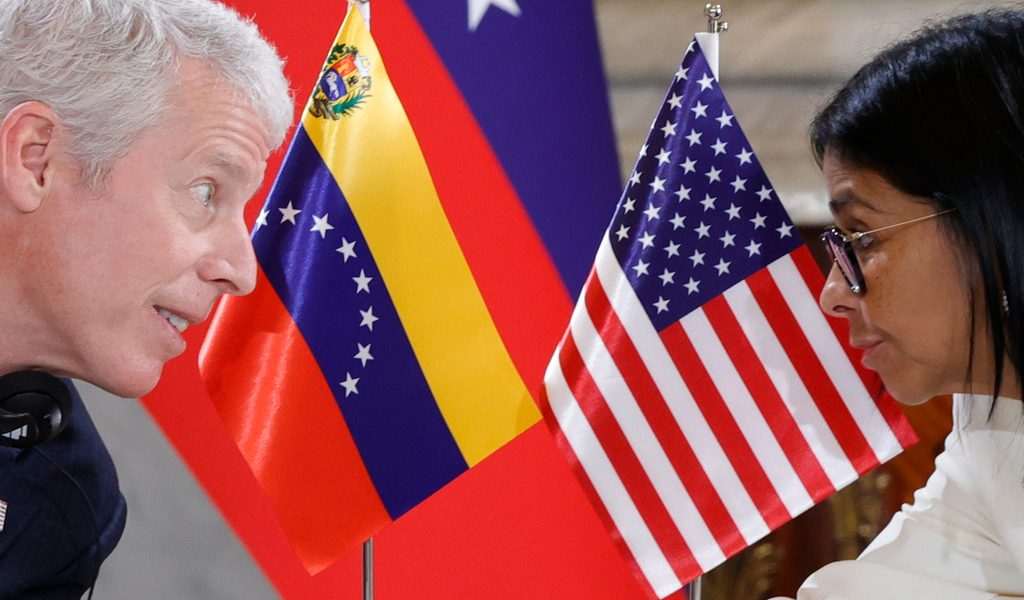
The main topic in Venezuela over the past two days has been the signing of a military agreement with the United States—the first since 2005, when Hugo Chávez ended military cooperation. The visit to Caracas on November 18 by Defense Secretary Pete Hegseth (known in U.S. terminology as the “secretary of war”), ten months after an operation that ended with Nicolás Maduro being taken to New York, sparked a heated reaction: from official assurances about “sovereignty” to fierce opposition from grassroots Chavista organizations.
Military Agreement and the Limits of Sovereignty
Hegseth and Venezuela’s defense minister, Gustavo González López, signed an agreement covering training, intelligence sharing, equipment supplies and border security. Its details have not been made public, according to AP. Hegseth himself said that Venezuela had “transformed from the most aggressive regional threat into a compliant security partner,” and told “narco-terrorists” at the U.S. Embassy: “We will hunt you down… and we will kill you” (BBC). González López responded with a statement stressing that cooperation was “based on respect for international law and the defense of the nation’s sovereign interests,” and that Venezuela’s military would retain command of operations.
Military analyst Ricardo Sucre sees an opportunity in the agreement, he writes in Efecto Cocuyo: “The U.S. Army is professional; it doesn’t engage in politics. This could help the FANB [Fuerza Armada Nacional Bolivariana—the Bolivarian National Armed Forces] regain its democratic spirit. Let’s remember that courses were held in Cuba, Russia and China.” Retired Colonel Guillermo Beltrán Vielma allows that “the possibility of establishing military bases in Venezuela is on the table,” though he does not consider it inevitable. El Nacional columnist María José Villasmil warns: “This is not simply a diplomatic rapprochement… it is a relationship that could have direct consequences for security and the balance of power in the region.” She notes that the cooperation involves the FANB, an institution that shapes how political power functions.
The Meaning of “Compliant Partner” Under Debate
Hegseth’s wording prompted a separate debate. In an interview with RFI, French expert Thomas Posado says the rapprochement places the country “de facto under American tutelage” and remarks: “Hugo Chávez would be turning in his grave”—it was Chávez who ended military cooperation in 2005. Italy’s Il Riformista describes the dilemma: relying on existing chains of command makes direct intervention less costly, but “legitimizing opaque agencies without transparent commitments… means confusing public order with constitutional democracy.” Meanwhile, trade between the United States and Venezuela more than tripled in the first nine months of 2026, reaching $16.3 billion.
The Oil Deal and Its Cost
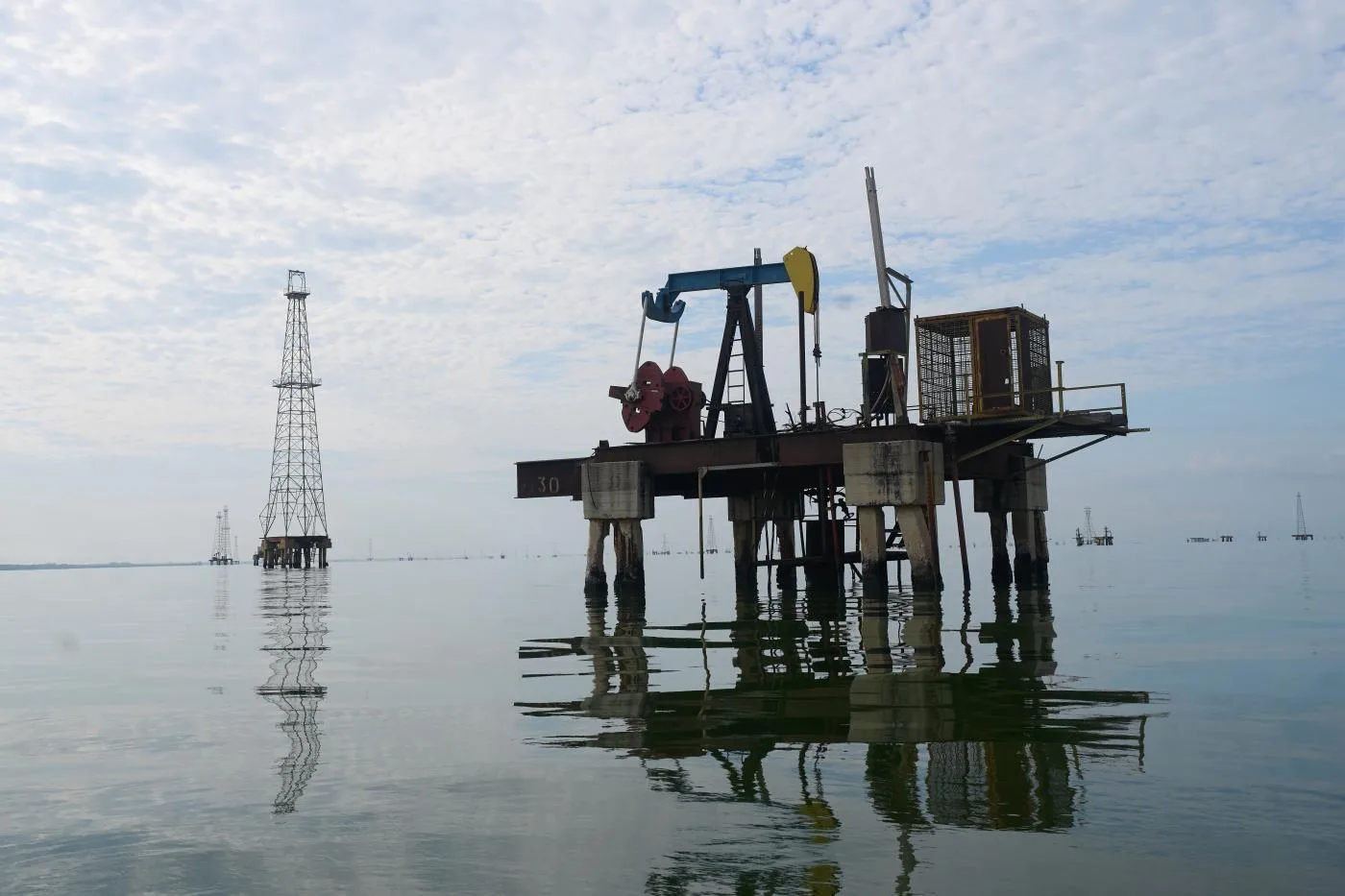
Hegseth’s visit builds on an energy agreement signed in August 2026: the consortium North American Blue Energy Partners received 100-year concessions for 17 fields with estimated reserves of about 65 billion barrels, while the U.S. Department of Defense’s Office of Strategic Capital acquired a 35% stake in the parent company. The State Department gained the right to buy 20% of production at cost, as well as first refusal on the rest (The Wire). In an article for Foreign Affairs, columnist Javier Corrales, whose piece was summarized by Quds Online, notes that the agreements were made without competitive bidding and that, according to polls, around 80% of Venezuelans oppose them, calling them “plunder” and “neo-imperialism.” Trump, it is worth recalling, called the country “our new acquisition.”
Grassroots Opposition: “Normalizing Subordination”
The sharpest local reaction came not from officials but from grassroots organizations. The Simón Bolívar Coordinating Committee and the Anti-Imperialist People’s Front said the agreement had been signed “behind the Venezuelan people’s back” and called for an end to the “normalization of subordination.” They called Hegseth’s run across the parade ground at Fuerte Tiuna—where Maduro was captured in January—“outrageous” and recalled that around 100 people were killed in the January 3 strikes (Orinoco Tribune). “Those who break into someone else’s home by force, loot, kill and kidnap can never be welcomed as honored guests by a people with class consciousness and a memory,” the statement said. Some communes took a softer line: Robert Longa, a leader of the El Panal commune, spoke of Chavista “peace diplomacy,” contrasting it with “warmongers.”
Maduro in a New York Cell
Another story is Nicolás Maduro’s 64th birthday on November 23, which he will spend in a New York jail. In a text titled “Reborn Through Faith, Reconciliation and Service,” he calls for people to “heal the wounds” and come together “face to face amid the diversity of today’s Venezuela,” quoting Bolívar and the Apostle Paul. His party, the PSUV, has posted a video condemning his “kidnapping” (Brasil 247). While some in Caracas talk about the army’s technical modernization, others speak of “forgiveness.” But both narratives sidestep the central question: when will elections be held, and who will govern the country after ten months of Delcy Rodríguez’s “transitional” rule, her term having expired back in July?