María Corina Machado’s return to Venezuela after nearly a year in exile was the biggest story of recent days, immediately exposing tensions between Washington and Caracas. While Donald Trump speaks of “total control” over the country, where U.S. companies have already been granted access on special terms, Venezuelan officials call the opposition leader’s return a “show,” and local economists describe the oil agreements with the United States as a “coalition of two kleptocracies.” Here is an overview of what Venezuelan politicians, experts and media outlets are discussing.
Machado’s return and what lies behind it
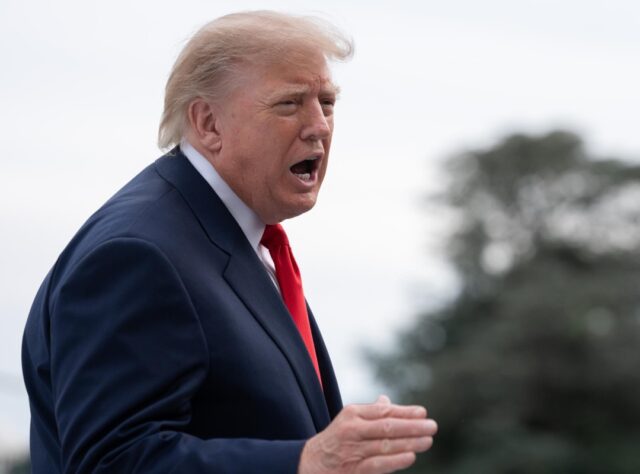
Machado confirmed her return on October 25, traveling from Panama through Colombia. Thousands of supporters greeted her motorcade on the journey from Barquisimeto to Caracas. Washington tried to present the return as a diplomatic success of its own: Secretary of State Marco Rubio said that “the conditions that allowed Ms. Machado to return safely are a direct result of U.S.-backed reconciliation talks,” adding that Washington had spent “weeks” urging the transitional authorities to “allow her to return without hindrance” (Despacho 505, El Comercio). Transitional government president Delcy Rodríguez called the return an “unnecessary show” and, without naming Machado, said she hoped that “those who harmed Venezuela, who called for sanctions and foreign aggression, would feel remorse” (CNN). Trump, for his part, offered only this: “She’s a very nice woman. She gave me her Nobel Prize … I hope she’s safe. But things are going very well for us in Venezuela” (El País).
Venezuelan analysts, notably, disagree about the implications. Political scientist Benigno Alarcón of the Polis firm says Machado’s presence “could change the incentives and balance of power between the government, the opposition and the United States,” but “does not in itself mean a transfer of power” (El País). Economist Ricardo Hausmann went further, saying that if the “regime” harms her, “Trump and Rubio will be responsible” (El País). An El Nacional columnist writes that her appearance “shatters the fiction of a managed transition,” in which stability was negotiated “behind civil society’s back” (El Nacional).
The oil deal and a “coalition of two kleptocracies”
The main economic story is the August 31 agreement, which Trump called “the biggest oil deal in the history of the world”: access to 17 strategic oil fields for 25 years, with the participation of Chevron, Repsol, Eni, Shell and BP, and a target output of more than 1.5 million barrels a day (El Cooperante). In an interview with Fox News, Trump explicitly declared that the United States had “total control” over Venezuela: “We’re taking millions of barrels of oil a week” (El Cooperante). Rodríguez’s government defends the agreement, saying it will bring “significant revenue to the state.”
However, critics in Venezuela and across Latin America point to a lack of transparency. In a column for Cambio Colombia, Colombian analyst Hans Blumenthal writes that “rights to the largest oil fields have already been allocated, and the United States is taking the lion’s share.” The key question, he says, is “what Venezuela will get and whether the agreement will remain in place when the country votes freely” (Cambio Colombia). Hausmann described the relationship taking shape as a “coalition of two kleptocracies” (“coalición de dos cleptocracias”), a phrase picked up by many media outlets (Charter97). According to El País, Machado is already criticizing the contract: businessman Alejandro Betancourt, whose company was awarded oil fields, “is not a partner,” and she will respect contracts only if they comply with Venezuelan law (Cambio Colombia).
Dispute over the election date and a “managed transition”
The key point of disagreement is the timeline. Rubio speaks of three stages—stabilization, economic recovery and political reconciliation—and wants “a new Supreme Court by the end of the year and a new National Electoral Council soon after” (Infobae). At the UN General Assembly, Rodríguez promised that elections would be held but gave no date. Trump said it was “too early” for elections. Machado is demanding a specific date: “The election date is the date of liberation” (Cambio Colombia).
Venezuelan editorial commentary sees a trap here: “every month without a date strengthens the position of the powerful and eases the pressure,” while “oil and democracy are moving in opposite directions in Washington” (Cambio Colombia). El País puts the paradox even more sharply: Rubio presents Machado’s return as an achievement of the very negotiating forum from which she is excluded. The talks involve Delcy Rodríguez and Dyonora Figueras, while Machado’s party, Vente Venezuela, is not part of them (El País, Infobae).
The Church, sovereignty and the debate over “forced” intervention
An unexpected but important local story is the reaction of the Venezuelan Episcopal Conference. Its president, Monsignor Jesús González de Zárate, said that the country reached January 3—the date of the U.S. military operation and the detention of Nicolás Maduro—because society “could not find common ground,” and that an outside actor therefore “had to” intervene (Revista Diplomática). Political scientist Leopoldo Puchi, writing in the same publication, strongly disagrees: that logic “shifts the blame for aggression onto the victim” and normalizes intervention, while “a country’s sovereignty does not depend on whether its leaders managed to reach an agreement” (Revista Diplomática). This is a rare example of a domestic Venezuelan debate not directly about the United States, but about how the country legitimizes the U.S. presence.
Sanctions, money and everyday life
Although the sanctions regime has formally been eased, Venezuelan experts are debating where the oil revenue is going. Analysts estimate that oil sold since January is worth more than $13 billion, but there has been no official confirmation, and the revenue is being deposited in a special account without full disclosure (Charter97). The minimum wage remains extremely low: according to figures cited by Venezuelan economists, the legal monthly wage is less than 30 cents, while an income of $240 consists almost entirely of bonuses and covers only about 40% of a family’s food basket (Cambio Colombia). According to Encovi, a survey by Andrés Bello University, 68.5% of households lived below the poverty line in 2025. That is why, El Nacional notes, business elites who once preferred “corporate silence” are now being forced to take a position, while the military reassesses the durability of “Chavismo 3.0” (El Nacional).
Notably, even among government supporters, cautious criticism can be heard. Venezuelan economist Celaya (AVIEM), in a technical analysis, says the energy crisis will require $15–40 billion and five to ten years to address, while sanctions have worsened the shortage of spare parts (QQ). Meanwhile, residents of oil-producing areas interviewed by The Atlantic say that “the Americans came to steal the oil and minerals” and that “nothing has changed” (Charter97). In this way, Venezuela’s debate about the United States is shifting from geopolitics to the question of who actually benefits from the “biggest deal in history.”