Over the past two days, three interconnected issues have dominated public debate in Venezuela: US Secretary of State Marco Rubio’s statement that a new Supreme Court and a “non-political” National Electoral Council (CNE) would soon be established to declare the presidency vacant and pave the way for elections; ExxonMobil’s return to the oil sector after a 19-year absence; and increasingly vocal debate over who actually governs the country—Caracas or Washington—and why ordinary Venezuelans have seen no improvements under this “tutelage.” This trio—the promise of elections, the distribution of oil wealth and the cost of US oversight—is setting the tone for local newsrooms, experts and politicians.
Election plan and presidential vacancy
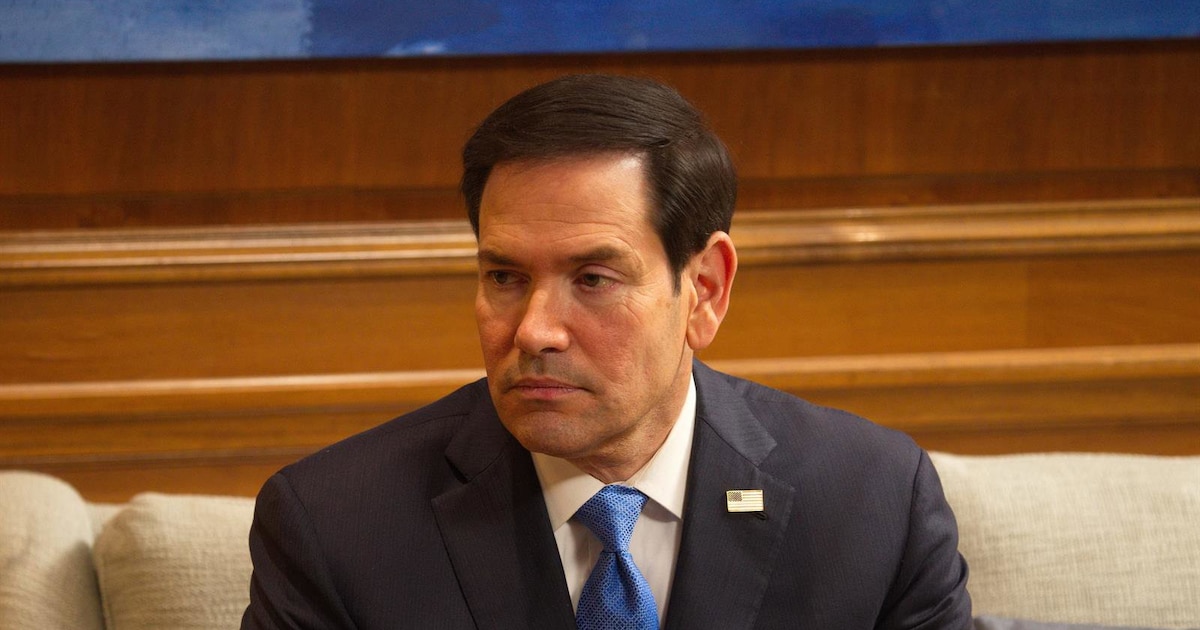
The key event was Rubio’s press conference in Paris on the sidelines of the G7 foreign ministers’ summit. He said that new Supreme Court justices should be appointed in Venezuela by mid-December, followed shortly afterward by a “non-political” electoral council that would “declare the presidency vacant”—a position currently held by acting president Delcy Rodríguez. This, he explained, would open a six-month window for elections, with the date set by a “legitimate electoral council” (Europa Press). Rubio also singled out the 7 million Venezuelans living abroad and said consulates must be opened in the United States so they can vote; at present, he said, none are operating (Infobae).
The response from the opposition involved in dialogue with the government was almost entirely positive. The opposition’s lead negotiator, Dinora Figuera, publicly thanked Rubio and the United States “for all their support in the transition to democracy” and pledged “fair, secure elections and full democracy” (Europa Press). The G7 endorsed the negotiations in its final statement, but made economic recovery conditional on democratic guarantees, the release of political prisoners and equal participation for all parties (El Pitazo). Local outlet El Pitazo described this as echoing the US three-phase plan and as Washington’s “tutelage” of the political negotiations.
The mood inside the country, however, is far less optimistic. LaPatilla columnist Dr. JJ Bacteria writes that nearly a year after Maduro was taken away, “reality is far from the initial expectations”: investors are “studying and planning,” but there has been no significant investment, and Venezuelans have seen “no minimum improvement” in water, electricity, healthcare or income (LaPatilla). The voice of grassroots teacher Celis Enrique Rodríguez Serrano is even more forceful: “Nobody can take this any longer!” he writes, noting that “tutelage” has given ordinary citizens “nothing,” and demanding that María Corina Machado “set a concrete date for elections, not ‘ideally in 2027’” (DiarioLaFaena). Tellingly, even former Ecuadorian president Rafael Correa, an ally of Chavismo, says that “Delcy is governing with a gun to her head and a kidnapped president” (LaPatilla). In other words, the same point is being made on both the left and the right: Caracas’s sovereignty is conditional.
Exxon returns: “the cherry on top of capitulation”?
The sharpest dispute of the past two days concerns a memorandum between PDVSA and ExxonMobil, signed in Caracas on November 9 under Rodríguez’s chairmanship. She called its terms “very favorable” and spoke of “brownfield and greenfield sites with billions of barrels” (La Jornada). Exxon, however, has been notably cautious: “This is a significant first step, but any future investment would require stable policies, clear rules, strong investment protections and competitive returns.” The agreement is a non-binding memorandum granting a year of exclusive negotiating rights over seven blocks, including Petromonagas (formerly Cerro Negro) (DiarioBitcoin, Newsbase).
Economists have welcomed the deal, but with reservations. Former PDVSA director José Toro Hardy called the news “very positive,” but cautioned: “So far, it is nothing more than a letter of intent… Without legal certainty, I very much doubt they will invest.” He also pointed to technical synergies: “Three barrels from the Orinoco, diluted with one barrel of Exxon’s Guyanese oil, produce the Merey 16 benchmark grade, which is in huge demand in the United States” (Venevisión).
Former oil minister and PDVSA head Rafael Ramírez sees it very differently. He called Exxon’s return “the cherry on top of the entreguismo cake”—a Spanish term meaning surrender or capitulation—recalling that in 2007 the company paid 1% in royalties, rejected the new legislation and was nationalized. Now, he said, “the same company that is occupying our territory in Essequibo” is returning “through a government under its control” (El Regional del Zulia). Left-wing critics add further context: more than 50 contracts have been signed since January, and a deal with NABEP, according to ProPublica, gives the United States a 35% stake and the right to buy 20% of production at cost, while Exxon and Conoco were, according to a source, “treated as second-rate” (Al Mayadeen). El Cooperante columnist, by contrast, supports the oil agreement “for political reasons”: in his view, it will “awaken” society and trigger a reshuffling of the elites, though he acknowledges that the opposition’s “nationalism” looks “fake and convenient” (El Cooperante).
Oil dollars under Washington’s control
Another point of contention is what will happen to oil revenues. According to a confidential KPMG report cited by The New York Times, between January 3 and September 30, $12.26 billion from oil, minerals and fertilizers was deposited into a “Venezuelan custodial account” at the US Treasury Department. Around $11.7 billion was returned to Venezuela, primarily to fund currency auctions aimed at supporting the bolívar (Infobae/EFE). Official Caracas presents this as evidence of “responsible management,” but local critics point out that every transaction requires approval from the State and Treasury departments, meaning the country’s financial independence is an illusion. Columnist Luis Enrique Vizcaya calls this a “pragmatic collusion” between Trump and the “Rodricabellyato”—a derisive nickname for Rodríguez’s circle—and warns that “our executioners are trading our wealth” (Costa del Sol FM).
“Tutelage,” political prisoners and disillusionment
Behind all the deals and schedules lies a question asked by both the left and the right: what does the ordinary Venezuelan get? According to ANOVA, 62.8% of households in 2026 experienced daily power cuts, up from 37.1% in 2024. Annual inflation is around 238.5%, according to economist Steve Hanke, and 68% of families remain below the poverty line (Al Mayadeen). This contrast underpins both the left-wing criticism of “recolonization”—the outlet Green Left writes of Chávez’s shift toward “submission to the IMF and Washington”—and the right-wing criticism of “tutelage,” which demands an immediate election date. For now, both sides agree on one thing: real decisions—from the composition of the new electoral council to the distribution of oil revenues—are being made outside Caracas. That is the loudest message coming from Venezuelan newsrooms over these two days.