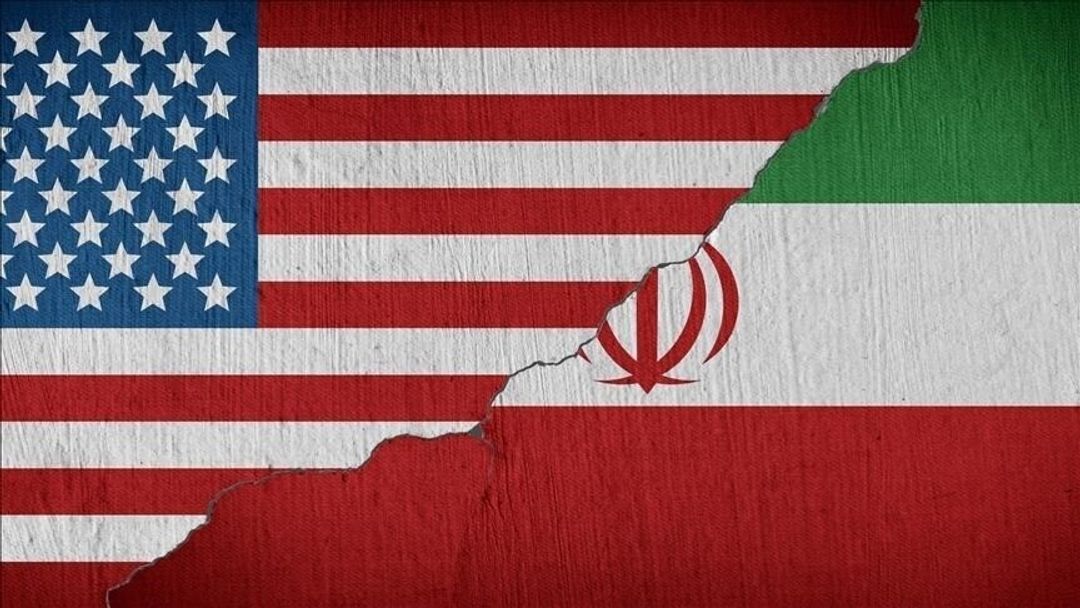
At the center of the regional agenda is concern over mounting U.S. economic pressure on allies and adversaries alike. Canada is being pushed toward a trade conflict by threats of tariffs, while Iran is facing tighter sanctions and financial isolation. Against this backdrop, experts are asking whether Washington’s confrontational strategy can contain broader geopolitical rivals, above all China. This material is based on publications by TRT Español, FXStreet, and Facebook (Venezuela).
U.S. Sanctions on Iran Heighten Concern and Demand for Gold
The new U.S. campaign to isolate Iran economically has triggered both political concern in countries already familiar with sanctions pressure and a notable reaction in financial markets. For Venezuela, which has faced restrictions on oil trade, international payments, shipping insurance, and access to the financial system for many years, the events surrounding Tehran are seen as a particularly close and potentially dangerous precedent.
At the center of the campaign is a U.S. operation that Treasury Secretary Scott Bessent called “Economic D-Day”; in some publications, it is referred to as Operation Outcast or “Economic Pariah.” Its stated goal is to deprive Iran of every possible source of revenue that, according to Washington, could be used to finance the Islamic Revolutionary Guard Corps. Bessent promised that “all economic ties with Tehran will be severely punished,” but did not publicly disclose the full list of specific measures or agencies that would be involved.
As TRT Español notes, Iranian authorities dismissed the threats as a repeat of a strategy that had already been tried and proved ineffective. Iranian Foreign Minister Abbas Araghchi said: “We have seen this movie before.” According to him, after the “most devastating sanctions” imposed approximately 14 years ago, the period of “maximum pressure,” and other stages of restrictions, another “most devastating economic operation” will likewise fail to achieve its objectives.
Iranian Foreign Ministry spokesman Esmaeil Baghaei, for his part, stressed that sanctions primarily affect “ordinary citizens.” He also accused the United States of trying to intimidate third countries and restrict their trade with Iran, calling such practices a violation of the principles of free trade and national sovereignty.
The threat of secondary sanctions is particularly important for Venezuela. Caracas and Tehran maintain political and economic ties in areas including fuel, petroleum products, technical cooperation, industry, and logistics. Pressure on banks, brokers, carriers, insurers, commodity buyers, and intermediaries could affect not only Iran directly, but also any external economic infrastructure that helps sanctioned countries maintain trade relations.
A publication by El Periódico describes the U.S. initiative as an “unprecedented” offensive and asks whether Donald Trump will be able to “change the course of history” or whether Washington will once again repeat the results of its previous sanctions policy. For a Venezuelan audience, the historical parallel with Cuba, Iran, and Venezuela itself is obvious: prolonged economic isolation did not bring about rapid political transformation, but it seriously complicated people’s daily lives, imports, access to foreign currency, oil revenues, and international payments.
In Caracas, U.S. sanctions are traditionally described as illegal unilateral coercive measures and a form of economic warfare. Against this backdrop, Tehran’s rhetoric about defending sovereignty and adapting to external pressure resonates in Venezuela. Both countries are relying on alternative trade routes, unconventional payment mechanisms, partnerships outside the Western financial system, and expanded ties with states that do not support U.S. sanctions policy.
At the same time, the new wave of restrictions has already affected the global gold market. According to FXStreet, gold rose to a three-month high of $4,681 per ounce before trading near $4,631, up 0.62%. The market reacted to reports of sanctions against nearly 60 entities linked to Iran.
The restrictions, the publication notes, cover digital assets, technology, gold, aviation, and maritime shipping. These are particularly sensitive areas for states with limited access to traditional banking channels and international financing: export operations, foreign-currency revenues, equipment supplies, and commodity trading may pass through them. Special attention is being paid to the “shadow fleet,” brokerage firms, and international networks of intermediaries.
Rising geopolitical tensions have increased gold’s appeal as a safe-haven asset. According to the World Gold Council, gold ETFs recorded inflows of 46.7 million tonnes worth $6.4 billion over the week—the largest figure in ten months. North American and European funds accounted for most of the inflows. Prices also received additional support from a 3.5-basis-point decline in the yield on 10-year U.S. Treasury bonds, to 4.700%.
The technical picture presented by FXStreet remains favorable for gold. After breaking above the 200-day moving average at $4,516, the nearest targets were identified as $4,700, $4,764, and $4,800 per ounce. If the market breaks and holds above these levels, it could set its sights on $5,000.
For Venezuelans, gold has not only an investment significance but also a broader political and economic one. In a country that has experienced devaluations, currency controls, and a high dependence on oil exports, physical gold is often perceived as a more tangible reserve than the national currency and unstable financial instruments. Rising global prices may matter both for government reserves and personal savings, although the sources do not separately examine Venezuelan production, reserves, or the domestic precious-metals market.
Thus, U.S. pressure on Iran is perceived in Venezuela on two levels at once. Politically, it is seen as a warning that the model of secondary sanctions against trading partners and intermediaries may expand. Financially, it is a factor intensifying global uncertainty and directing capital into gold. For countries living under U.S. restrictions, the cost of such confrontation is measured not only in diplomatic statements, but also in access to fuel, technology, payment systems, exports, and citizens’ everyday well-being.